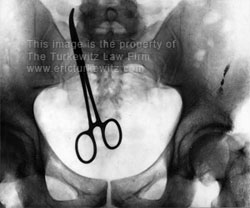
New York Personal Injury Law Blog: Medical Malpractice - Vetting The Case

Eric Turkewitz, The Turkewitz Law Firm, New York, NY  

Tuesday, May 22, 2007


Medical Malpractice - Vetting The Case


About 95-98% of medical malpractice inquiries to my office are rejected. Having previously discussed medical malpractice law and the economics of bringing such an action, mostly for the med-bloggers and tort "reformers" who tune in to this station, let's turn to the decision-making process for a short step-by-step. Remember that, since the case will not settle easily, and the painful economics of the contingency fee punish you harshly for picking poorly, the case better be strong. And one can safely assume that, as Ronald Miller points out at the Maryland Injury Lawyer Blog, the doctor or hospital will not admit an error.

1. The Phone Call: Most inquiries don't make it past this stage. Often, the complaint is of a bad result, discourteous conduct that leads to suspicions, or a plain old failure to understand what happened. This can be related to bad bedside manner, or an individual that unexpectedly finds himself listening to complicated medicine while in a state of high anxiety and distress. The potential client often doesn't know how, if at all, the doctor departed from accepted medical practice. (When the call is made by another attorney seeking to forward the case on to me, the rejection rate is lower since s/he has already done a vetting process.)

2. The Interview: You find out more in person than by phone. Some people already have records or portions of records that help to reconstruct what happened. Friends and relatives may have bits and pieces of information that help. The reliability of the potential client(s) can also be evaluated.

3. The Record Review: This is often the first real expenditure, so you have to have a pretty good idea that the matter is worth pursuing. In New York, you'll be hit for 75 cents a page, and the page totals can be daunting for substantial injuries. Then comes the hours of review. Assuming the matter still warrants attention after these three steps, we go to the expert(s).

4. The Expert Review: There is no case without an expert, unless you have a rare res ipsa case. And your expert has to be good, or s/he will get chewed up during a trial. If you hire an expert that is, shall we say, flexible with the standards of care and willing to go the extra mile for you, you will likely find yourself bankrupt. Bad cases don't settle. About 70% of malpractice cases are lost at trial, and juries don't like to bring back verdicts against doctors. The expert who reviews a bad case and tells you "no" is helping you while the expert that tells you "yes" is hurting you. Choose wisely.

5. The Other Expert Review: Remember that the negligence must be a substantial cause of the injuries. It doesn't help you to win the liability phase of the trial if there is no causation. While an internist might be able to testify on the breast lump that should have been biopsied, it is the oncologist that you need for discussion of whether the length of the delay in treatment was significant. There is a good chance you need multiple experts, just to decide if a case should be brought.

This process, a form of which exists in any law office that takes such cases on a regular basis, results in substantially weeding out the bad claims.

Finally -- and this is not an issue often discussed -- those that advocate dismembering the malpractice system and replacing it with some type of no-fault or other system with lower barriers fail to realize that it would result in an absolute flood of matters pouring in, significantly eclipsing that which now exists. But that, I suppose, is a question for another day.

Labels:


Comments:
If year after year, juries favor doctor defendants 70% of the time, that is scienter of weak cases, genius.
 
The 70% figure doesn't include the settlements, which occur for the easier cases, so you are looking at a deeply skewed statistic. It is nevertheless an important one (from the vetting perspective) as an indicator of how reluctant jurors are to bring back a plaintiff's verdict.

--ET
 
Eric: If doctors knew how trial attorneys are their best friends by the careful screening most of us do, they would love us. The Editor of the New England Journal of Medicine published a my letter with the same type of results on case screening that you cite. Keep up the good work. The public needs to know the truth that it is bad doctors and greedy insurance companies that are the real culprits.
 
"Trial attorney's are our best friends." LOL LOL you can't be real. That is along the lines of going into Iraq to get Osama.
Actually Mike the "real culprit" is a system in which most suits are baseless and most of the truly injured don't get their day in court. But I don't expect you or eric to address the real problems with the US legal system since you directly benefit from the status quo

PS: I also noticed eric how you quoted the Maryland Trial Attorney blog who once again use the IOM numbers of hospital deaths. Will you jokers every critically look at the methodology behind this flawed study? No because it is not about the truth it is about the look.
 
"Trial attorney's are our best friends." LOL LOL you can't be real. That is along the lines of going into Iraq to get Osama.
Actually Mike the "real culprit" is a system in which most suits are baseless and most of the truly injured don't get their day in court. But I don't expect you or eric to address the real problems with the US legal system since you directly benefit from the status quo

PS: I also noticed eric how you quoted the Maryland Trial Attorney blog who once again use the IOM numbers of hospital deaths. Will you jokers every critically look at the methodology behind this flawed study? No because it is not about the truth it is about the look.
 
Post a Comment


Links to this post:

Create a Link


<< Home


The New York Personal Injury Law Blog does not accept advertising banners, pop up ads or other distractions from its content. But since The Turkewitz Law Firm is the sole sponsor, it may be considered a form of attorney advertising in accordance with New York rules going into effect February 1, 2007 (22 NYCRR 1200.1, et. seq.)

Throughout the blog as it develops, you may see examples of cases we have handled, or cases from others, that are used for illustrative purposes. Since all cases are different, and legal authority may change from year to year, it is important to remember that prior results in any particular case do not guarantee or predict similar outcomes with respect to any future matter, including yours, in which any lawyer or law firm may be retained.

Some of the commentary may be become outdated. Some might be a minority opinion, or simply wrong. No reader should consider this site (or any other) to be authoritative, and if a legal issue is presented, the reader should contact an attorney of his or her own choosing for advice.

Finally, we are not responsible for the comments of others that may be added to this site.


This page is powered by Blogger. Isn't yours?