New York Personal Injury Law Blog: Eliot's Mess: Did The Payments Exceed $10,000?

Eric Turkewitz, The Turkewitz Law Firm, New York, NY  

Tuesday, March 11, 2008


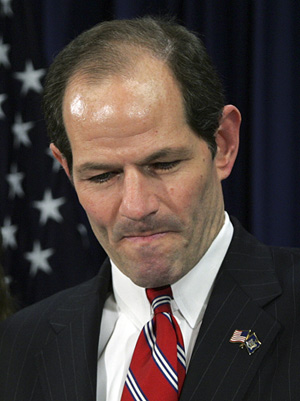
Eliot's Mess: Did The Payments Exceed $10,000?

Update: 3/12/08 -- Payments may be as high as $80,000, and state funds may have been used for transportation.
----------------------------
Original on 3/11/08 -- Did Eliot Spitzer's payments to the prostitution ring exceed $10,000, well above the $4,300 of initial reports?

I don't generally delve into criminal law, but this jumped out at me, and it deals with "structuring." According to a post at Overlawyered, these are the elements:

31 U.S.C. 5324 prohibits certain actions by any person who acts with the purpose of evading the reporting requirements of Section 5313 (Currency Transaction Reports). The definition of structuring for purposes of currency transaction reporting is found at 31 C.F.R. 103.11(gg). The elements of the structuring regulations are:

A person acting alone, in conjunction with others, or on behalf of others,

Conducts or attempts to conduct,

One or more transactions in currency,

In any amount,

At one or more financial institutions,

On one or more days,

For the purpose of evading the reporting requirements of 31 C.F.R. 103.22 (requiring CTRs).
But something is missing, and that is the follow-up to 31 CFR 103.22, if in fact, that is what was being investigated.

And according to 31 CFR 103.22, the amount must exceed $10,000. So while folks are talking about $4,300 in payments to the prostitution ring, that smaller amount of money wouldn't have tickled the bank into reporting this potential structuring crime to the IRS, would it?

It seems likely that an amount in excess of $10,000 must be at issue if this is what was being investigated, which means more of a mess than Eliot already has. And to tickle the bank to act, it may be a sum well in excess of that amount, because I wouldn't think an investigation would be opened if they simply saw two transactions of, say, $6,000 each a few days apart. There could be substantially more at play here.

Addendum: Forty television trucks have encircled the Capitol for the media feeding frenzy.

Labels:


Comments:
The payments clearly exceeded $10,000 over time if the leaks to the Times that it was the structuring that tipped off the investigation are true.

Under "Know Your Customer" regulations, banks regularly tip off the feds about money-flows that look like they're designed to evade the $10,000 reporting requirement.
 
And sure enough, the LA Times reports that an SAR was filed when Spitzer tried to break up a wire of over $10,000, and then tried after the fact to take his name off of it.
 
It's amazing how smart people can do such dumb things sometimes. If it was anyone else other than someone who had actually prosecuted financial crimes they could at least claim ignorance of the law before the court of public opinion.
 
Anyone who moves large sums of money around at a bank would know about the rule. It's not like the banks try to hide it from you. I doubt I am likely to say this ever again, but Ted is correct: something was done that tipped off the banks. "Oh, you have to report it? Well, let's do it as two $5,000 transactions" is one of those things.
 
Post a Comment


Links to this post:

Create a Link


<< Home


The New York Personal Injury Law Blog does not accept advertising banners, pop up ads or other distractions from its content. But since The Turkewitz Law Firm is the sole sponsor, it may be considered a form of attorney advertising in accordance with New York rules going into effect February 1, 2007 (22 NYCRR 1200.1, et. seq.)

Throughout the blog as it develops, you may see examples of cases we have handled, or cases from others, that are used for illustrative purposes. Since all cases are different, and legal authority may change from year to year, it is important to remember that prior results in any particular case do not guarantee or predict similar outcomes with respect to any future matter, including yours, in which any lawyer or law firm may be retained.

Some of the commentary may be become outdated. Some might be a minority opinion, or simply wrong. No reader should consider this site (or any other) to be authoritative, and if a legal issue is presented, the reader should contact an attorney of his or her own choosing for advice.

Finally, we are not responsible for the comments of others that may be added to this site.


This page is powered by Blogger. Isn't yours?