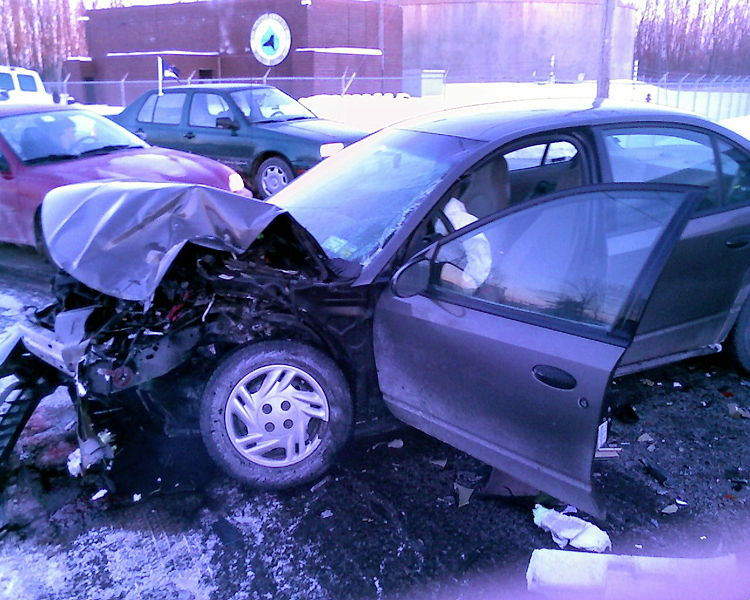
 New York has a No Fault law that applies to injuries from car accidents that limits the rights of people to bring suit unless they have a “serious injury.” And my upstate colleague Jim Reed at ZiffLaw described a fundamental problem with that law, via an email exchange with a prospective client: If you are lazy and “milk” the injury, you qualify to bring suit under New York’s statute, but if you struggle back to work, and work despite the pain and limitations you might have, you don’t qualify. The “serious injury” law, in other words, works as an incentive for people to be lazy and complain instead of being as productive as they can.
This problem arises because, under New York’s No-Fault Law, one can only bring a suit after an auto accident if the “serious injury” fits one of these definitions:
- A personal injury that results in death;
- Dismemberment;
- A significant disfigurement;
- A fracture;
- The loss of a fetus;
- Permanent loss of use of a body organ, member, function or system;
- Permanent consequential limitation of use of a body organ or member;
- Significant limitation of use of a body function or system; or
- A medically determined injury or impairment of a non- permanent nature which prevents the injured person from performing substantially all of the material acts which constitute such person’s usual and customary daily activities for not less than ninety days during the one hundred eighty days immediately following the occurrence of the injury or impairment” (See, for example, Oberly v. Bangs Ambulance; Insurance Law § 5102 [d]).
This significant restriction on bringing suit was a trade-off for the guaranteed health benefits of the No-Fault Law that started in 1973 and was amended in 1977 to the present formulation. But it also works in the counter-productive manner of encouraging people to stay home and not work. And that makes for bad public policy.
It also means that a fractured pinky that heals in a few weeks would qualify as “serious” under the law, but soft tissue back pain that lasts for years might not, especially if objective results don’t turn up on radiological studies or the physician does a poor job documenting the injury and the specifics of the limitations.
It is this conundrum that brings up the problem with “medical mills” that some folks complain about. In order to document the injury properly, one needs physicians who are familiar with the legal requirements of satisfying a statute that includes a “significant limitation of use of a body function or system.” That may not be the type of language that doctors learn in medical school or the way they were taught to make their medical records, creating a problem and cottage industry of those doctors who will document the way the legislature wants, and who will also find the time to testify in court.
And it brings yet another problem: Treating doctors may need to exaggerate certain claims of the patient to fit into legislatively defined categories in order to keep the tap open from the insurance company that is paying the bills, because the real injuries may not qualify. And the insurance company, by contrast, as an incentive to hire “independent” doctors to check the patient and rig the exams to show no injuries to close down the tap, even if the injuries are real. In fact, this is the subject of two lawsuits that have been brought in New York, that are discussed here:
- State Farm Hit With Civil RICO Claim Over Sham Medical Exams
- Allstate Slammed With RICO Charge Over Sham Medical Exams
Now some of these problems will exist anyway, even without the statutory framework. But it seems to me that the statute has exaggerated the problem, and it may be time for New York to revisit the subject to clean things up.
Cool! An article that finally says it. People milk the system, and those who work through it suffer more. Shouldn’t there be investigators who personally examine the person with qualifications of rehabilitating person.
Shouldn’t there be investigators who personally examine the person with qualifications of rehabilitating person.
There are. But they are paid by the insurance company that has an eye toward killing the benefits.
Pingback: Court of Appeals Hears Argument On “Serious Injury” in NY Auto Cases (What Should They Do?) – New York Personal Injury Law Blog
Pingback: No-Fault Law Headed Back to NY High Court? (Updated) – New York Personal Injury Law Blog