![]() |
||||||||||||||||||||
|
Eric Turkewitz, The Turkewitz Law Firm, New York, NY |
||||||||||||||||||||
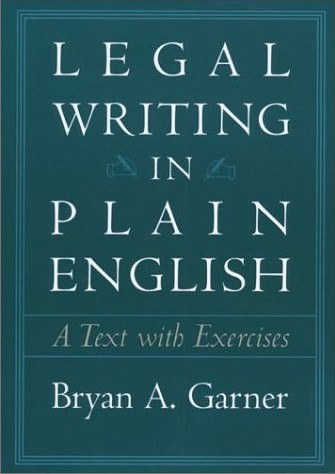
Wednesday, January 6, 2010Can A Cartoon Law Exam Help You in the Practice of Law?![]() We start with a law professor that wants to make an exam "fun" by having students relate a cartoon to course materials. Then we move to a practicing lawyer that rips that idea to shreds and beyond. But, believe it or not, I think the concept can lead to better lawyering. This little idea emanated from Howard Wasserman at TortsPrawf, who wrote: For no particular reason, I started thinking today about doing a question in which students would get a one-frame cartoon (The New Yorker would be the obvious source, but we could find them from other sources) and have the student relate that cartoon to the material in the course. My wife had an exam that did this in a sociology course and it sounds like a fun idea (although she said it was the hardest exam she had in college).Scott Greenfield, who often writes of how out of touch law professors are with the actual practice of law, was not amused by this "fun." He wrote: This could, of course, be great experience if a client arrives at your office, one-frame cartoon in hand, and asks your advice.But the idea clicked in my head, though not for the reason Wasserman stated. Many practicing lawyers, the folks in the trenches, can't write because they can't sharply identify the issue and present it up front. One-frame cartoonists, however, know all about succinctly nailing the issue. That succinctness is something I first practiced when working for my dad after law school, because one of his office rules was that every case had to be reduced to a "one-liner." Thus, a complicated medical malpractice case, that might have many different issues, would be reduced to: 1 year delay in diagnosing breast cancer in 52 year old woman, married, three kidsAnd that one-liner came in handy not just for office management, but when you approached the bench at a conference and the judge asked what the case was about. Five seconds later the judge knew what is going on and could delve into those parts of the nitty-gritty that might be needed for the conference. That one-liner also served as the opening of every brief. Law school exams teach you to write, and write and write. Then write some more. And that may be wrong. Perhaps they would better serve aspiring lawyers if they taught them to more sharply focus the issues and write less. How sharply? Give each student a maximum of 75 words to define each issue. That is a skill they can use in the practice of law. With just 75 words, its tough to bluff. That 75 word limit comes, by the way, from writing guru Bryan Garner. If you can't define the issue in 75 words, he teaches, you probably don't know what it is. Everyone that attends Garner's CLE class walks out amazed after watching numerous videos of appellate judges discussing how poorly the issues are framed by the lawyers, and even how difficult it might be to find them in voluminous papers. So that cartoon idea does have some merit to it, though not for the "fun"reason. Teach the students to write less, not more. And as to the length of this post, if I had more time I'd have written less. --------------------- Addendum: Scott Greenfield wrote last year about how Twitter cruelly forces that type of brevity. Labels: Law School, Legal Writing
Comments:
Great article Eric.
I agree that framing legal issues in a succinct way is a key skill for any trial lawyer. I know you are not a fan of Twitter but one aspect of the service I enjoy is the requirement to form an intelligent thought in 140 characters. If nothing else, it assists in the discipline of succinctness.
I'm reminded of my high school days in extemporaneous speaking competitions, where we would be given a short article or an editorial cartoon and a few minutes to compose a coherent presentation. I've thought on occasion that that was one of the more valuable things I learned at that age, in terms of preparing me for my legal career.
While tossing in a cartoon just to make exams a bit more fun may be a little misguided, I do like the idea of presenting issues to students in a more abstract way, with subtler facts and more muddled issues. In the "real world", facts and issues are rarely presented to us with an eye toward making our lives as lawyers more fun. Notwithstanding, if a cartoon, an offbeat news item, or some other "fun" information can present facts and issues for legal examination in the somewhat haphazard, noise-filled manner information comes to us everywhere except in a law school classroom, I can see value there. Concerning your points that exams should force students "to more sharply focus the issues and write less," I'd agree with the former but not necessarily the latter (unsurprising, perhaps, considering the length of this comment). I'm not sure that writing less on exams is a good objective overall. As an experienced practitioner, one should be able to competently frame an issue in 75 words or less, but that serves one's client only if those 75 words have a thousand equally-competent but unspoken words behind them. In practice, we need to be able to frame an issue, make a succinct argument, and give advice in a short e-mail rather than a 25-pages memo; we can and usually should give a clear and direct answer without explaining everything in gory detail. Law school isn't the time to do that, though; exams there should confirm what professors should find through the course of the term -- that students understand the gory details and can express them comprehensively. With just 75 words, you're correct that it's "tough to bluff". In the real world, a short bluff-free statement indicates that a lawyer gets it. In the unreal world of law school, however, it seems nearly as likely to characterize a student who happened to guess right as one who truly understood. That's a distinction that we all want law schools to be getting right for the good of the profession.
Colin:
My 75 word limit was meant for defining the issue, the thing a good writer would do in the opening paragraph of your brief. It wasn't meant to suggest that expounding on the issue afterwards should be ignored. That kind of exam, I think, has real world lawyering in it.
I know you are not a fan of Twitter but one aspect of the service I enjoy is the requirement to form an intelligent thought in 140 characters. If nothing else, it assists in the discipline of succinctness.
I agree. It is one of the few places where Twitter can actually teach something to lawyers.
My criminal law professor (a "big name" who I despised, but no matter) did have word and page limits on his exams. He had a section where we had to define criminal-law-related words or phrases (e.g., "double jeopardy") in 50 words or less, and a truly ugly issue-spotter that was limited to four or five pages.
Post a Comment
The definitions were a reasonably useful exercise, but the space was so constrained on the issue-spotter that I don't think anyone could have gotten it down to a one-liner that was not a monster. "Homeless couple, squatting in apparently abandoned NY office building, get drunk on possibly stolen liquor, have possibly nonconsensual sex, knock over candle and burn down building, killing Jersey firefighter." And I'm sure I left out a couple of twists. Addressing it in 4 pages was a nightmare. Links to this post: << Home
The New York Personal Injury Law Blog is sponsored by its creator, Eric Turkewitz of The Turkewitz Law Firm. The blog might be considered a form of attorney advertising in accordance with New York rules going into effect February 1, 2007 (22 NYCRR 1200.1, et. seq.) As of July 14, 2008, Law.com became an advertiser, as you can see in the sidebar. Law.com does not control the editorial content of the blog in any way. Throughout the blog as it develops, you may see examples of cases we have handled, or cases from others, that are used for illustrative purposes. Since all cases are different, and legal authority may change from year to year, it is important to remember that prior results in any particular case do not guarantee or predict similar outcomes with respect to any future matter, including yours, in which any lawyer or law firm may be retained. Some of the commentary may be become outdated. Some might be a minority opinion, or simply wrong. No reader should consider this site (or any other) to be authoritative, and if a legal issue is presented, the reader should contact an attorney of his or her own choosing for advice. Finally, we are not responsible for the comments of others that may be added to this site.
|
Subscribe by Email
|
|||||||||||||||||||
![]() |
![]() |
![]() |
|||||||||
![]() |
An Affiliate of the Law.com Network
|
![]() |
|||||||||
![]() |
![]() |
![]() |
November 2006
December 2006
January 2007
February 2007
March 2007
April 2007
May 2007
June 2007
July 2007
August 2007
September 2007
October 2007
November 2007
December 2007
January 2008
February 2008
March 2008
April 2008
May 2008
June 2008
July 2008
August 2008
September 2008
October 2008
November 2008
December 2008
January 2009
February 2009
March 2009
April 2009
May 2009
June 2009
July 2009
August 2009
September 2009
October 2009
November 2009
December 2009
January 2010
February 2010
Copyright © 2007 Eric Turkewitz & The Turkewitz Law Firm
About the New York Personal Injury Law Blog:
An attorney's blog on New York personal injury law,
medical malpractice, the civil justice system
and cases of interest.
|
|
Design by Lidija Tomas Design / Studio 4D |