New York Personal Injury Law Blog

Eric Turkewitz, The Turkewitz Law Firm, New York, NY  

Sunday, May 4, 2008


Eliot Spitzer Enters Private Practice

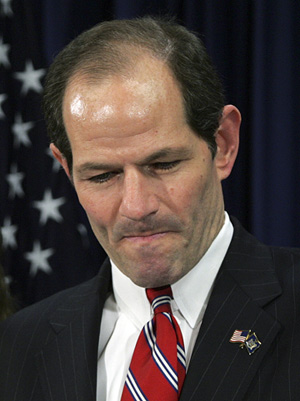
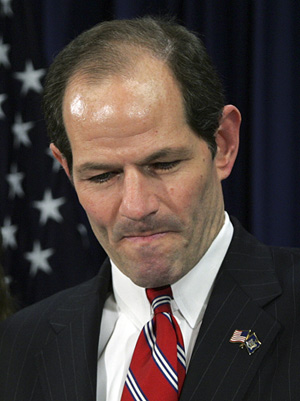
Former New York Gov. Eliot Spitzer entered private practice yesterday with Spitzer & Associates. Part of his practice will be personal injury law, among other matters within his unique world view. This includes, as he makes clear, some unique slip and fall cases as well as defective product litigation.

His entire announcement is here:

Labels:


Wednesday, March 12, 2008


Eliot's Mess: The Ramifications for Medical Malpractice "Reform" in New York

In case anyone wondered why a personal injury blogger was covering the Eliot Spitzer scandal -- aside from the fact that his New York office is two blocks away from me and news helicopters are buzzing overhead as he prepares to resign -- it's because it may have deep ramifications for medical-legal issues here.

Just two days ago, before the scandal broke, I wrote about 1,500 doctors rallying in Albany. I debunked the myths that the New York Medical Society was using to support artificial one-size-fits-all caps on medical malpractice suits in their discussions with elected officials.

Part of the Medical Society press release, which I didn't discuss at the time, has this quote from Spitzer:
"I look forward to standing with you when we sign these medical liability changes into law."
So Spitzer, who's brother is also a neurosurgeon, was an important ally of the physicians in trying to limit patient rights. Victimized patients will not be sorry to see him go if this was the issue that they held most dear to their hearts.

Assembly Republican Leader Jim Tedisco (R,C,I-Schenectady-Saratoga) had this to say about incoming Governor David Paterson, as he set the bar high:
"David Paterson's life story is, in a word, inspirational. His public record is one of overcoming obstacles, showing true character in the face of daunting adversity and being able to bridge Albany's bitter partisan divide that has, regrettably, widened into a chasm in recent years."

"Governor Paterson knows the meaning of honor and has shown in both his deeds and words that he is a man of the highest public and personal integrity. His inherent decency and desire to put advancing the interests of the 18 and a half million New Yorkers we represent ahead of political partisanship will truly be a breath of fresh air."

Addendum on 3/13/08: Last year, after a 14% medical malpractice insurance hike, Spitzer enacted a medial malpractice liability task force to suggest solutions. It remains to be seen what will happen to it.

More (3/19/08): The National Association of Manufacturers gives its take here: On the Tort Reform Angle, Too Bad about Spitzer

Labels: , ,


Eliot's Mess: Payments May Total 80K With Use of State Funds for Transport

After I posted yesterday morning that Eliot Spitzer's problems were likely well beyond the $4,300 of published reports, the New York Daily News reports today said that he may have spent as much as $80,000 on prostitutes, and that the may have used state funds to fly to and from the rendezvous points. The report also states that the liaisons have been found to go back about 18 months.

If true, this adds yet another layer to the hypocrisy of Spitzer, whose office last year went after New York State Senator Joe Bruno, the top Republican in the state, for using state funds (a helicopter) for political business.

Labels:


Tuesday, March 11, 2008


Eliot's Mess: Did The Payments Exceed $10,000?

Update: 3/12/08 -- Payments may be as high as $80,000, and state funds may have been used for transportation.
----------------------------
Original on 3/11/08 -- Did Eliot Spitzer's payments to the prostitution ring exceed $10,000, well above the $4,300 of initial reports?

I don't generally delve into criminal law, but this jumped out at me, and it deals with "structuring." According to a post at Overlawyered, these are the elements:

31 U.S.C. 5324 prohibits certain actions by any person who acts with the purpose of evading the reporting requirements of Section 5313 (Currency Transaction Reports). The definition of structuring for purposes of currency transaction reporting is found at 31 C.F.R. 103.11(gg). The elements of the structuring regulations are:

A person acting alone, in conjunction with others, or on behalf of others,

Conducts or attempts to conduct,

One or more transactions in currency,

In any amount,

At one or more financial institutions,

On one or more days,

For the purpose of evading the reporting requirements of 31 C.F.R. 103.22 (requiring CTRs).
But something is missing, and that is the follow-up to 31 CFR 103.22, if in fact, that is what was being investigated.

And according to 31 CFR 103.22, the amount must exceed $10,000. So while folks are talking about $4,300 in payments to the prostitution ring, that smaller amount of money wouldn't have tickled the bank into reporting this potential structuring crime to the IRS, would it?

It seems likely that an amount in excess of $10,000 must be at issue if this is what was being investigated, which means more of a mess than Eliot already has. And to tickle the bank to act, it may be a sum well in excess of that amount, because I wouldn't think an investigation would be opened if they simply saw two transactions of, say, $6,000 each a few days apart. There could be substantially more at play here.

Addendum: Forty television trucks have encircled the Capitol for the media feeding frenzy.

Labels:


Monday, March 10, 2008


Rumor: Spitzer to Resign, Paterson to be sworn in tonight

Rumors out of Albany, via CBS radio is that Spitzer will resign and swear in Lt. Gov. David Paterson tonight. [Note: Paterson has only one "t," which we might as well start getting used to.]

Feds have at least six different recordings from Client #9, believed to be Spitzer.

Spitzer's statement:
Today, I want to briefly address a private matter. I have acted in a way that violates my obligations to my family and that violates my or any sense of right and wrong. I apologize to my family. I apologize to the public, to whom I promised better. I do not believe that politics in the long run is about individuals; it is about ideas, the public good and doing what is best for the State of New York. I am disappointed. I failed to live up to the standard I expect of myself. I must now dedicate some time to regain the trust of my family. I will not be taking questions. Thank you very much. I will report back to you in short order.
He took no questions. Video of very brief press conference is here.

It's hard to run as a law and order candidate, presenting yourself as squeaky clean, and survive this type of thing. It shouldn't matter, but it does. It also doesn't help him that he antagonized so many people, on both the left and the right. Who's going to go to bat for him and tell him to ride it out?

On a final note, it appears from news reports that Spitzer called for, umm, service, on February 13th. Pretty weird way to plan for Valentines Day if you ask me.

Labels:


New York Gov. Eliot Spitzer is "Client #9" in Prostitution Ring

Charges have been brought by the US Attorneys office for the Southern District of New York against four people involved in a prostitution ring. New York Gov. Eliot Spitzer's name has surfaced as one of the customers as "Client #9".

Fox News and CBS televison both report that Spitzer, famous for his law and order approach as New York Attorney General that he rode to the Capitol, will quit. Another report has called him Client #9 in a high priced prostitution ring.

According to a March 7 story in the New York Times regarding the ring:
The ring, known as the Emperor's Club V.I.P., had 50 prostitutes available for appointments in New York, Washington, Miami, London and Paris, according to a complaint unsealed on Thursday in Federal District Court in Manhattan. The appointments, made by telephone or through an online booking service, cost $1,000 to $5,500 an hour and could be paid for with cash, credit card, wire transfers or money orders, the complaint said.
..

After obtaining authorization to tap the club's phones, federal agents recorded more than 5,000 calls and text messages and had access to 6,000 e-mail messages, court papers said.
New York succession rules mean that Lt. Gov. David Patterson would take over in the event of a resignation. He was a Harlem Senator previously and will be the state's first black Governor.

Press Release from US Attorney's Office on the arrests: US-Atty-PressRelease.pdf
-----------------------------------------

Press conference slated to start at 2:15. Eliot "The Sheriff of Wall Street" Spitzer has not yet appeared.

Labels:


Spitzer Is Linked to Prostitution Ring

Breaking story from the New York Times:

Spitzer Is Linked to Prostitution Ring
By DANNY HAKIM
Gov. Eliot Spitzer has informed his most senior administration officials that he had been involved in a prostitution ring, an administration official said this morning. He is set to make an announcement at about 2:15 this afternoon.

Labels:


Tuesday, July 31, 2007


Why New York Medical Malpractice Insurance Jumped 14%

You may have seen the screaming New York headlines: Doctors hit with 14% increase in medical malpractice rates! Doctors in high risk specialties paying 6-figure insurance premiums! Insurance reserves so low carriers may become insolvent! Blame the lawyers! came the cry from the doctor's, for surely it must be due to medical malpractice cases. A little protectionism called tort "reform" would go a long way to curing the problem. Right?

Ahh, but truth is another matter. Was it really medical malpractice lawsuits that lead to this increase? Let's take a candid look at some actual facts:
  • New York's Superintendent of Insurance, who sets the amount of rate increases, says this jump comes "After years of artificially low rate increases" and that "the rate increase comes after years of setting rates below what was needed." He did it now in order to avert a possible "irreversible crisis." (Did doctors previously complain that their rates were too low?) So, the Superintendent says, New York must play catch-up with a big rate hike;
  • The State of New York had previously "appropriated" $691M of medical malpractice insurance reserves to balance the state budget from the Medical Malpractice Insurance Association. This association had been established by the state to satisfy any deficiencies attributable to the premium levels for malpractice policies, and for reinsurance. That surplus would have been used (if not taken for other purposes) for maintaining the solvency of New York's three medical malpractice insurance carriers.
OK, so the "crisis" was caused by lousy state policy under the George Pataki administration, by setting artificially low rates while also swiping the rainy day fund. Surely, however, the problem was also caused in part by increasing medical malpractice cases and payouts, right?

Well, no. In fact a study has shown that the number of medical malpractice cases in New York has remained static, and the amount of payouts has kept pace with other health care costs. When premiums go up, but the payouts are flat, you know you have a problem. But not one created by those who were injured by negligence.

And have high medical malpractice insurance rates in downstate counties chased away physicians, as the fear-mongers suggest? Not even close. It seems the number of doctor in New York jumped by 16% from 1995 to 2003, an increase greater than our growth in population. And the New York Times reported just last week in Few Young Doctors Step in as Upstate Population Ages, that while there was 6 percent growth in the number of doctors from 2001 to 2005, for a total of about 77,000 doctors, the way they are spread throughout the state is wildly uneven. The Times wrote:
While newly licensed doctors flock to New York City, Long Island and Westchester County, where there is already a glut, far fewer choose to practice in the vast upstate region.
As the article makes clear, and as New Yorkers know, upstate has suffered economic woes in past years, much of which was related to the loss of industry. This isn't a doctor issue. People move to the big city for a multitude of reasons, just as they always have.

Perhaps the problem is an onslaught of frivolous litigation? Nope, not that either, according to a report in the New England Journal of Medicine that disproves the myth of frivolous malpractice litigation.

Here's a suggestion for the new Eliot Spitzer administration: Government clearly created this insurance problem, as your Superintendent admits. You therefore need insurance reform. So don't try to fix it on the backs of the most badly injured of New Yorkers with some type of "tort reform" because that won't fix a government created problem. Even insurance company insiders will tell you that "tort reform" will not bring on lower rates.

And while the governor's brother is a neurosurgeon in a downstate county, and therefore probably both at the top end of malpractice rates along with his colleagues and in a good position to lobby his brother, it's hard to evaluate the significance of such expenses without also knowing what their income is. Complaining about a low-six figure premium while taking home a seven-figure income for a high-risk specialty will not bring too much sympathy.

Now here is a reform that the doctor's may want to entertain: With up to 98,000 people per year dying from medical errors, and with 68% of New York's medical malpractice payouts coming from just 7% of the doctors, maybe, just maybe, a little more gazing in the mirror might be in order? Perhaps the medical lobby should inform their physician-constituents about the facts, instead of simply handing them propaganda to put in their waiting rooms?

So what do I expect from all this? Not insurance reform, for that would be the obvious thing. And not greater enforcement from the State Health Department on recurrently problematic doctors. It hasn't happened yet, so why expect it now? No, I believe many will use this governmentally created mess as an excuse to strip rights away from those most severely injured by malpractice. You can almost hear the screams for caps (even though we already have them) and health courts coming from the protectionists who want to shield the negligent from taking responsibility for their mistakes.

While New York's physicians already enjoy wide immunity from litigation payouts due to the horrible economics of taking medical malpractice cases, except in the most disastrous of matters, I fully expect their lobbyists will want more, more, more. And the facts be damned.
-------------------------
Addendum, after Eliot Spitzer resigns: Eliot's Mess: The Ramifications for Medical Malpractice "Reform" in New York

-------------------------
(Eric Turkewitz is a personal injury attorney in New York)

Labels: , , ,


Thursday, January 18, 2007


How Much for that Brooklyn Judgeship?

A damning article in the Village Voice, The Sales of Justice, reports that District Attorney Charles Hynes will soon indict people regarding the sale of a judgeship in New York's King County (Brooklyn).

The price? $50,000 - $70,000 for a seat with the robes.

Brooklyn has been the site of prior judicial scandals. If these allegations are meritorious, it will be the fourth Brooklyn judge that D.A. Hynes has prosecuted. As someone who tries cases in that courthouse, I can only hope this story turns up empty, but I don't think that is what will happen.

It also reminds me that just a few short weeks ago new Gov. Eliot Spitzer said this at his inaugeral about politics and judges:
I will also submit a second constitutional amendment that will take
the politics out of the selection of judges and implement a merit appointment process.
The shame of it all is that the conscientious and ethical judges will be tainted by the bad apples.

Labels: ,


Friday, January 12, 2007


New York Near Deal on Judicial Selections?

I had previously written how Gov. Spitzer was pushing judiciary reforms that included restructuring and consolidating New York's court system, and creating a new screening committee to pick judges that was not partisan based.

Now, according to Capitol Confidential, he may be near a deal on reforming the way our trial court judges are selected. As per Elizabeth Benjamin, this would entail:
a so-called "down-the-middle" proposal that doesn't completely do away with the traditional convention system of selecting state Supreme Court candidates (ruled unconstitutional last January) but modifies it to be more open.

Gov. Eliot Spitzer pushed this issue to the front burner when he declared on the day of his first State of the State speech that he wouldn't support "anything that has a closed conventions structure," insisting "there must be a way to primary onto the ballot."
You can read more on the subject at the Brennan Center for Justice's blog at ReformNY, or by Jason Boog at Judicial Reports.

[Update - 2/12/07 - New York Trial Justices Oppose Role In Chief Judge's New Screening Committees]

Labels: ,


Thursday, January 4, 2007


Quotes on the Law and Lawyers #5 (On Courts)

Having now posted several times on the efforts by Gov. Spitzer to reform New York's courts, it is time to turn to a single quote on the meaning of it all:
"But there is one way in this country in which all men are created equal-there is one human institution that makes a pauper the equal of a Rockefeller, the stupid man the equal of an Einstein, and the ignorant man the equal of any college president. That institution, gentlemen, is a court. It can be the Supreme Court of the United State or the humblest J.P. court in the land, or this honorable court which you serve. Our courts have their faults, as does any human institution, but in this country our courts are the great levelers, and in our courts all men are created equal."
- Harper Lee, To Kill a Mockingbird, p. 218 (1960)
Winner of the Pulitzer Prize for Fiction, 1961

Labels: , ,


Spitzer Moves To Restructure Courts With Chief Judge Kaye's Plans

In yesterday's State of the State address, New York Gov. Eliot Spitzer asked for "a Constitutional amendment that incorporates Judge Kaye's recommendations to consolidate and integrate our balkanized courts."

Perhaps the happiest person to hear that (aside from a multitude of practitioners), was Chief Judge Judith Kaye. At her own State of the Judiciary speech for 2006, she described the frustrations involved with fixing New York's arachaic court structure, and the decades long struggle to do so:
Since 1993 I have urged simplifying the archaic structure of New York's courts, by far the most complex in America. Supreme Court and Family Court, Surrogate's Court and the Court of Claims, superior criminal courts and local criminal courts -- time and time again, whether the issue is matrimonials, or indigent defense, or simple efficiency, we have seen that jurisdictional barriers among New York's trial courts fragment related cases, risk inconsistent judgments, discourage effective outcomes, encourage costly litigation, and confuse litigants and lawyers. We have had some notable operational successes, such as the Integrated Domestic Violence Courts and the Bronx Criminal Division. Despite these heroic efforts to work around the problems, however, there is no escaping the conclusion that our court structure is in need of repair.

I am discouraged, but not deterred, by the fact that my perennial call for this reform remains unheeded. Indeed, 2006 marks a full century since Dean Roscoe Pound's historic speech to the American Bar Association, calling for states to unify their trial courts for the sake of efficiency and substantive justice. Over the last century, other states have heeded that call. In 1962, New York took the modest step of merging and unifying some of its courts, principally in New York City. But eleven trial courts is still a far cry from what Dean Pound envisioned when he urged unification, and a far cry from what Chief Judge Charles Breitel urged in 1974 when he joined that call.

Ensuring accountability, better protecting crime victims, reducing recidivism, reducing costs, making our courts more efficient, accessible and understandable -- I have come to see more than ever before that without change in court structure, these benefits will continue to elude our State. Given the frustrations we've experienced in getting court reform off the ground, I'm convinced that it's time for a new approach. I wondered: how did they do it back in 1962? That effort, as I learned, was actually inspired by the work of a commission set up in the mid-1950s, chaired by New York attorney Harrison Tweed, that studied the need for structural court reform and modernization of New York's procedural codes.

Recognizing the success of the Tweed Commission, and the successes we have had in the last decade with our commissions, I will be forming a Special Commission on the Future of the New York State Courts to pick up where the Tweed Commission left off. Harnessing the expertise of the most respected lawyers, jurists and community leaders, this Commission will assess, candidly and without reservation, the effectiveness of our current structure, the need for reform, and whether our procedural codes -- all of them now thirty or more years old --need streamlining as well.

The Commission will be asked to look at systems across the nation for ideas, and to propose a court structure that is free of barriers that force the unnecessary fragmentation of courts and cases, that is user-friendly, has the benefits of both specialization and simplicity and that is accessible to all New Yorkers; and to suggest procedures that complement such a streamlined system. That is a mighty task I know, but truly an important one for the future of our courts and justice system.
Will Gov. Spitzer, with the help of Judge Kaye, be able to marshall the forces for long needed change? Stay tuned...

Labels: ,


Wednesday, January 3, 2007


Spitzer Urges Constitutional Amendments for Judicial Reform

From Gov. Eliot Spitzer's State of the State address, being delivered as I type: He urges two constitutional amendments regarding judicial reform:
First, we must reform our state's sprawling judicial system. New York has the most complex and costly court system in the country, a system that too often fails to provide justice while imposing an undue burden on taxpayers. Chief Judge Kaye has forged consensus within the legal community for how we must fairly administer justice. Now is the time to act.

In the coming weeks, I will submit a Constitutional amendment that
incorporates Judge Kaye's recommendations to consolidate and integrate our balkanized courts.

I will also submit a second constitutional amendment that will take
the politics out of the selection of judges and implement a merit appointment process.
Given Spitzer's executive order that he signed on his first day in office, I can't say I am surprised. His desire to de-politicize the judicial selection process is no doubt in part due to criticism of Gov. Pataki's choices, covered on the front page of today's New York Law Journal, among other factors.

Details to follow.

Labels: , ,


Pataki Got Low Marks For Judicial Diversity

On the front page of today's New York Law Journal is a story about the 58 Supreme Court Justices that former New York Gov. George Pataki elevated to the four appellate divisions, New York's intermediate appellate courts.

Of the 58, a whopping 83 percent were white men. Two were black, two were Hispanic and eight were women (one of whom is black). Pataki was also criticized for going outside the jurisdictions of the two New York City departments (1st and 2nd Appellate Divisions) in order to find his judges, instead of elevating Supreme Court justices from the area.

While the appointed judges were naturally conservative, given that Pataki is Republican, the article doesn't criticize any of the judges based on lack of intelligence or seriousness.

I had posted just yesterday that one of the first executive orders Gov. Eliot Spitzer signed had to do with new judicial screening committees, and that they seemed to be designed to remove some of the political baggage that has haunted judicial selections in the past. I would guess that these screening committees, which will be bi-partisan, will put a focus on diversity that the Pataki administration lacked.

Labels: , ,


Tuesday, January 2, 2007


Spitzer Advocates for Judicial Reform in New York

In the world of New York and the law, there is really only one story in today's paper: Crusading former attorney general Eliot Spitzer being sworn in as Governor, with vows to reform the state and improve the troubling ethical issues that he sees in Albany. And to pick better judges, (a subject overlooked by most of the media).

In making his reforms immediately by executive orders, he stopped government staffers from using state-owned cars, computers or other property for their personal business. This was the issue that brought down Comptroller Alan Hevesi.

Spitzer also prohibited state officials from starring in taxpayer-paid advertisements. This was a favorite activity of outgoing Gov. George Pataki that effectively acted as free advertising for him.

Spitzer
also, thankfully, set up new procedures to ensure those seeking state judgeships are qualified. A copy of his executive order with respect to new judicial screening committees can be found here. It includes folks from the judiciary and the attorney general's office, and from both majority and minority political parties.

The screening committees seem designed to find judges based more on core competence than political ideology. And that would be a very good thing.

[Addendum: On January 3rd, the New York Law Journal did a major front page story on judges Gov. Pataki elevated to appellate posts and their lack of diversity, which I posted about here.]

Labels: , , ,


Thursday, December 28, 2006


The Sins of Cardinal Health - Putting You at Risk

When New York Attorney General Eliot Spitzer settled two days ago with wholesale drug giant Cardinal Health regarding its trading of drugs with the secondary market, he published what I think is a devastating indictment of the company and how it risked the lives of consumers across the country. Why did Cardinal do this? Fom the AG's press release is this:
The investigation determined that Cardinal purchased drugs from certain alternate source vendors, despite risks associated with buying from those vendors, to take advantage of higher available profit margins. Cardinal also sold pharmaceuticals to certain customers even in the face of evidence that those customers may have been illegally diverting the drugs outside their intended channels of distribution. (emphasis added)
For those new to the story, this is my post from yesterday on the announcement. While the press release was covered in the newspapers, most (all?) overlooked the specific findings that the AG's office made regarding Cardinal's sins. What follows are some of those findings, which give the very distinct appearance to me that Cardinal was being deceptive and/or turning a blind eye to the problem of counterfeits at the time. While problems have now been rectified, it doesn't excuse the conduct that occurred when it happened.

In reading the AG's comments below, I noted that when Cardinal employees discuss the risk-benefit issues involved when dealing with the secondary market and suspect medications, they apparently refer to their own risk -- as opposed to the risk of patients who may need to take the life saving medications that they are busy trading around.

7. One employee in 2002 wrote an e-mail discussing a newspaper article on a spate of recent counterfeit drug cases. The article quoted one commentator's view that criminals are bright, rational people "doing the risk-benefit analysis," and shifting their activities to diverting and counterfeiting prescription drugs. The Cardinal employee wrote, apparently referring to that observation regarding counterfeiters,, "The article mentioned the risk reward ratio of price to penalty when caught." He concluded: "We obviously need to earn money in this area, but have to manage risk."
...

9. At times, Cardinal purchased from sources despite indications that the vendors may have been unsuitable. For example, in January 2004, one employee examined the pedigrees that Cardinal was receiving, and noted suspicious sources in the chain of custody -- in his words -- firms "which could be bad." The employee asked that a plan be put together to review those entities. A Cardinal compliance employee indicated that he had already verified that those entities were licensed as wholesalers. That verification was one appropriate step but insufficient. It does not appear that there was any further response to the request for review, nor that the suspect vendors were excluded. The Investigation has shown that some of the entities the employee identified were, as he suspected, engaging in diversion....
10. In March 2004, Cardinal realized that it possessed an anabolic steroid product that customers might perceive as high-risk, although in fact there was no specific evidence of any product integrity issues. It sought to avoid such customer concerns by transferring this product from its trading company, which was known for buying from [alternate source vendors], to its "divisions," which customers perceived as selling pharmaceuticals purchased from manufacturers. A Cardinal employee sent an e-mail to the head of the Trading Company, noting a substantial inventory in "an anabolic steroid that is on the restricted list due to potential counterfeit. There is plenty of room to pass our inventory to the divisions. What are your thoughts on moving this product to the divisions?' The reply e-mail instructed simply: "Go ahead and move it."
11. Cardinal repeatedly sold pharmaceuticals to customers that it knew or should have known were diverting pharmaceuticals. Prior to March 2005, Cardinal made numerous sales of pharmaceuticals to a Nevada company which purported to be a "closed-door" pharmacy that served only nursing homes. In a routine pattern, the Nevada company placed two orders at the same time. One was for products likely to be needed by its stated patient population of nursing home residents, typically in quantities of ones or twos, as would be expected for its needs. The other was for much higher quantities and included products unlikely to be needed by the nursing home residents. Despite this pattern, Cardinal continued to fill the company's dual orders as described above. Investigation has shown that the company dispensed the products on the small-quantity orders to nursing home residents, and it transferred the products on the large-quantity orders to an affiliated wholesaler for resale on the Secondary Market....

12. Similarly, starting in January 2003, Cardinal was alerted that its customers in the Carrington network of closed-door pharmacies were diverting drugs. One warning came from a Cardinal sales representative who reported visiting the Carrington pharmacies and finding the doors locked, an "Administrative Assistant" on site but no pharmacist, about thirty large boxes awaiting pickup by UPS and delivery to a wholesaler in Kentucky, and purchase orders from a Florida wholesaler with directions to ship to the Kentucky wholesaler. One of the Administrative Assistants explained in detail the process by which the closed-door pharmacy received drugs and sold them to the wholesalers. Cardinal took steps to determine whether the Carrington pharmacies were engaged in diversion, but continued its sales, though at a reduced level, until September 2003. The steps taken by Cardinal, such as seeking assurances from Carrington executives and accepting those assurances, were, in light of other evidence known to Cardinal, inadequate. In December 2003, Cardinal finally severed its business relationship with Carrington after learning from law enforcement that Carrington was under criminal investigation...
13. Cardinal also sold pharmaceuticals to wholesalers who were at the same time on Cardinal's excluded vendor list -- in other words, wholesalers that Cardinal itself deemed sufficiently high-risk that it adopted the policy of never buying product that had passed through their hands. The Trading Company president noted as to one wholesaler in June 2003 that "several things that have happened in the past are making us feel we need to very closely examine our buying" from the wholesaler, while simultaneously noting that "we are fine" with selling to that same wholesaler. In another example from December 2003, the president reported that "we now have been asked by compliance" to add a certain wholesaler to the excluded vendor list, but "We can still sell to them."
14. Cardinal made "third party" returns to manufacturers on behalf of other wholesalers regardless of where the wholesaler had purchased the product. As a former Cardinal employee testified: "[I]t wasn't worth our while to research whether we had [originally] sold it to the alternate source or to this third party or not." Such practices can support the Diversion Market by giving unscrupulous customers an incentive to divert drugs and then "return" them for full credit....
One can only hope that the folks responsible have long since been fired. If not, then I think top management must have been complicit in the conduct.

Labels: ,


Wednesday, December 27, 2006


Cardinal Health Settles Drug Inquiry with New York for $11M

Cardinal Health, one of the "Big Three" of the drug wholesaling business, has settled New York's investigation against it for $11M and agreed to reforms of its business practices. Cardinal is ranked 19th on the Fortune 500 list of America's largest corporations.

The underlying problem dealt with the company's purchase and sale of drugs out of the "secondary market," instead of buying them directly from manufacturers. This gray market in drugs involved some 6,000+ wholesalers as of 2005 when New York's investigation began, and before changes started to sweep through the industry. Many of those changes I had previously documented on my Counterfeit Drug Resource Page.

The existence of so many secondary wholesalers -- who are licensed by a hodgepodge of regulations that vary from state to state -- led some to buy and sell pharmaceuticals without knowing exactly where they had been and who had owned them in the past. This opened a gaping hole for counterfeit medications to leak into the legitimate drug supply system. The purchase of such mystery medicines was widely condemned and led to changes by major wholesalers in 2005.

From the press release out of the office of New York Attorney General Eliot Spitzer:
Secondary market trading is not illegal on its face, but can create opportunities for the introduction of unreliable drugs, including counterfeits, into the marketplace. In recent years, there has been an increase in the number of cases of counterfeit drugs in the American supply chain. Secondary market trading also can create an opportunity for companies to divert drugs from their intended distribution channels. Diversion into the secondary market, often to take improper advantage of manufacturer discounts, can begin a series of trades from wholesaler to wholesaler that makes it difficult to trace the origin of a drug and impossible to ascertain its authenticity.

The investigation determined that Cardinal purchased drugs from certain alternate source vendors, despite risks associated with buying from those vendors, to take advantage of higher available profit margins. Cardinal also sold pharmaceuticals to certain customers even in the face of evidence that those customers may have been illegally diverting the drugs outside their intended channels of distribution.

A review of the AG's findings, which does not seem to appear in newspaper accounts of this settlement, represents in my view a devastating indictment of the conduct of Cardinal Health, which appeared to act in a reckless disregard for the safety of consumers. This will be the subject of a follow-up post.

As per the AG's office, Cardinal will pay $3 million to New York State, $7 million to a non-profit health research corporation called Health Research, and $1 million to the attorney general's office to cover costs of the investigation. But wait... there's much more...it appears it isn't just about money but about forcing better business practices:

In addition to adopting the Wholesaler Safe Product Practices, Cardinal has agreed that in the regular course of its business it will:
-- Buy pharmaceuticals directly from manufacturers and not on the secondary market from alternate source vendors;
-- Sell pharmaceuticals only to wholesalers who have certified their compliance with the Wholesaler Safe Product Practices, and have agreed to allow audits of those certifications;
-- Adopt "know your customer" provisions and monitor for customer diversion; and
-- Hire an external auditor to conduct periodic reviews of its compliance with the settlement.
As I wrote on November 27th, I was one of the people the attorney general had dropped a subpoena on, for the records I had obtained and created in my own investigation regarding the counterfeit drugs taken by a Long Island teenager, Tim Fagan, after he had undergone an emergency liver transplant. It's nice to see the investigation has paid dividends for New Yorkers, not just in financial recovery, but in a safer pharmaceutical supply chain.

Labels: , ,


Monday, November 27, 2006


New York Counterfeit Drug Bill Affected by Election?

The recent election seems destined to play a role in the counterfeit drug bill pending in New York. While last week I wrote about Tim Fagan's Law pending in Washington, that is not the only proposed legislation designed to bring greater safety to our drug distribution system. In Albany, Assemblywoman Amy Paulin (D-Scarsdale) introduced her own bill to track drugs and increase pharmaceutical safety. From the press release:
This legislation requires drug manufacturers to establish a pedigree for each prescription drug, requires every wholesaler to submit a bond of $100,000, punishes manufacturers and wholesalers who intentionally package, sell, transfer, distribute or deliver a counterfeit drug with a class D Felony, establishes a fine of up to two thousand dollars per violation for offending drug manufacturers, and authorizes criminal background checks for manufacturers and wholesalers.

But two things happened in the election. First on the negative side, Paulin's Republican co-sponsor lost his Senate seat. Nick Spano (R-Yonkers) had hung on to re-election by a mere 18 votes in 2004, but this time lost. Paulin was bold to reach across the aisle to ask Spano to co-sponsor this bill -- both pictured with me here after the press conference annoucing the legislation -- especially given the vulnerability of his seat. But sound public policy comes first for this bill she cares passionately about. She now needs a new sponsor on the Senate side.

And second, on the far more positive side, Eliot Spitzer blew away his opponent to win the governorship. Since Spitzer as Attorney General started an investigation into drug distribution practices in New York, it is presumably a matter he knows and cares much about. One of the subpoenas he dropped in this investigation was on my firm, for the records that I have for representing Tim Fagan and investigating the problem of counterfeit drugs.

This bill is one of many in state legislatures across the country that have popped up give the extraordinary risks from counterfeit drugs that exists due to our leaky drug supply chain. Hopefully the holes can be plugged before more people are injured.

Labels: , , , , ,


The New York Personal Injury Law Blog is sponsored by its creator, Eric Turkewitz of The Turkewitz Law Firm. The blog might be considered a form of attorney advertising in accordance with New York rules going into effect February 1, 2007 (22 NYCRR 1200.1, et. seq.) As of July 14, 2008, Law.com became an advertiser, as you can see in the sidebar. Law.com does not control the editorial content of the blog in any way.

Throughout the blog as it develops, you may see examples of cases we have handled, or cases from others, that are used for illustrative purposes. Since all cases are different, and legal authority may change from year to year, it is important to remember that prior results in any particular case do not guarantee or predict similar outcomes with respect to any future matter, including yours, in which any lawyer or law firm may be retained.

Some of the commentary may be become outdated. Some might be a minority opinion, or simply wrong. No reader should consider this site (or any other) to be authoritative, and if a legal issue is presented, the reader should contact an attorney of his or her own choosing for advice.

Finally, we are not responsible for the comments of others that may be added to this site.


This page is powered by Blogger. Isn't yours?