![]() |
||||||||||||||||||||
|
Eric Turkewitz, The Turkewitz Law Firm, New York, NY |
||||||||||||||||||||
Wednesday, April 22, 2009Susan Boyle's Voice, and the Lessons for Trial Attorneys If you haven't heard of unemployed, 47-year old Susan Boyle taking the stage in a British talent shows and blowing the doors off the joint by now, you've probably been living under a rock. The expectations were as low as can be for the rather plain (some say homely) looking woman who, it turns out, had the voice of an angel. (Video here)And there is the lesson for trial lawyers. One considerable reason for her stunning story was that the expectations were set so low. If she had been a pretty blond taking the stage, it would not have been the same. She would still have a nice voice, but would she have become an international human interest story? Of course not. And of course that isn't fair. But people judge others on appearances all the time, and that doesn't change when we become jurors. How does a trial lawyer use that bit of knowledge? By raising the expectations for the other side's witnesses and lowering them for your own. Let the jury be surprised and their expectations exceeded for your own. Let them be disappointed by the adversary. Two years ago I wrote about the problems of well-educated, attractive adversaries in One Way to Cross-Examine The Attractive Doctor, and discussed how to approach the issue before that witness takes the stand in the medical malpractice setting: The answer is not to knock them down, but to build them up in opening statements and jury selection (if your jurisdiction allows).And the reverse may also be true, as Ms. Boyle demonstrates. Instead of building your own clients up, you can compare them to their adversaries, and warn the jury that the nice doctor on the other side, for instance, might have much higher education and more practice speaking in front of others, and caution jurors not to judge your client on looks or awkwardness. This gently lowers the bar without hurting your clients or unfairly disparaging the other side and, like Ms. Boyle, makes it easier for them to be liked by the jury. (Assuming this scenario is appropriate for the case, of course.) I'd love to say that trying a case is all about the facts and only the facts. But appearances sadly mar the way for many. And this is one way to level that playing field. Labels: FAQ-Medical Malpractice, FAQ-Personal Injury, Trial Practice Thursday, June 7, 2007Medical Malpractice - A Response To Many Questions
In the comments of this post, MD/PhD Student raised many different medical-legal issues. My response grew so long, I decided to give it its own post:
...I see med-mal as a reason why medical costs are rapidly increasing. Malpractice insurance premiums, while obscene, are not the biggest factor in this increase. Instead, from what I have seen and been told by physicians, unnecessary (and extremely expensive) tests are routinely ordered to cover the one-in-a-million possibility of disease so that doctors can more successfully defend themselves if sued. As a general practice, premiums go up when the stock market goes down and vice versa. Insurance companies make their money there. Try this link: Medical Malpractice Insurers Price-Gouged Doctors During This Decade as well as the links at the end of that post. One reason that doctors feel the need to practice CYA medicine (and the reason that many bloggers have speculated Flea settled the case) is the perception that juries are easily swayed by charismatic lawyers and sympathetic patients and are reputed to ignore science and medicine when making decisions. Research actually says otherwise, that jurors give doctors the benefit of the doubt more often than other defendants: Juries and Doctors: Not What You Think and Doctors and Juries. While tort reform is an idea I strongly support, might there not be another way to mitigate frivolous lawsuits and unconscionably large awards (and in so doing, reduce the cost of malpractice insurance and CYA medicine)? Two more links for you: The Myth of Frivolous Litigation and How New York Caps Personal Injury Damages What would your opinion be on have something like a "medical court" where grievances can be brought to be heard by a panel of judges and physicians who are more likely to be swayed by actual facts and true damages than emotional appeals and theatrics? See: Health Court Legislation Again Introduced To Congress Labels: FAQ-Medical Malpractice Tuesday, May 22, 2007Medical Malpractice - Vetting The Case![]() About 95-98% of medical malpractice inquiries to my office are rejected. Having previously discussed medical malpractice law and the economics of bringing such an action, mostly for the med-bloggers and tort "reformers" who tune in to this station, let's turn to the decision-making process for a short step-by-step. Remember that, since the case will not settle easily, and the painful economics of the contingency fee punish you harshly for picking poorly, the case better be strong. And one can safely assume that, as Ronald Miller points out at the Maryland Injury Lawyer Blog, the doctor or hospital will not admit an error. 1. The Phone Call: Most inquiries don't make it past this stage. Often, the complaint is of a bad result, discourteous conduct that leads to suspicions, or a plain old failure to understand what happened. This can be related to bad bedside manner, or an individual that unexpectedly finds himself listening to complicated medicine while in a state of high anxiety and distress. The potential client often doesn't know how, if at all, the doctor departed from accepted medical practice. (When the call is made by another attorney seeking to forward the case on to me, the rejection rate is lower since s/he has already done a vetting process.) 2. The Interview: You find out more in person than by phone. Some people already have records or portions of records that help to reconstruct what happened. Friends and relatives may have bits and pieces of information that help. The reliability of the potential client(s) can also be evaluated. 3. The Record Review: This is often the first real expenditure, so you have to have a pretty good idea that the matter is worth pursuing. In New York, you'll be hit for 75 cents a page, and the page totals can be daunting for substantial injuries. Then comes the hours of review. Assuming the matter still warrants attention after these three steps, we go to the expert(s). 4. The Expert Review: There is no case without an expert, unless you have a rare res ipsa case. And your expert has to be good, or s/he will get chewed up during a trial. If you hire an expert that is, shall we say, flexible with the standards of care and willing to go the extra mile for you, you will likely find yourself bankrupt. Bad cases don't settle. About 70% of malpractice cases are lost at trial, and juries don't like to bring back verdicts against doctors. The expert who reviews a bad case and tells you "no" is helping you while the expert that tells you "yes" is hurting you. Choose wisely. 5. The Other Expert Review: Remember that the negligence must be a substantial cause of the injuries. It doesn't help you to win the liability phase of the trial if there is no causation. While an internist might be able to testify on the breast lump that should have been biopsied, it is the oncologist that you need for discussion of whether the length of the delay in treatment was significant. There is a good chance you need multiple experts, just to decide if a case should be brought. This process, a form of which exists in any law office that takes such cases on a regular basis, results in substantially weeding out the bad claims. Finally -- and this is not an issue often discussed -- those that advocate dismembering the malpractice system and replacing it with some type of no-fault or other system with lower barriers fail to realize that it would result in an absolute flood of matters pouring in, significantly eclipsing that which now exists. But that, I suppose, is a question for another day. Labels: FAQ-Medical Malpractice Wednesday, April 25, 2007Medical Malpractice Economics Two weeks ago I wrote Medical Malpractice - A Primer, directed toward members of the medical community due to a recurring theme I saw on medical blogs: The idea that such suits are brought cavalierly. (You can this in the comments section of blogs such as Flea, GruntDoc, and Kevin, M.D.)I promised a follow-up on how cases are selected by a plaintiff's attorney, but first want to deconstruct the time and money needed if the matter is taken. For only by understanding the time and money risks can one appreciate the importance of careful screening for potential litigation. Though all cases are different, let's assume this simple fact pattern: A 10 month delay in diagnosing and treating breast cancer in a 50 year old woman with a husband and two kids, one of whom is a minor. Her cancer has now spread to two lymph nodes. She has a part time business. All parties and witnesses are local. The following time and money costs must be assumed to take such a case to verdict:
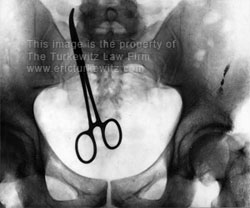
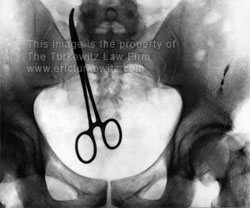
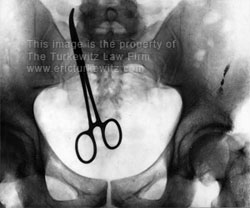
Since the case will always be thrown out without an expert (with the exception of the rare res ipsa case, such as the retained clamp above), the liability and causation experts are not optional. The attorney's time involved for litigating the case for a few years will entail record reviews, expert discussions, document drafting, depositions (and prep), possible motion practice, and 5-10 court conferences. It will probably be a two week trial if all goes very smoothly -- but depends on the judge's schedule, the schedules of the experts on both sides, and the longwindedness of the attorneys -- and can very easily go longer. It will, in sum, likely be several hundred hours, though it could be more. The opposing attorneys will be top-notch medical malpractice litigators because the insurance companies don't hire a jack-of-all-trades for this sort of thing. The out of pocket costs will easily be $30,000 -- $50,000, and quite possibly higher depending on the particulars of the case. If the case is lost at trial -- perhaps because of a defense expert who "goes the extra yard" for a fellow physician, a plaintiff less attractive than the defendant doctor, "bad facts" you didn't know about at intake, a tendency for juries to favor doctors, an unexpected scheduling problem that prevents a witness from appearing, or a plain old dispute as to the standard of care -- your money and time should all be assumed to be gone. It is unlikely you will recoup the disbursements from the client. You still have to pay the rent, personnel, utilities, computers and other costs of running a business. One should never assume that the case will settle, of course, but if it does it will probably only be after you have prepared for, or even started, the actual trial. (See: No, your medical malpractice case will NOT settle fast.) If you win and get paid back your disbursements and receive a fee, it will still likely take a few years. (You may want it to go quicker, but defendants do not, and the court may not be able to.) From a cash flow standpoint, this is not an attractive business model. And in New York, those fees if you are successful start at 30% and slide down to 10% as the recovery increases. And if another attorney did some work on the file and then forwarded it on to you, you will be sharing that fee with others. This, of course, assumes no appeals. If the trial court or appellate thinks the verdict is too high, it will be thrown out. (see, How New York Caps Personal Injury Damages) In short, the economics from a business standpoint are quite poor, which is why case selection becomes so important for the careful practitioner. It is also why the average malpractice recovery is so high, since the medical community enjoys de facto immunity for smaller cases based on these economics. To call this a high-risk endeavor would be a significant understatement. The vetting process for such a case is therefore critical, and will be the subject of a future blog posting. [This link added 5/22/07] Labels: FAQ-Medical Malpractice, Medical Malpractice Wednesday, April 11, 2007Medical Malpractice -- A Primer![]() I've been reading a lot of medical blogs lately, and medical professionals have been reading mine. And as many doctors have ranted about attorneys (such as those in the comments at Kevin, M.D. and Flea) I've noticed a lack of some basic legal principles on the subject of medical malpractice. Many think that any bad result brings on a lawsuit. Since those misunderstandings no doubt contributed to the rants, this posting serves as a basic primer on the subject. It is based on New York law, but there's a pretty good chance your own state is similar. We start with the definition of negligence. (Which I like to define by example: backing out of the driveway without looking.) Here's the court's more formal definition that will be given to the jury: Negligence is lack of ordinary care. It is a failure to use that degree of care that a reasonably prudent person would have used under the same circumstances. Negligence may arise from doing an act that a reasonably prudent person would not have done under the same circumstances, or, on the other hand, from failing to do an act that a reasonably prudent person would have done under the same circumstances.From there, the court discusses medical negligence. Note the part I placed in bold: Malpractice is professional negligence and medical malpractice is the negligence of a doctor. Negligence is the failure to use reasonable care under the circumstances, doing something that a reasonably prudent doctor would not do under the circumstances, or failing to do something that a reasonably prudent doctor would do under the circumstances. It is a deviation or departure from accepted practice.That part in bold is important so as to contrast with what is not malpractice: By undertaking to perform a medical service, a doctor does not guarantee a good result. The fact that there was a bad result to the patient, by itself, does not make the doctor liable. Doctors are liable only if they are negligent. Whether a doctor was negligent is to be decided on the basis of the facts and conditions existing at the time of the claimed negligence.The issue of what constitutes a "deviation from accepted practice" and what constitutes a mere "error in judgment" often frame the testimony and arguments of a trial. The error of judgment defense is so critical that, even if an error was made due to inadvertence, the defense is likely to be that it was done on purpose. Thus, the defense will be that this was merely an error of judgment and the jury shouldn't engage in Monday morning quarterbacking. It is also important to note that doctors are not held to the highest standards of knowledge. The jury will be told: The law recognizes that there are differences in the abilities of doctors, just as there are differences in the abilities of people engaged in other activities. To practice medicine a doctor is not required to have the extraordinary knowledge and ability that belongs to a few doctors of exceptional ability. However doctors are required to keep reasonably informed of new developments in their fields and to practice medicine in accordance with approved methods and means of treatment in general use. A doctor must also use his or her best judgment and whatever superior knowledge and skill he or she possesses, even if the knowledge and skill exceeds that possessed by the average doctor or specialist in the medical community where the doctor practices.Thus, at any malpractice trial, the plaintiff-patient will have to prove these three things (for which an expert is required): 1. The standard of care is breached with a departure from customary and usual practice, and not a mere error of judgment; 2. That the departure was a substantial cause of injury to the patient; 3. That the injury was very substantial. While those words don't exist as a legal threshold, they exist as a practical one. One can't spend hundreds of hours and tens of thousands of dollars to prove a case where the damages don't cover the time and money put forth. Since the cases are vigorously defended (see: No, Your medical malpractice case will NOT settle early), and defense malpractice attorneys form some of the elite of the trial bar, it would be rare for any attorney who knew what they were doing to take on a smaller case. I hope to follow up with a post on how malpractice cases are screened and selected. Addendum:
Labels: FAQ-Medical Malpractice Thursday, April 5, 2007Medical Malpractice Is Increasing In Many Hospitals![]() If you thought that increases in technology have caused medical errors to drop, then you would be wrong. A new study out today makes these findings based on data from 2003-2005:
(hat tip to Day on Torts) Labels: FAQ-Medical Malpractice Wednesday, March 28, 2007Medical Malpractice Insurers Price-Gouged Doctors During This Decade This comes from Americans for Insurance Reform, released today:NEW YORK -- Americans for Insurance Reform (AIR) announced today the release of Stable Losses/Unstable Rates 2007, a new study that examines fresh insurance industry data to determine what caused the most recent medical malpractice insurance crisis for doctors. The study by AIR, a coalition of over 100 consumer and public interest groups representing more than 50 million people, finds that the insurance crisis that hit doctors between 2001 and 2004 was not caused by claims, payouts or legal system excesses as the insurance industry claimed. Rather, according to the industry's own data:
(hat tip to TortDeform) Labels: FAQ-Medical Malpractice, Insurance Industry, Medical Malpractice Tuesday, March 27, 2007Practice Tip: One Way to Cross-Examine The Attractive Doctor A recent British study confirmed something most of us all know intuitively:Juries trying criminal cases are likely to be more lenient when the person in the dock is physically attractive, psychologists say.So how do you level the playing field if, for example, you have an attractive doctor as a defendant in a medical malpractice case? And by attractive, I mean not just physically, but someone with good credentials who makes an impressive personal appearance by their ability to speak well. This is important if the patient chose the doctor. The answer is not to knock them down, but to build them up in opening statements and jury selection (if your jurisdiction allows). Tell the jury they will like the defendant. After all, your client chose this doctor for surgery, right? Trusted him/her. Kinda like Marcus Welby. Therefore, it stands to reason, the jury will too. This does a few things: First, you have been dead honest. It is unlikely the jury expected you to "confess" this thing, but frankly, they will likely see it anyway if defense counsel is even mildly competent. Trying to tar a physician at the outset that your client previously trusted has enormous potential to backfire. The jury also now has very high expectations for the doctor. With the bar set so high, any slip-up or contradictory testimony is likely to be viewed in a harsher light. Assuming you have a solid case to take to trial, this doctor-defendant will also lay out the standards of care (while they still trust him/her) before being confronted with the deviations from care, the sloppy notes, the rushed surgery, failure to read the x-ray, or contradictions from deposition testimony. And there is something else at play here. The doctor was trusted, and the trust was betrayed. Betrayal often unleashes a flood of powerful emotions. The instinct for confrontation must, at times, be avoided, and saved for those few special moments when the witness, who has now been built up, strays from the straight and narrow. And if that happens, it will have far greater impact than if you had simply tried to trash the doctor from the outset. (Eric Turkewitz is a personal injury attorney in New York) Labels: FAQ-Medical Malpractice, Inside The Well, Trial Practice Monday, March 19, 2007Misdiagnosis Occurs In 15 To 20 Percent Of All Cases Misdiagnosis occurs in 15 to 20 percent of all cases, according to a new book out by Dr. Jerome Groopman called "How Doctors Think."In an op-ed in today's Boston Globe (The Mistakes Doctors Make) based on the book, Dr. Groopman writes: Why do we as physicians miss the correct diagnosis? It turns out that the mistakes are rarely due to technical factors, like the laboratory mixing up the blood specimen of one patient and reporting another's result. Nor is misdiagnosis usually due to a doctor's lack of knowledge about what later is found to be the underlying disease.In the piece, he deconstructs how a tumor was missed for years in a woman who had just given birth. The book is reviewed at this link to Time. The Time lead is for an overlooked tumor in an 8-year old. According to the review, [Groopman] learned that about 80% of medical mistakes are the result of predictable mental traps, or cognitive errors, that bedevil all human beings. Only 20% are due to technical mishaps--mixed-up test results or hard-to-decipher handwriting--that typically loom larger in patients' minds and on television shows.While some have a knee-jerk reaction to the attorneys who initiate suit on behalf of patients injured by malpractice, it's nice to know that some doctors are thinking about the actual problem. Because shooting the messenger, a time-honored way of changing the subject, is a lousy way of fixing a problem. (Globe op-ed via David Williams at Health Business Blog) Addendum 3/21/07 -- Dr. Groopman on The Colbert Report. Labels: FAQ-Medical Malpractice, Hospital Malpractice, Medical Malpractice Thursday, March 15, 2007Don't Get Sick On The Weekend Medical malpractice attorneys will not be surprised. A study released yesterday in the New England Journal of Medicine finds a higher death rate for people who go the hospital for heart attacks on the weekends than during the week. The reason is that fewer invasive cardiac procedures are performed.The study tracked over 200,000 patients and found about a 1% difference. And the reason for the difference, the authors suggest, may be due to a difference in staffing levels. These staffing concerns do not surprise me. I'm not sure if it's been studied, but I would bet the worst time to go a hospital is the July 4th weekend. And I think few doctors would disagree. New residents are created on July 1st, and existing residents move up a year to new responsibilities. Match that with many attending physicians taking off time for a holiday week, and a problem is created. When hospital staffing levels drop, patients suffer. Labels: FAQ-Medical Malpractice, Medical Malpractice Monday, March 12, 2007New York Personal Injury Claimants Can Protect Some Medical Records New York personal injury lawsuits have very liberal discovery rules when it comes to furnishing medical records. Almost any medical record, it seems, is fair game under the civil practice rule for discovery of all "material and necessary" documents.But the First Department of the Appellate Division wrote a few days back that a tougher standard exists for more sensitive medical data, particularly with respect to HIV status and substance abuse materials. Applying the standard of the Health Law or Mental Hygiene Law instead of the Civil Practice Law and Rules, the court noted that a court should grant an order for disclosure of confidential HIV related information upon an application showing a "compelling need" for disclosure of the information for the adjudication of a criminal or civil proceeding. Since the motion court had made its determination using "material and necessary" standard and not the "compelling need" standard, the lower court decision was reversed and remanded for consideration under the higher standard to see if such records exist and determine their discoverability (if any). The decision in this malpractice case is here. Labels: FAQ-Medical Malpractice, FAQ-Personal Injury Monday, February 19, 2007Medical Malpractice -- Litigating the Surgical Error Case
The other day I wrote of Notre Dame football coach Charlie Weis suing his doctors based on a failure to recognize life-threatening complications after his gastric bypass surgery. This resulted in Weis bleeding internally for more than a day and ultimately incurred permanent nerve damage to his legs.
The story highlights a sharp issue in surgical error cases: Simply causing an injury during surgery is one thing, but the failure to recognize that injury is something else entirely. The latter is more likely to be provable malpractice than the former. Those who litigate these cases know the drill well: The potential client calls regarding a bad surgical result. Simply having a bad outcome, though, is not malpractice. If the problem was seen at the time and the surgeon rendered treatment for it, the case may well be rejected by experienced malpractice attorneys so long as the injured body part was in the surgical field. There are two reasons for the likely rejection of a case regarding a surgical error: First, if for example a surgeon nicks an adjacent organ, close to where s/he is operating, it is the type of surgical risk about which jurors are very forgiving, even if it shouldn't have happened. But because it is also a risk, it is therefore incumbent on the surgeon to check to make sure such injury did not occur. The failure to recognize that the injury took place is often, therefore, the actionable malpractice. Other FAQs on New York medical malpractice from this site:
Labels: FAQ-Medical Malpractice Wednesday, February 7, 2007FAQ: Statute of Limitations in Medical Malpractice Cases
New York's statute of limitations is just 2 1/2 years in medical malpractice cases, which is brutally short when it comes to the "failure to diagnose" cancer cases. Often the malpractice is not even known (because the diagnosis was missed) until after the statute of limitations has passed.
A few days ago, the Appellate Division decided Trimper v Jones, and this demonstrates how medical practitioners get immunity from suits regarding a failure to promptly diagnose a cancer: [D]ecedent sought treatment from Dr. Jones for a flare-up of eczema and that he subsequently showed her a mole on his left shoulder that concerned him because it seemed to be growing. Dr. Jones excised the mole and had it biopsied in October 1999. Dr. Jones advised decedent on October 29, 1999, through plaintiff, that the lesion was a minor nevus and was not malignant. Decedent next saw Dr. Jones in January 2001, when he experienced another flare-up of eczema, and he again saw Dr. Jones in March 2002 for a flare-up of eczema. At that time, he pointed out a lump under his left arm, and Dr. Jones referred him to his internist. Upon removal of the lump by a surgeon, it was determined that decedent had metastatic melanoma. Decedent did not see Dr. Jones again, after his appointment in March 2002. Plaintiff commenced this action in February 2003, and defendants thus met their burden of establishing that the statute of limitations, which began to run in October 1999, had expired. While New York does allow for some exceptions to the time limitations rule, they are not applicable in this type of matter. One could conceivable extend the statutory period under the "continuous treatment doctrine" if treatment was continuing for the same condition that gave rise to the lawsuit. But if the diagnosis was missed there is unlikely to be any treatment for that condition. New York, unlike some other states, does not have the time limitation starting to run from the date of discovery of the malpractice. The effect is to give immunity to medical care providers who miss a diagnosis, tell a patient all is well, and such error is not discovered until the 2 1/2 year period has elapsed. In a prior post I had discussed the need for speed sometimes in contacting an attorney. Sadly, it is sometimes impossible. For other FAQs on New York medical malpractice, click this link. Labels: FAQ-Medical Malpractice, Medical Malpractice Wednesday, January 24, 2007The Medical Malpractice "Crisis" Hoax -- From Public CitizenAnd to protect good doctors from junk lawsuits, by passing medical liability reform.Good doctors, however, don't seem to be the problem. Since 1991, according to the report, 5.9 percent of U.S. doctors were responsible for 57.8 percent of the number of medical malpractice payments. That is an extraordinary statistic. A few other points from the report, and things to think about when someone advocates closing the courthouse door to those injured by negligence:
Is our society litigation crazy? Apparently not. It appears from the Public Citizen report that only 5-10% of those killed by medical errors had any recovery from a malpractice suit. From the report: "One-third of malpractice cases resulting in a malpractice payment in 2005 (4,504) involved the death of a patient. Yet, as a 1999 landmark study by the Institute of Medicine showed, an estimated 44,000 to 98,000 patient deaths occur each year as a result of preventable medical errors in hospitals." Public Citizen took their data from the National Practitioner Data Bank (NPDB), which contains data on malpractice payments made on behalf of doctors as well as information about disciplinary actions against them by state medical boards or hospitals. Just reading the table of contents of this report is enough to make anyone think twice about the propaganda spewed by advocates of tort "reform." Key Findings Labels: FAQ-Medical Malpractice, Medical Malpractice, tort reform Tuesday, November 28, 2006How much are the legal fees in a personal injury case?
In part one of this FAQ, I discussed 1) the need to find a lawyer in your area, and; 2) concerns one should have if they are solicited by an attorney. Now we turn to legal fees:
3. How much are the legal fees in a negligence case? Most New York personal injury law firms operate the same way: First, there is no legal fee for an initial consultation. If the case is taken it is usually done on a contingency basis, which means that the lawyer gets paid only if the client gets paid. This is an incentive for the lawyer to only take good cases with serious injuries, and it relieves a burden from clients who would not otherwise be able to afford a good attorney. Legal fees are governed by the Judiciary Law, which establishes a limit of 1/3 of any recovery as the fee, with the exception of medical and dental malpractice cases where the fee is lower (see below). Over the course of the representation, there will be expenses that most attorneys will generally advance on behalf of the client, such as for medical records, experts, stenographers, and certain court filings. There may be exceptions to this, and a good attorney will candidly discuss them with you. (For example, if a settlement offer is made that the attorney recommends accepting, and the client refuses, the client might be asked to front any additional expenses.) At the time of recovery, the firm will first reimburse themselves for the cash outlay for expenses and then do an apportionment of the remaining recovery. For example, if a case settles for $100 and there was $10 in expenses paid by the attorneys on behalf of the client, then the $10 would be paid back to the attorney and the remaining $90 would be used to determine the legal fee. 4. What are the fees in New York medical malpractice and hospital malpractice cases? Medical, dental and hospital malpractice cases are also governed by the Judiciary Law, which sets forth a legal fee "sliding scale" structure that looks like this: 30% of the first $250,000 of the sum recovered;Thus, while malpractice cases are significantly more difficult to bring, and cost a great deal more (due to the necessity of hiring additional experts), the fees are lower than in other New York personal injury matters. In fact, they are some of the lowest in the nation. Because of this, many New York firms have a much higher threshold barrier in taking malpractice cases. Essentially, the lower fees, greater expense and significant technical difficulty of bringing such suits has given virtual immunity to the medical profession for smaller claims. Samples of some of the New York medical malpractice cases my firm has handled can be viewed at this link, and they demonstrate the complexity of many matters. In future FAQs, I hope to cover the need for speed in certain things, the issues around how to "value" a potential case, and other subjects. Labels: FAQ-Medical Malpractice, FAQ-Personal Injury, Medical Malpractice, Personal Injury Monday, November 20, 2006FAQ - New York Personal Inury Law - Part 1
Since many of the same questions recur in personal injury law, it makes sense to write about them. Here then is the first installment of Frequently Asked Questions:
1. There are so many attorneys and legal websites, how do I select a law firm?
Any law firm that solicits you, your family or friends at a hospital should be immediately reported to the District Attorney or the local disciplinary committee. This "ambulance chasing" is illegal, unethical and embarrassing to the profession. Further, if such conduct takes place at the start of representation, it will be impossible to trust the attorneys later on to do the right thing for you when you seek advice on how to proceed. I don't care how good they claim to be, if they are unethical than you should look elsewhere, or if you have already hired them, change attorneys. In the next FAQ post, I'll cover legal fees for general liability cases as well as the more complex medical malpractice suits. Labels: FAQ-Medical Malpractice, FAQ-Personal Injury, Personal Injury
The New York Personal Injury Law Blog is sponsored by its creator, Eric Turkewitz of The Turkewitz Law Firm. The blog might be considered a form of attorney advertising in accordance with New York rules going into effect February 1, 2007 (22 NYCRR 1200.1, et. seq.) As of July 14, 2008, Law.com became an advertiser, as you can see in the sidebar. Law.com does not control the editorial content of the blog in any way. Throughout the blog as it develops, you may see examples of cases we have handled, or cases from others, that are used for illustrative purposes. Since all cases are different, and legal authority may change from year to year, it is important to remember that prior results in any particular case do not guarantee or predict similar outcomes with respect to any future matter, including yours, in which any lawyer or law firm may be retained. Some of the commentary may be become outdated. Some might be a minority opinion, or simply wrong. No reader should consider this site (or any other) to be authoritative, and if a legal issue is presented, the reader should contact an attorney of his or her own choosing for advice. Finally, we are not responsible for the comments of others that may be added to this site.
|
Subscribe by Email
|
|||||||||||||||||||
![]() |
![]() |
![]() |
|||||||||
![]() |
An Affiliate of the Law.com Network
|
![]() |
|||||||||
![]() |
![]() |
![]() |
November 2006
December 2006
January 2007
February 2007
March 2007
April 2007
May 2007
June 2007
July 2007
August 2007
September 2007
October 2007
November 2007
December 2007
January 2008
February 2008
March 2008
April 2008
May 2008
June 2008
July 2008
August 2008
September 2008
October 2008
November 2008
December 2008
January 2009
February 2009
March 2009
April 2009
May 2009
June 2009
July 2009
August 2009
September 2009
October 2009
November 2009
December 2009
January 2010
February 2010
March 2010
Copyright © 2007 Eric Turkewitz & The Turkewitz Law Firm
About the New York Personal Injury Law Blog:
An attorney's blog on New York personal injury law,
medical malpractice, the civil justice system
and cases of interest.
|
|
Design by Lidija Tomas Design / Studio 4D |