![]() |
||||||||||||||||||||
|
Eric Turkewitz, The Turkewitz Law Firm, New York, NY |
||||||||||||||||||||
Thursday, June 4, 2009Did Sotomayor Violate NY Ethics Rules in Private Solo Practice with "& Associates" Name? I was skimming the questionnaire of SCOTUS nominee Sandra Sotomayor to look back at her life in private practice. And I found this starting on page 143 of the Committee Questionnaire:ii. whether you practiced alone, and if so, the addresses and dates; Yes, with Sotomayor & Associates, 10 3rd Street, Brooklyn, New York 11231, from 1983 to 1986, but this work was as a consultant to family and friends in their real estate, business, and estate planning decisions. If their circumstances required more substantial legal representation, I referred the Now Sotomayor was a prosecutor up until 1984 and started in April of that year with Pavia & Hartcourt, according to the questionnaire. That means she had her private law firm, likely a home office based on her modest description of the practice, that overlapped both her prosecutor's position and her associate's position at Pavia & Hartcourte. So the question here is not whether she had permission to have that private firm, as I suspect she must have, but rather, why she called it "Sotomayor & Associates"? Did she have any associates when she was advertising herself in that manner? My guess is no, given that this was a side business that she says was devoted to consulting for family and friends. And if she had no associates, then it is a no-no to tell the world that you do. That's misleading. From the American Bar Association comes this all-inclusive statement that such conduct is prohibited in every state: Are there any Associates (or "Law Groups") in the House? In New York, the conduct would fall under DR 2-102, which bars misleading advertising on a letterhead. [See Comment 2] If in fact Sotomayor had no associates at her firm, it would appear she overstepped the bounds of self-promotion by making her firm seem bigger than it was. Now I am well aware that there are a whole lot more serious ethical violations that take place. But I do my fair share of writing on the subject of advertising and self-promotion when it comes to practicing lawyers, and it wouldn't be fair to others to give Sotomayor a free pass on the subject. Previous Sotomayor posts here: Update: I Googled the law firm name with this query: "Sotomayor & Associates" Sonia. I did not find any discussion of Judge Sotomayor's private practice under that firm name. Labels: Attorney Ethics, Judiciary Monday, June 1, 2009Sotomayor is Most Like Which Baseball Figure? (Yes! It's a real question!) Sure, I know what you're thinking. That my question in the headline is silly, while everyone is probing every legal angle they can find on Supreme Court nominee Sonia Sotomayor. Every word she has uttered or written is being discussed and debated -- while being cogitated, contemplated, ruminated and regurgitated in various hashings and re-hashings -- all in the hopes of finding something controversial to be meaningfully exciting. And we haven't even had hearings. But you should know that my question isn't simply about whether this particular Yankee fan "saved baseball," or not. No, this is a question that must get asked because it will be asked whether we like it or not.It will get asked, you see, because Oyez.org, which runs a super-serious Supreme Court website, understands as I do that there is a passionate interest in baseball at the Supreme Court. If you don't know about Oyez's multi-media Supreme Court web site and its baseball quiz, here is an intro: The Oyez Project began in the friendly confines of Wrigley Field in the late 1980s as the Chicago Cubs continued to break the hearts of its many diehard fans. It was during one such game that the idea of creating a multimedia-based Supreme Court experience took root. The first iteration was a series of complex HyperCard stacks built on a baseball-card metaphor. The "Hitchhiker's Guide to the U.S. Supreme Court" demonstrated the power of multimedia integration with serious academic content. Many students worked on various versions before the development of a web-based application. The development of a web-based version of the project stems from the foresight of Richard Barone and Joe Germuska of Northwestern's then nascent Learning Technologies Group... Oyez has a biography of every Supreme Court justice, and at the end of each bio they have a quiz, asking the reader to choose which baseball figure a particular justice is most like. For example, John Jay, the first Chief Justice, is compared with Kenesaw Mountain Landis, the first commissioner of baseball. Philly fan, and former fantasy camp player Sam Alito's bio is here and you can take your own peek to see how well you do with a modern day jurist.Oyez gives this brief explanation of its quiz: "The Law-Baseball Quiz" debuted in the New York Times on April 4, 1979. Created by law professor Robert M. Cover, it compared baseball players and Supreme Court Justices. Unlike Eddie Gaedel, the midget in baseball's most publicized stunt, the Quiz has delighted and stumped enthusiasts on many occasions since it first appeared...So, given that SCOTUSblog guru Tom Goldstein opined that Sotomayor is a shoo-in, and that the only glimmer of controversy is whether she ever made judgments based on race, and this turns out to be a non-issue when her record is examined, we must turn to the burning question of the day: Which baseball figure will Sotomayor be compared with from the world of baseball? And if you thought you would just Google "First Hispanic Baseball Player" and be done with it (Esteban Bellan, 1871, Troy Haymakers) don't be so quick on the trigger. For color barrier-breaker Thurgood Marshall was not compared with Jackie Robinson, but with Emmet Ashford, the first black umpire. Oyez makes you think. (Sandra Day O'Connor picked up the Robinson connection.) And there is also that background issue of whether Sotomayor even qualifies as the first Hispanic justice, given Benjamin Cardozo's Portuguese roots. Which brings us to the penultimate Sotomayor question -- since the dead horse beating rule has not yet been invoked on all things Sotomayor nor has anyone successfully jumped the shark here -- will she be compared with an Hispanic player? A Puerto Rican player? A woman umpire? Or someone that isn't nearly so obvious? Let the guessing begin... Sotomayor-Yankee photo find: Underneath Their Robes Labels: Judiciary Thursday, May 28, 2009Advice and Consent on SCOTUS Pick - First Time in Decades? The comments were buried deep in an article in today's New York Times on the process by which President Obama nominated Judge Sonia Sotomayor for the Supreme Court. Obama, it seems, did the unheard of practice of calling every member of the Senate Judiciary Committee seeking their input.While the Constitution requires (Article II, Section 2, paragraph 2) the advice and consent of the Senate for Supreme Court justices, stating that the President: ...shall nominate, and by and with the Advice and Consent of the Senate, shall appoint Ambassadors, other public Ministers and Consuls, Judges of the supreme Court...the reality is that Presidents, at least in recent memory, ignore the advice part and simply ask for consent. Presidents are funny that way. According to Republican Senator Charles Grassley, however, in his 29 years on the Judiciary Committee Obama is the first President to call and actually seek that advice. From the article, with my emphasis: As he narrowed his choices, aides said, Mr. Obama kept asking for more original writings by the candidates, and he called every member of the Judiciary Committee, something few if any presidents have done.A President that actually cares about the Constitution. What a concept. Labels: Judiciary Monday, May 18, 2009Judge Sotomayor and the First Amendment (And the Pending Case)
Judge Sonia Sotomayor of the 2nd Circuit Court of Appeals is on the short list for Justice David Souter's soon-to-be-vacant Supreme Court seat. At SCOTUSblog, Tom Goldstein reviews some of her civil appellate opinions, and notes that "Sotomayor has considered First Amendment issues relatively infrequently."
It's worth noting then, that she currently has a First Amendment case before her that I've discussed with some frequency on this blog, and one that may ultimately affect all attorneys: The issue of New York's new attorney advertising rules in Alexander & Catalano v. Cahill. The case, argued January 22nd before a three judge panel comprised of Sotomayor, Guido Calabresi and John M. Walker Jr., deals with a number of attorney advertising and anti-solicitation ethics rules that went into effect in 2007 (see, New Attorney Advertising Rules (Is This Blog an Advertisement?), which includes a 30-day moratorium on attorney advertising after a mass disaster. That particular rule was upheld in the court below. The problem with that regulation, as I've discussed, is not so much the 30-day time period, but the difficulty in defining advertising in the context of the web. Just trying to figure out who must comply is often difficult. Subsequent to oral argument, the real-world effects of the regulation were seen when Continental Flight #347 went down in Buffalo, and I followed the myriad ways that advertising/solicitation could take place that might violate the rule. And that the very ambiguity of trying to figure out where the bright line of solicitation exists raised First Amendment issues. Some of the those posts are here:
It is now almost five months since argument was made. Whether a decision comes out while the SCOTUS nominating waiting game goes on, or after it is over, remains to be seen. (My comments on one of the qualities the nominee should have are here: The SCOTUS Nominee and The Tissue Box Test) Labels: Judiciary Tuesday, May 12, 2009The SCOTUS Nominee and The Tissue Box Test I want to talk about tissues and the law and Supreme Court nominees. As the legal blogosphere and political Washington buzz about the judicial philosophy President Obama will be looking for in a judge to replace Justice David Souter -- and what underrepresented social niche the nominee will come from, be it female, black, Hispanic, gay, etc. -- what I want to know is if the nominee has ever had a box of tissues on his or her desk. For clients.I want a nominee that knows what it's like to have someone cry in their office. I want a nominee that has been there when someone tells them that their mother/father/brother/daughter was arrested/injured/killed and that they are desperate for help. I want a nominee to know what it's like to see real people -- not political philosophies or corporate giants trying to add a few cents per share to their earnings -- in their office in distress, and to represent them. I want a nominee that has experienced being the last, best hope for a downtrodden individual and the problem brought in the door. I want someone who knows what it's like to be the underdog against corporate or government interests. I want a nominee to know what it's like to make the rent. To pay an employee. From their own pocket and not someone else's. To answer the phones. To argue the case. To battle against deception. To actually practice law in the real world instead of in the ivory tower under the protective wings of others. Our court is stuffed with Harvard and Yale law school grads, most of whom I think never actually tried a case for a private client, financed a case, or fought for an individual before ascending to the lofty heights of the appellate bench. Last week Norm Pattis wrote on why we need a trial lawyer on the Supreme Court. He said: A trial lawyer knows about raw human need and the law's rough edges. It is a trial lawyer's job to find the intersection of terror, fear and tears with the high doctrine and principle of the law. Not one member of the current court has ever sat with a client and his family during jury deliberations to discuss what will become of a family should the client be sent to prison.We don't have anything resembling a cross-section of society on the court. We don't have people who look at broken bodies up front and personal in their offices. That's why we have the tissue box. It isn't to wipe our own noses. At Simple Justice, Scott Greenfield picked up the Pattis theme with this about the birth of the trench lawyer movement: In the trenches, we experience life, along with the huddled masses who care far less about whether a judge is a constructionist or originalist or texturalist. We know the consequences of decisions, together with the consequences of delayed decisions. Our view is ground level, and our understanding of how badly the law can hurt comes from holding the hands of the maimed. We know that people lie, cheat and steal, but we know that isn't limited to the defendants. We have philosophies, but we live realities.Perhaps life's experience representing individuals will mean something different to the practitioner-judge than the philosopher-judge when the government strips away rights. Or corporations do a cost-benefit analysis and determine a few deaths aren't so bad for their product because the profits will still exceed the legal payouts. If Obama wants a judge who "understands that justice isn't about some abstract legal theory or footnote in a casebook" then he better find a lawyer who once had that tissue box on the desk for the clients. ----------------------- More:
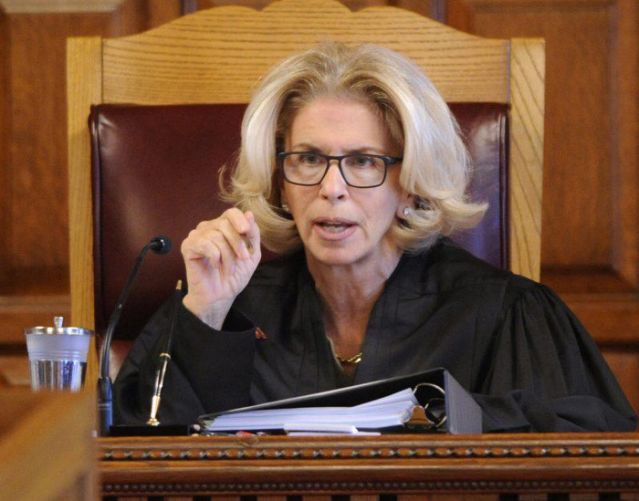
Labels: Judiciary Wednesday, December 31, 2008Chief Judge Kaye Keeps Door Open On Hillary's Senate Seat![]() Dan Slater from the WSJ Law Blog interviewed New York's chief Judge Judith Kaye today on what she will do next now that she is retiring. Two weeks ago I said she should be considered for Hillary's Senate seat, with Caroline Kennedy being a particularly bad choice. (See, Chief Judge Judith Kaye -- For U.S. Senate) And the last question Slater asked was on that point. And the Chief Judge kept the door open with this non-answer: We've heard rumors that you might replace Hillary Clinton in the senate. Labels: Judiciary Monday, December 29, 2008Chief Judge Judith Kaye, for US Senate, Gets A Bit of Attention![]() The accolades for retiring New York Chief Judge Judith Kaye continue, with a story in today's New York Times. There is also a humble tribute to Kaye by Lawrence Cunningham at Concurring Opinions, calling her "One of the country's greatest contemporary judges." She leaves the bench January 15, 2009, having won admiration from people from across the political spectrum. What will she do now? Two weeks ago I advocated that she be considered for the U.S. Senate seat being vacated by Hillary Clinton. Now Daily News columnist Bill Hammond makes the same suggestion. The idea of Caroline Kennedy getting the seat because of her breeding makes me deeply uncomfortable. That is the worst possible reason to hand someone a Senate seat on a silver platter. Anyone else think Kaye should be considered? Labels: Judiciary Wednesday, November 19, 2008How One Brooklyn Courtroom Wastes $10M Each YearThe scene for this nightmare is one of our local trial courts, the Supreme Court Building in Brooklyn. The courtroom is called the Central Compliance Part, or CCP as it is known to its denizens. And each day in this massive ceremonial room, a couple hundred hours of lawyers' time is wasted. When this is annualized, the numbers are truly frightening. To understand this misery, a little background is in order. All civil litigation starts, after the filing of complaints and answers, in an "Intake Part" where a preliminary conference is held and a discovery schedule is worked out. At that preliminary conference a compliance conference date is also set to mop up any outstanding issues. If your adversary decides to show up on time you could be done in a half hour. But when you return for that compliance conference, you will not leave in a half hour. No way. The calendar will have over 100 conferences and motions on it. Over the course of a morning some 200 lawyers can easily come and go through this model of epic legal inefficiency. Today's calendar, for example, had 75 conferences. It looked like this: /ConferencesCCP.pdf Now add to that the motion calendar with 72 motions and cross-motions involving 54 different cases, which looks like this: /MotionsCCP.pdf Now ask all the lawyers to show up at 9:30, in one place. Even if you can work out any remaining issues with your adversary, and you can accomplish what you need in 10 minutes, which is often the case, you may not leave this room for two to three hours. Even if you work everything out and submit a proposed order with no issues that need judicial intervention, you might still wait for an hour for a signed order to be returned to you. And this waste doesn't count the time going to and from court. The system is so bad that a cottage industry of "per diem" lawyers has even grown up around it. These folks will, for about a hundred bucks, take care of your conference or routine motion. They make their living by running around from courtroom to courtroom on behalf of others who have conflicts, or who can't spare half a day to do 10 minutes of work. While this may be seen as a boon to some who want to go this route, it also means that if you are on the other side of a per diem who has booked several different things in different courtrooms, you may be left cooling your heels waiting, and waiting and waiting, while they make their living elsewhere and waste your time. This is no way to run a courthouse. The lawyers all know it. The judges all know it. The clerks all know it. Everyone hates it. Except for the per diem lawyers running around the courthouse putting their band aides on a septic system. Having now ranted a bit, let me add my suggestions for fixing this very broken system that is wasting hundreds of hours of legal time every day on matters of simple discovery. First: The court must create an electronic template for their compliance orders that the attorneys can use, with required dates for completion and a future conference. That is the easy part; Second: Every Preliminary Conference should have a provision whereby the attorneys are required to have a conference call at least 20 days before the compliance conference so that they can use that template to create a stipulated order to complete outstanding discovery; Third: All completed orders can be submitted via email to the court, with blanks left for future court dates and a place for the attorneys to note their availability or unavailability due to conflicts. The court then prints, signs, and files and the lawyers retrieve the order via eLaw. Fourth: Any unresolved issues must be subject to a court conference call with one of the court attorneys. Scheduling is done by email with a specific time to call in; Fifth: In the event of a real issue that has defied resolution, or an unreasonable or obstreperous lawyer is involved, a court conference is scheduled; Sixth: Some lawyers don't, ahem, get paid to move cases efficiently. They get paid to be unreasonable. Wasted time means more billable hours. The court has to start treating the directives in preliminary conference orders more seriously and be stricter with problematic firms as the judges do in the federal system. This will ultimately force lawyers to work things out, or risk the wrath of the court for being unreasonable or routinely ignoring orders. The system is broken. Badly. It needs to be fixed. And so, to the Powers That Be in Brooklyn, I beg and beseech you. Fix it. Just 200 hours of wasted time a day -- and it is really much more than that -- is 1,000 hours a week, which is over 50,000 hours per year. At $200/hour that is $10,000,000/year. Out of just one courtroom. Labels: Judiciary, Law Practice Thursday, November 13, 2008Chief Judge Judith Kaye Says Goodbye New York's Chief Judge, Judith Kaye, has hit the mandatory retirement age of 70. She gave her farewell speech yesterday, according to this story in today's New York Times.Elevated in 1993 under Gov. Mario Cuomo, she was not only the first woman to hold the top spot, but also served longer than any other chief. She had been an associate judge for 10 years before that, giving her 25 years up on Albany's Eagle Street where the courthouse sits. She has opined on everything from jury selection to court consolidation to judicial salaries, in which she is the lead plaintiff in a landmark suit against the executive and legislative branches to force higher pay. And on that last subject, she held forth again during her remarks. According to the Times: She also restated the case for a pay raise for judges, even in tough fiscal times. She said in her speech that she did not want to talk about the lawsuit she filed in April to force lawmakers to increase judges' salaries. But she said it was "heartbreaking and frustrating and demoralizing beyond description" that "our proud judiciary" -- some 200,000 full-time employees, including judges -- had been the only part of state government to be denied "the increases they seek."Her lasting legacy might be (based on the fact that the Times led with this) that judicial salary lawsuit. The Times elected to lede with this: After delivering what she called her "swan song," an hourlong speech on Wednesday in which she said her role as "chief plaintiff" in a lawsuit over judicial pay "sickens me," the state's chief judge said she had not endorsed anyone as her successor.Judge Kaye -- and this probably comes as no surprise from a blog that (tries) to focus on New York law -- has been the subject of more posts here than any other individual. Since I only started two years ago, my posts on here deal primarily with her flip-flopping decision on whether she should, or should not, try to gain those long-needed judicial pay raises by suing the other branches of government. This is a wrap-up of my posts on Judge Kaye:
Then in July she reversed herself, setting off a furious brawl among the judiciary when she said she would not bring the suit. Then in December our Chief Judge Hamlet flip-flopped again and said she would bring suit.
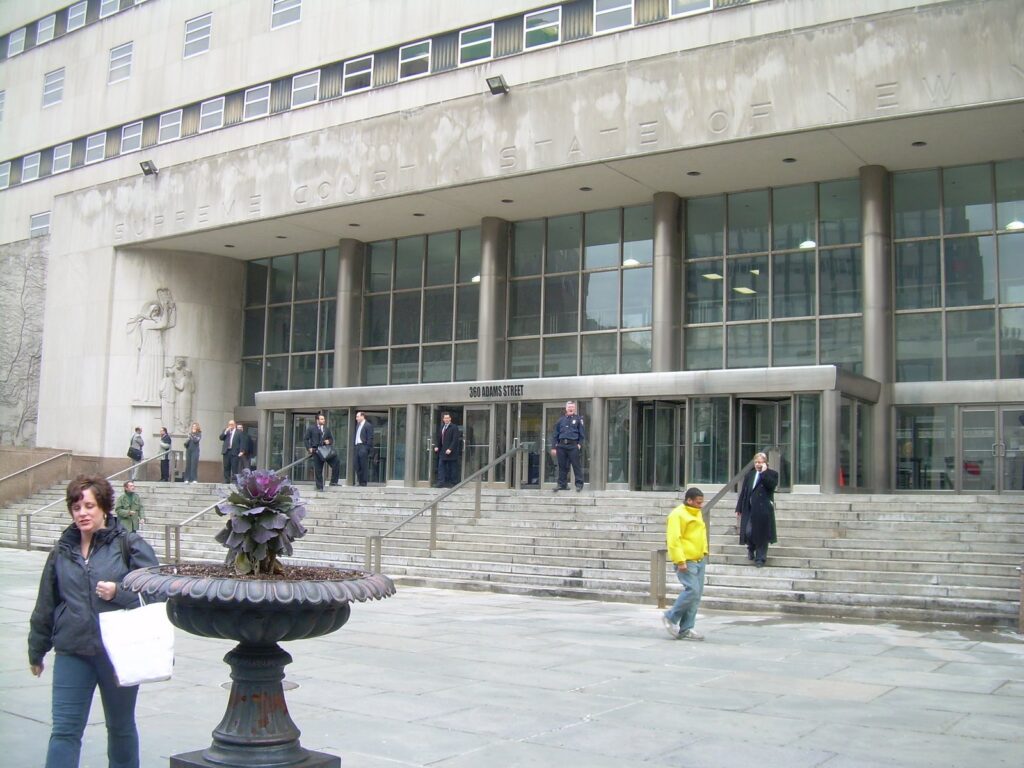
Labels: Judiciary Tuesday, October 28, 2008The Ethical Problem of Electing Judges New York elects judges, and when judges are up for election, where to do they get their contributions from? That's right. Lawyers. Lawyers that often appear before them. The judicial candidates are forbidden from asking who gave what. But the information is available to the public on the internet.Mark Lagerkvist at Judicial Reports has a piece tomorrow on this subject and the problems inherent in such a system (The System is the Crime). The piece focuses on the contributions from the well-regarded Albany firm of Powers and Santola, a firm that does what I do, plaintiffs personal injury and medical malpractice. And the article is well worth the read because John Powers, a former President of the New York State Trial Lawyers Association, acknowledges the problems inherent in the system as he also discusses his firm's contributions of $10,000 and more to various judges before whom the firm practices. When election day comes, as it is now, my local train station is always chock fully of politicians showing their faces and talking to people. Judicial candidates make regular appearances. And that is one thing I was never comfortable with; politicking judges. While judges can never be above politics -- and anyone who watches a Supreme Court confirmation proceeding can see that -- the idea of asking for votes doesn't seem to be an improvement over the appointment process. It debases the judiciary and, I think, leaves a taste in the public eye that the judges are little more than politicians. I'd like to see nominations by the executive and confirmations by a super-majority of the legislature (or legislative committee). That would protect everyone against radicals appearing from the wings of either party. It seems to be the safest way to get protect the public. And the judiciary. ================== Note on courtroom sketch - That is Judge John Sirica with H.E. Haldeman on the witness stand. The original hangs in my office. Labels: Judiciary Sunday, July 20, 2008The Worst Supreme Court Decision Ever![]() Over at Concurring Opinions, Kaimipono Wenger asks the readership about what the worst "still-current" Supreme Court decision. And the answer, to me, is a no-brainer. As I discussed back in January 2007, when I had a readership of three, the classic bombs were Plessy v. Furgeson, Dred Scott and Korematsu. But Bush v. Gore stands in a league of its own, well above the others. For each of the others could be reversed by the voters either in Congress or by constitutional amendment. But since Bush v. Gore dealt with the actual disenfranchisement of voters, it could not. All legally cast ballots should have obviously been counted, since it is the people that hold actual power in a democracy. One simply can't compare a reversible decision with an irreversible one. Labels: Judiciary Thursday, July 17, 2008Kaye v. Silver, Judicial Pay Raise Suit (Today's Argument) I just came back from the courtroom where the matter of Judith Kaye (NYS Chief Judge) against Sheldon Silver (Speaker of Assembly) is being argued. This is the judicial pay raise suit that is, perhaps, the most unique suit ever filed in the state. The Assembly leader, Senate leader and Governor were all sued by Chief Judge Kaye in her capacity as head of the judiciary. (See: New York's Chief Judge Kaye Finally Brings Suit for Judicial Pay Raises)Supreme Court Justice Edward H. Lehner was taking the arguments on summary judgment motions, just minutes after I had argued one of my own cases. So I stuck around. I listened for over an hour before having to bail out. And it looks like it could go all day. The Chief Judge has created a thicket of issues by suing the Assembly, Senate and Governor, with the case being heard by the judiciary. Justice Lehner noted at the outset that he stands to benefit from a raise if he were to order it. With about a dozen lawyers and assistants involved in the well of the courtroom or sitting in the gallery, it was at the outset hard to tell the lawyers without a scorecard. Numbers and names on the back of suits would have helped. Peering out over his reading glasses from his dark wood paneled courtroom at 60 Centre Street -- and using the same demeanor he used to discuss whether a fall on wire on a floor was a slip or a trip, at issue on the case preceding this -- Justice Lehner delved into the legal morass of what he called "the most novel case of my court career." (Complaint) Here is a sampling of the issues presented, just during the time I was there: Is state Supreme Court the proper place for the case, or does it belong in the Court of Claims? (I hit this issue the day after suit was brought: Did New York's Chief Judge Sue State in the Wrong Court? ) Counsel for the legislature says this is a salary dispute that belongs in the Court of Claims while the Chief Judge argues that the money is ancillary to the constitutional issues that have been raised and that constitutional issues belong in Supreme Court. Next up, Justice Lehner wanted to know what, exactly the co-plaintiff "New York State Unified Court System" was, as opposed to the Office of Court Administration, and whether or not a "system" was a proper plaintiff in this action. Who, he wanted to know, actually employs the judges? Is this an agency, a department, a legal entity of some kind that can bring a suit with Chief Justice Kaye? That answer came definitively from the attorney for the OCA, who asserted it was an independent institution of government established by the constitution. And while it has been a party before, both as plaintiff and defendant, no one, it seems, had yet raised the issue of whether it was proper as an entity as a party. The third issue, and we are still a long ways from the actual merits of the case, was whether Chief Justice Kaye was suing solely in her representative capacity of the judiciary, or in an individual one also. Defendants had raised objections to her acting as a representative. Wouldn't this issue be resolved, the judge wanted to know, if we just amended the caption to make her an individual plaintiff also? That would raise the question -- and this wasn't mentioned in the oral argument -- about what happens if this thing doesn't settle and the case goes up to the Court of Appeals? Can Chief Judge Kaye hear her own case? While the instinct is to say "of course not," the fact is that every judge that touches this case will be impacted the same way. Even though she is plaintiff, this is really a class-action type of case in which the entire judiciary is affected. Next in the dock, Justice Lehner wanted to know the ramifications of the Governor threatening a veto of pay raise legislation if the legislature didn't also vote for campaign finance reform. He was looking for a moral response devoid of legalisms, but alas, lawyers being lawyers, defense counsel couldn't say, "Of course that's wrong! But the remedy is at the ballot box," which any sane person would have said because it's pretty obvious. Finally, now 45 minutes into argument, the real issues started to get touched upon, as Justice Lehner asked, "Why are we here?" The fundamental problem is that the legislature and executive branches are linking the judicial pay raise to other issues, principally a legislative pay raise. But Judge Lehner, in another case (Larabee v. Governor), had already rules that unconstitutional. Defense counsel wanted him to reverse himself, which the judge obviously couldn't do since that other case was not before the court at the moment. But it didn't stop them from trying. It's at this point, when they start to get to the merits that Chief Judge Kaye's counsel, Bernard Nussbaum of Wachtell Lipton, starts to get particularly impassioned and animated, his arms flailing this way and that while he speaks, to the point I thought he was going to inadvertently smack one of the other lawyers. (Since his legal credits include representing Bill Clinton, I don't think my characterization will hurt him any.) Watching what lawyers do with their hands and arms while in the middle of a high-pressure argument can be fun. One lawyer kept his nervously twitching hands locked behind him while he spoke (and spoke well, I might add) while another kept them folded calmly over his belly. OK, I'm digressing, back to the action... Nussbaum goes on to argue about discrimination of the judiciary, which is the heart and soul of his case. Judge Lehner suggests that if he wins on just one of his issues, that will be enough, but Nussbaum wisely asserts he wants all issues decided in case the Appellate Division or Court of Appeals (chief Judge Kaye, presiding) should toss out the one he wins on. Then it was on into politics and Albany's legendary "three men in a room" that basically decide everything that happens in our dysfunctional capital. One of those three men, the judge notes, is changing as we argue (Joe Bruno, Senate Majority Leader, will resign his office tomorrow.) Everyone, Nussbaum argues, is up to their ears in the linkage issue. And on they go to discuss bills that get authored with no intent of passage, and the linkage of judicial salaries to legislative one, and the judiciary being held hostage and not being independent. From there the court goes on to arguments of the speech and debate clause of the constitution, and whether that immunizes the comments about linkage that were made. The defendants say these comments can't be the basis of a lawsuit. Plaintiffs assert that this is a constitutional issue of protecting the weakest branch of government. Folks, that was just the first hour and 15 minutes. Nussbaum showed up with a few large bags of giant charts and an easel for display (Our easels aren't good enough, Justice Lehner wanted to know?) One last thought as I left the courtroom. A spectacular amount of legal work is going into the suit by Wachtell Lipton on behalf of the Chief Judge in her representative capacity. That work is being done for free. It seems to me that this represents a very substantial gift to the judiciary (See: Wachtell and Judicial Ethical Violations in New York's Judicial Pay Raise Suit?) While I support the judicial pay raises -- they are badly needed -- the idea that a private firm would make such a huge gift leaves me scratching my head in wonder both that the gift was made and that the gift was accepted. The value of the services must easily exceed a million dollars at Wachtell's billing rate. Every judge in the state is represented by Wachtell. How, I wonder, can any judge sit fairly on a Wachtell case if this firm is also representing the judge? More:
Labels: Judiciary Monday, June 2, 2008SCOTUS Denies Cert in Fantasy Baseball Case The US Supreme Court denied certiorari today in the fantasy baseball case of Major League Baseball Advanced Media v. CBC Distribution. That dispute had formed the basis of my April Fools Day hoax, claiming that cert had been granted but that a dispute arose when three members of the Court recused themselves due to participation in a fantasy league, and two others did not.The suit revolved around the use of real statistics generated by players at the major league level for use in fantasy leagues, when major league baseball claimed that those that wanted to use the stats needed to pay a licensing fee, while plaintiff CBC, which runs a service for fantasy players, claimed no such fee was needed under the First Amendment. Since the Eighth Circuit Court of Appeals had sided with CBC, Major League Baseball has now definitively lost the case. The hoax, and the underlying legal and baseball issues of recusal that inspired it, was the subject of a second post: Deconstructing a Fantasy (And Who Was Duped?) The brief order did not mention anyone recusing themselves for participating in a fantasy baseball league.The dispute over when court members should recuse themselves, however, remains unresolved. See also: Sam Alito Talkin' Baseball (and Antitrust): (Tony Mauro @ Blog of Legal Times) Labels: April 1, First Amendment, Judiciary Friday, May 2, 2008New York Judges Slowing Cases From Legislators' Law Firms Over Pay Raise Issue (Updated) Some New York judges have taken aim at the law firms of legislators for cases pending in front of them, due to the failure of the legislature to give them a pay raise, according to the New York Post. New York's judges here have not had a pay raise, even for cost of living, for nine years.According to the Post, emails have circulated with titles like "How to Get Our Salary Adjustment," and the e-mails have included a "blacklist" of 50 state legislators who are registered as attorneys and the firms where they are employed. A prime target is Weitz & Luxenberg, with thousands of asbestos and other mass tort cases pending in New York's judicial system, because Assembly Speaker Sheldon Silver is a partner at the firm and is blamed by many for the delay in passing legislation for the salary increase. Particularly interesting is that some judges are recusing themselves from cases that involve the Speaker's firm. This money quote comes from the Post article: "I think the speaker is a slug," said Cattaraugus County Judge Larry Himelein, a Democrat who said he couldn't be fair to Silver's firm. "The whole New York state political process is a joke."According to the article, "judges say the recusals are about avoiding any conflict of interest because of the ongoing pay dispute." But if the judges claim to be biased against the Speaker's firm then, of course, the opposite must also be true: They will be forced to recuse themselves from any case where Wachtell Lipton is counsel, as that firm is representing Chief Judge Judith Kaye pro bono in her suit on behalf of the judiciary in favor of pay raises against Silver, Senate Majority Leader Bruno and Governor Patterson). (See: Wachtell and Judicial Ethical Violations in New York's Judicial Pay Raise Suit?) The pay raise issue will be no doubt be the source of additional litigation by savvy attorneys who don't want judges sitting on their cases when Wachtell is also appearing in the case. This work slowdown by judges on Weitz & Luxenberg cases will be powerful evidence of bias in the judiciary for those firms involved, on both sides. Addendum: Last week, the state's Advisory Committee on Judicial Ethics issued this opinion that Chief Judge Kaye's lawsuit on behalf of the judiciary does not require judges to recuse themselves when a legislator appears before them as counsel, or his/her firm, or a firm representing one of the parties, but that they may do so as a matter of individual conscience. Regarding my post on Wachtell's appearance, the advisory opinion states: Regarding the appearance before a judge by a member of a law firm representing one of the parties in the Chief Judge's litigation itself, we note again that the inquiring judges are not named parties in that lawsuit. Consequently, the law firms involved in that action neither represent those judges nor parties adverse to those judges. Accordingly, the Committee concludes that recusal is not required when a member of a law firm representing one of the parties appears (see Opinions 07-176; 01-24[Vol. XIX]).The advisory opinion does not address the issue I had raised with respect to the substantial gift of pro bono services that was made, and accepted by Chief Judge Kaye, to the judiciary. See also: Chief Judge Writes N.Y. Governor to Deny Work 'Slowdown' by State's Judges (NY Law Journal via Law.com) (hat tip, Overlawyered) Labels: Judiciary Friday, April 25, 2008Scalia Rehashes "Get Over It" Line Regarding 2000 Election Justice Antonin Scalia has once again hauled out the "get over it" line when referring to the 2000 election and the part he played in stopping votes in Florida from being counted. As if the suspension of democracy was something to be forgotten instead of something to learned from.His comments came in an interview with 60 Minutes that will be broadcast this Sunday as he pitches a new book on appellate persuasion: "I say nonsense," Scalia said, when asked about critics who say the 5-4 ruling was based on politics and not justice. "Get over it. It's so old by now."But I'm a bit uncertain as to why it made headlines, since he has trotted out this routine before to defend his conduct. It was reported back in January 2007 (See: A Response to Justice Scalia on Bush v. Gore and Scalia and Alito Hit the Lecture Circuit) A few others on the subject:
Labels: Judiciary Friday, April 11, 2008Did New York's Chief Judge Sue State in the Wrong Court? Yesterday Chief Judge Judith Kaye sued the State of New York (among other defendants) in Supreme Court, the state's trial level court. But New York law provides that the Court of Claims has exclusive jurisdiction of suits against the state for money damages. Did New York's Chief Judge sue in the wrong court?I mentioned this subject quickly this morning as the bottom of a post on the ethical implications of Chief Judge Kaye's legal counsel making a big gift to her and her fellow judges: Free legal services. But it seems that this subject deserves a post of its own. After all, if the Chief Judge and Wachtell Lipton can make such a blunder (if, in fact, it is a blunder) what does that mean? This quote comes from a footnote out of the New York's Court of Appeals, our highest court and the one Chief Judge Kaye sits on, in a case last year (Haywood v. Drown): New York's waiver of sovereign immunity is conditioned on submission to the exclusive jurisdiction of the Court of Claims ( see N.Y. Const, art. VI, § 9; Court of Claims Act § 8).It sits as a footnote because this is well known law. That jurisdiction is for any case demanding money damages, and it seems that Chief Judge' Kaye's suit certainly fits that bill, especially since one of the things the suit asks for is that it be retroactive for a couple of years. But wait! Having chipped in my two cents yesterday on the subject, I felt a need to continue the exploration, and found I was wrong, wrong, wrong. And the reason is that the constitutionality of the State's conduct is at issue. I now shamelessly crib from a lower court decision by Justice Walter Tolub in 2006 against Comptroller Hevesi and the State (citations have been omitted): It is well settled that the Court of Claims has exclusive jurisdiction over actions for money damages against the State, State agencies, or State officials acting in their official capacities in the exercise of governmental functions. This is because claims seeking money damages which arise out of actions and determinations made by State officials acting in their official roles are, in essence, actions against the State, for the State is the real party in interest. Court of Claims Act § 9[2] provides the court with jurisdiction to hear and determine claims against the state for the appropriation of any real or personal property or any interest therein.So there you have it. That "Doh!" belongs to me. Labels: Judiciary Thursday, April 10, 2008Wachtell and Judicial Ethical Violations in New York's Judicial Pay Raise Suit? Yesterday Chief Judge Judith Kaye brought a lawsuit for long sought judicial pay raises on behalf of the New York judiciary. In doing so, some ethical issues now present themselves based on the free legal services offered to the judiciary by Wachtell Lipton, an issue quite apart from the more obvious question of how any judge that is part of the plaintiff's class can actually hear the case. (Those issues are covered today at Judicial Reports.)Now here are the other ethical questions: 1. Wachtell Lipton is representing the Chief Judge pro bono through Bernard Nussbaum, former chief counsel to Bill Clinton. But isn't that type of free representation a gift, and a very substantial gift at that, in violation of the ethical rules? According to New York's Disciplinary Rule 7-110: A lawyer shall not give or lend anything of value to a judge, official, or employee of a tribunal except as permitted by the Code of Judicial Conduct, but a lawyer may make a contribution to the campaign fund of a candidate for judicial office in conformity with the Code of Judicial Conduct.So what does the Code of Judicial Conduct say? Here it is: (5) A judge shall not accept, and shall urge members of the judge's family residing in the judge's household not to accept, a gift, bequest, favor or loan from anyone except:So that leaves one exception: Section 100.4(H). What is that? It follows at the same link. And the point of the regulation is that payments to judges should not "give the appearance of influencing the judge's performance of judicial duties or otherwise give the appearance of impropriety." And I can't see how a gift that is worth many hundreds of thousands of dollars in legal fees, or over a million the way BigLaw likes to bill, would not give the appearance of impropriety. There are exceptions in that section, with a reporting limit of anything over $150. I don't see any exception that fits this type of gift. 2. Next question: Did Judge Kaye commit an ethical violation by accepting such a gift from Wachtell Lipton on behalf of the judiciary? 3. And now on to Wachtell's own problem: Will those who are litigating against Wachtell in New York's state courts now move to have the firm disqualified because of their gift? At the very least, a horrible perception will arise when any Wachtell lawyer steps into the courtroom in any case to appear in front of his own client, with its apparent conflict of interests. I have to assume that anyone litigating against Wachtell will now look into making motions to disqualify the firm. Now this is not an argument against judicial pay raises. Far from it. I think our judges are badly underpaid and have deserved he increase for many years. No, this goes only to the manner in which they are going about it by accepting a major gift from a law firm that litigates in front of these same judges, who are now their clients. Even if the legal services fall into some legal loophole, and I haven't seen it yet, it still seems to smell. Especially if I were a litigant where Wachtell was on the other side. And one other, unrelated, issue. Among the defendants is the State of New York. But the State can only be sued in the Court of Claims, not the Supreme Court. Why did Wachtell, with the approval of the state's top judge, bring the action in a court where it is not permitted to do so? (Explanation here: Doh!) See also:
Labels: Attorney Ethics, Judiciary New York's Chief Judge Kaye Finally Brings Suit for Judicial Pay Raises A year ago last April New York's Chief Judge Judith Kaye threatened to bring a lawsuit because the judiciary hadn't had a raise, even for the cost of living, for eight years. Their salaries remained stuck at $136K while first year associates at BigLaw top out over $200K including their bonuses.Then in July she reversed herself, setting off a furious brawl among the judiciary when she said she would not bring the suit. Then in December our Chief Judge Hamlet flip-flopped again and said she would bring suit. Now apparently, a year after saying in a press release that the judiciary will not remain "docile in the face of the shabby treatment," she is finally pulling the trigger and starting suit. It is, of course, shameful that the legislature hasn't acted to fix this problem of underpaying the judiciary. While no one expects them to be on a par with the private sector, one has to recognize that substantially underpaying them will ultimately cause the best of the bench to move into private practice, or to politely decline the opportunity if they do not yet wear the robes. The suit, long awaited by the judiciary, is being filed today in Supreme Court in Manhattan (Supreme Court being the main trial court, not an appellate court). Of course, since every judge in the courthouse has a vested interest in seeing the case succeed, it remains to be seen who, exactly, will hear this thing. -------------------- And now...moments after posting the above, I am back...here is a copy of the filing.../Kaye-v-Silver.pdf The suit names Sheldon Silver, head of the Assembly, Joe Bruno, head of the Senate, David Paterson, our newly minted Governor, and, of course, the State of New York. According to the suit, "no other state or federal judges anywhere in the United States have gone longer without an increase in their compensation -- not even a cost of living adjustment." While titled "Complaint," the document doesn't read like any Complaint you have likely seen before. It looks more like a manifesto of judicial pay raise problems before finally alleging in paragraph 12 that the current situation is unconstitutional as a violation of the separation of powers between the branches of government, with pay so low that judges are held hostage to political whims about which they have no say. The suit also claims (paragraph 15) that by failing to account for cost of living increases, that judicial salaries have been lowered, in violation of the constitutional mandate that they judicial salaries "shall not be diminished." The suit is accompanied by a 12 page Memorandum of Law asking for a prompt trial. Also part of the filing is a seven page letter to Justice Edward Lehner asking for the same relief. What Lehner will do is anyone's guess since he is part of the class that Kaye has sued on behalf of (see paragraph 19 of the Complaint). Justice Lehner has been hearing another judicial pay raise case (Larabee v. Spitzer) brought by four other justices: New York City Family Court Judge Susan Larabee, New York City Criminal Court Judge Patricia Nunez, New York City Civil Court Judge Geoffrey Wright and Cattaraugus County Family Court Judge Michael Nenno. Updates:
Labels: Judiciary Tuesday, March 18, 2008Recusal In the High Court...For Fantasy Baseball?Stock investment, we know from the recently decided 4-4 decision in the Rezulin drug case (Warner-Lambert v. Kent), can cause a conflict of interest recusal, as Chief Justice John Roberts didn't participate due to a $15,000 stock investment in Pfizer, parent company of Warner-Lambert. The subjects of recusal and the problems of a 4-4 split have been discussed by many, including Howard Bashman (advocating an appellate judge sit by designation), Drug and Device (the problem of forum shopping due to splits in the Circuits, and its impact on multi-district litigation), and SCOTUSblog (noting that this is a rare occurrence). It had previously been discussed by Eugene Volokh (sell your stock judge!) and Stephen Bainbridge. That recusal may now come up again, not due to stock holdings, but quite oddly in an altogether different manner: The subject of Rotisserie Baseball (a/k/a "roto" or fantasy baseball) is now before the court on a petition for certiori to determine if baseball statistics are owned by Major League Baseball or are free to the world under the First Amendment (see Above the Law, Sports and the Law: Supreme Court Might Hear Dispute Over Fantasy Sports Property Rights, CBC v. Major League Baseball). Here's how it impacts players of the game, which could easily include one on or more high court judges: Fantasy team owners draft real players from around the league at the start of the season to form their own teams in their own leagues, and use those very real statistics as their own to compete and trade against other team owners in their fantasy league. But it's not just a few bucks in gambling money at stake for the winner. Those statistics are complied by various services that make them available to the public for a fee. So even if you aren't in a roto money league, you still need the stat service to compile the data to determine which fantasy team has more homers, RBIs, stolen bases, etc. than the other teams in your league. And Major League Baseball wants a cut of that money by licensing the information out. If you play roto you know this drill well. Now heading into my 20th season, I haven't yet won, despite the heroic efforts of my brother that does 99% of the heavy lifting. But if you have to pay more money at the beginning of the season for the right to use those stats then there will be real economic issues for every single team owner. We fantasy team owners don't want to pay money to the multi-millionaire real team owners just to have our fun. Setting up dates for the start-of-the-year drafts are going on now across America as the season prepares to open. These fantasy leagues are very popular, with a considerable industry devoted to it (hence the litigation). So this leads us to this oddball question with its constitutional issues: Are any of the Supremes fantasy team owners? If so, they have an interest in the outcome of the suit. What does that lead us to? Free league or not? Does fair use of the statistics come into play if the league is non-money, meaning no gambling fees, but you still need to pay for the stats? Will free leagues still be required to pay a fee for use of the stats if the court were to decide that Major League Baseball owned them or does the First Amendment protect them? Is it different for leagues with money involved? Oh, I know what you think, this a silly long shot. But read this from US News and World Report on Justice Samuel Alito:"A longtime Philadelphia Phillies fan, he uses sports metaphors in speeches. As a child, he played second base and dreamed of becoming a baseball commissioner. As an adult, he coached his son's Essex County Little League team, and his wife once sent him to a fantasy Phillies baseball camp where he played second base alongside professional ballplayers." Labels: Judiciary Thursday, February 21, 2008Bush Judicial Nominee Found With Scant Courtroom Experience I hate it when someone with so little experience is nominated for a judgeship. And when I write "so little experience," I mean I apparently had more in my first full year than Bush's nominee for the Middle District of Tennessee has had in an entire career. Gustavus Adolphus Puryear IV is the subject of a Stephanie Menicmer skewering that just appeared in Mother Jones.Leaving aside the roman numerals after his name - blame his parents for that one -- what does he bring with him to the bench if confirmed by the Senate? He has this courtroom resume: He has tried two cases, though the article doesn't say if that means they were actually tried to verdict or he picked a jury and settled. His current position is that of an executive for a private prison company. And in that capacity had this to say: "Litigation is an outlet for inmates. It's something they can do in their spare time." Legal issues that may be raised are, apparently, unimportant. Now I'm not saying that courtroom experience is a requirement to be a judge. I don't say that because the Constitution doesn't say that. But it damn well should be to get past the Senate in their capacity to give advice and consent for judicial nominees. If you want to know how political connections result in judicial nominations, check out the Mencimer article. This isn't about politics of the left or the right, but about basic competence to do a job. Considering that the lives of others would be in his hands, I think that's kinda important. The Senate Judiciary Committee held a hearing on February 12th, and has not yet voted on the nomination. More at:
Labels: Judiciary Wednesday, December 12, 2007The Worst Courthouse in America? I've had the misfortune of appearing in the Bronx County Family Court a few times in the past. And I've almost blogged about my experiences because they were so horrible.And by horrible, I mean that the people who appear for family disputes and custody hearings can't even get into the courthouse and to the hearing rooms because of broken elevators. It can easily take two hours just to get to the hearing room. Then the hearings get adjourned until another date because everyone isn't present. Today, the New York Times has a piece on this very problem, front page of the Metro section, above the fold. Many law blogs discuss great principles of the law. But principles mean nothing if you can't get in the door to argue your case. British Prime Minister William Goldstone once said, "Justice delayed, is justice denied." And nowhere is that more true than in the Bronx Family Court. Labels: Judiciary Tuesday, December 11, 2007New York Chief Judge Flip-Flops On Lawsuit. Again New York's Chief Judge, Judith Kaye, threatened to bring a lawsuit for judicial pay raises in April (New York's Chief Judge Threatens To Sue For Pay Raises).Then she changed her mind in July (A Judicial Brawl in New York As Chief Judge Kaye Abandons Lawsuit Threat). Now, according to this AP report, she is once again threatening a lawsuit (NY's chief judge says she may sue over judicial pay raises, via Judicial Reports). What, exactly, is the rest of the state's judiciary to think? Labels: Judiciary Sunday, December 2, 2007New York Judge Grows Protest Beard Over Salary Issue Nine years is a long time to go without a raise. And that's how long New York's judges have gone without. And when I say no raise, I mean they haven't even received a cost of living increase to their $135,900 salary.So Staten Island's Acting Supreme Court Justice Philip Straniere is letting his whiskers go as his way of protesting. The story comes out of the Staten Island Advance (hat tip: How Appealing), and here is they money quote on his four-month old beard: [T]the way things are going, my beard should be long enough by Christmas for me to get work as a sidewalk Santa for some charity."Since first year associates at big firms blow the judiciary out of the water with the money they make, we can expect a decline in our state's judiciary if this continues. And if the beard idea gets traction in the courthouses, things could get interesting. Previously covered:
Labels: Judiciary Wednesday, October 3, 2007New York's Disgraced Ex-Chief Judge Wachtler Readmitted to Bar Sol Wachtler, formerly the Chief Judge of New York's highest court, has been readmitted to the New York bar. Wachtler, who had served in the Court of Appeals for 20 years, had plead guilty to threatening and harassing his former lover 14 years ago. I had covered his motion to be re-admitted on February 21st (Sol Wachtler Getting Law License Back?).Amongst other transgressions that involved stalking and hiring a private detective and anonymous obscene messages so that she would turn to him for help, he also had threatened to kidnap her teenage daughter. He served a 13 month jail sentence and wrote a book about his experiences in which he blamed an undiagnosed mental illness and prescription drugs for his problems. In a a biography of Wachtler (King of the Mountain) by Albany Times Union editor John Caher, he writes of the former Chief Judge: "Wachtler struck down the 'marital exemption' to rape. Prior to his court's decision, there was an exemption in the rape statute that essentially allowed a man to rape his wife, even a wife with whom he was estranged, with absolute impunity," Caher says.Coverage can be found here:
(Eric Turkewitz is a personal injury attorney in New York.) Labels: Judiciary Tuesday, October 2, 2007Is Clarence Thomas Playing the Race Card Again? When I watched the Clarence Thomas confirmation hearings many moons ago, I was more than a bit surprised to hear him fight back with a claim that the Anita Hill allegations of the hearings were, in his words, a "high-tech lynching for uppity blacks."And so I waited for the questions that would address the issue: Judge Thomas, do you think that allegations of sexual harassment against a candidate for the Supreme Court should be investigated by this committee as part of the advice and consent function of the Senate?Those questions, I think, would most fairly be answered as "yes." And if the answers are yes, then the investigation has nothing whatsoever to do with race. One could quibble with whether the allegations should be aired in open or closed session, but that doesn't address the issue of whether the issue should be explored. Ultimately, those that were interested in the classic he said / she said dispute claimed to believe the person that aligned with their politics. But as far as I could tell, those important questions never came, and Senators were too cowed by the remarks to respond to the issue. And now Judge Thomas is doing it again in a new book. From Jan Crawford Greenburg at ABC News: Thomas says he had told [his wife] Virginia that some of his opponents "would try to kill me," and he had grasped how. It dawned on him that he was being treated no differently that those Southern blacks in his grandfather's time.And so, Judge Thomas once again walks down the road of blaming racisim for the sexual harrassment investigation. And I am wondering who will call him on it. See also:
Labels: Judiciary Thursday, September 27, 2007Brooklyn Judgeship Suit Goes to Washington Next Week It started in Brooklyn with an angry Civil Court Judge Margarita Lopez Torres trying to get on the ballot for a Supreme Court slot. And it goes next week to the U.S. Supreme Court.Judge Lopez Torres merely wanted to move up from a lower court (Civil Court) to Supreme Court (New York's trial court of general jurisdiction). The problem? She couldn't get on the ballot because the nominations for these elected offices were ordained by political bosses at party conventions, and not the electorate via a primary. And why couldn't she get the nomination from the party bosses to get on the ballot? Because, she contends, the bosses that do the picking wanted to use her staff a dumping ground for unqualified patronage. So she, and nine others, sued in United States District Court, claiming that the voters were deprived of their civil rights by being disenfranchised by New York's archaic judicial selection practice. After a 14-day hearing, Judge John Gleeson in the Eastern District of New York (covering Brooklyn, among other local parts) found that Judge Lopez Torres: "demonstrated . . . that indisputable qualifications for the job and immense popularity among the candidate's fellow party members are neither necessary nor sufficient to get the party's nomination. Something different is required: the imprimatur of the party leadership."She has now won twice, in U.S. District Court and the Second Circuit Court of Appeals, and oral argument in the U.S. Supreme Court will be heard next Wednesday. The case centers on this provision of New York's constitution: the justice of the supreme court shall be chosen by the electors of the judicial district in which they are to serve.Judge Lopez Torres says that this means the electorate must chose, for to allow the party bosses to make the picks is to leave power in the hands of the entrenched interests. The party bosses, on the other hand, claim that this can be accomplished either by primary or party convention, as the legislature has prescribed. This is the position of both the Democratic and Republican machines, as well as the Association of Supreme Court Justices. There are 33 states that election judges. Only one does not allow for primaries to pick them. New York. Stay tuned... Other links:
Labels: Judiciary Wednesday, August 1, 2007Appellate Court Issues Opinion Seven Years After Argument The appeal was argued in June 2000. The decision came down last week. Let the bar take notice.The case was one of employment discrimination. There were no exceptional or unusual points of law. It comes from the District of Columbia Court of Appeals. The decision is here: SevenYearOpinion.PDF A footnote on page 24 says: The court sincerely regrets the unusual delay in issuing this opinion.Has the court set a record for judicial delinquency? (hat tip: Ben Glass) Labels: Judiciary Wednesday, July 25, 2007Can Alito and Roberts Be Impeached For Lying During Confirmation Hearings? An interesting question was raised yesterday by Sen. Arlen Specter, who chaired the confirmation hearings of Chief Justice Roberts and Justice Alito. Yesterday he called for a probe into decisions this past term that over ruled precedent.The basis of the probe will be to see if Roberts and Alito have "lived up" to their assurances that they would respect legal precedents. Since the judges are, of course, lifetime appointees, and there is nothing that can be done about them short of impeachment and removal, then is stands to reason that the only possible outcome of any hearings -- other than seeking publicity, but politicians would never do that -- is to determine if they lied during their confirmation hearings. And if so, to proceed to impeachment, since that is the only remedy available. The reasoned claim for the hearings, by the way, is not impeachment but to help with future confirmation and candidates who aren't candid. But that is a charade. If the Senate wanted better answers, they should ask better questions. Instead of posturing for the cameras as is all-too-often the case. (hat tip, American Constitution Society Blog) (Eric Turkewitz is a personal injury attorney in New York) Labels: Judiciary Monday, July 9, 2007A Judicial Brawl in New York As Chief Judge Kaye Abandons Lawsuit Threat New York's Chief Judge Judith Kaye has abandoned her previous threat of a lawsuit against the legislative and executive branches for the failure to grant even a cost-of-living pay raise over the last nine years.In a letter to the judiciary over the past holiday week, Chief Judge Kaye, pictured at right, backed down. In an unsigned, four page letter marked "Confidential," she wrote that any such lawsuit by the Third Branch of government against the other two "must withstand the strong light of day," and that formulating an appropriate theory has "not be an easy task." The judge added that had such a suit already been brought, it would not "have helped us one whit" and "it would have damaged our cause." How did this conidential letter come to light? Because sitting Justice Emily Jane Goodman of Manhattan has now written about it, publishing both the Chief Judge's letter and her own response online in an exclusive report at Judicial Reports. And Justice Goodman wants to know why, if such a suit would not have been helpful or couldn't be brought, was the threat so publicly made? Justice Goodman, using an extraordinarily sharp tone considering her target, and often dripping with sarcasm that attorneys are unaccustomed to hearing from the bench, is anything but kind to Chief Judge Kaye. A few snippets of of Justice Goodman's response: The Chief Judge writes that she understands my "mounting frustration," though I suspect she will find it unseemly when I, a New York State Supreme Court Justice, am forced into bankruptcy. She's assuring me that our problems with the Governor and Legislature are not unique in the nation; but show me one other judicial entity in its ninth year without a pay raise or cost of living increase.There is much more at the Judicial Reports link above. The publication of the confidential letter and the sharp commentary accompanying it, has the sound of an insurrection against Chief Judge Kaye from the ranks of our trial judges, if others feel as betrayed as Justice Goodman. And it is possible that, if the trial judges don't see acceptable action from their leadership or the legislature, that a work "slow down" may be in the future. Addendum 7/15/07: See also A Bold Move By Justice E.J. Goodman (Simple Justice) (Eric Turkewitz is a personal injury attorney in New York) Labels: Judiciary Thursday, June 14, 2007Judges Gone Wild When looking for stories on personal injury law for this blog, I often come across comments bashing the jury system. So consider this: Would you want any of these judges sitting on your case:
Readers Digest: America's Worst Judges; Overlawyered: Worst Judges, cont'd.; The Legal Reader: Memphis Judge Banned From Florida Resort For Harassment; And these links don't even involve scandal of the bribery or bench-buying kind, as we've seen in Brooklyn, or those with political biases judges might bring to the bench. The point, however, is not to bash judges in general. Not even close, since most I've seen are hard-working and conscientious (and I have to appear in front of them). But rather, to highlight that just as there may be bad jurors from time-to-time, so too are there bad judges. Humans are fallible. When the nations founders enshrined the right to trial by jury, even in civil cases, they knew what they were doing. Labels: Judiciary Tuesday, May 22, 2007New York Advertising Rules - Update on Lawsuit![]() The trial has been cancelled for the lawsuit started over New York's new attorney advertising rules that went into effect on June 1, 2007. According to Greg Beck, who has been litigating this matter for Public Citizen: We had a trial scheduled on June 18, but since then we agreed that there were no disputed facts and cross moved for summary judgment. We have oral argument on June 18 instead of trial. We also have our [preliminary injunction] motion still pending, and there's a good chance the judge will at least rule on that, if not on the summary judgment motion, on June 18th....Prior posts on the subject can be found here:
Labels: Attorney Ethics, Judiciary Monday, May 21, 2007New York Court of Appeals Issues Decison Without Any Citations At All![]() Last week, New York's highest court did something I've never seen. And lawyers I have spoken with have also never seen it. They wrote a decision without any citations at all. Not one. If anyone else has ever seen such a thing from a state's highest court, I'd love to hear about it. The decision is reproduced in full below (Scott Greenfield, loved the caption, People v. Person, and the substance is also discussed by Nicole Black at Sui Generis): People v Person 2007 NY Slip Op 03959 Decided on May 8, 2007 Court of Appeals Published by New York State Law Reporting Bureau pursuant to Judiciary Law § 431. Labels: Judiciary Monday, April 9, 2007New York's Chief Judge Threatens To Sue For Pay Raises With badly needed judicial pay raises being left out of New York's April 1st budget agreement, New York Chief Judge Judith Kaye threatened to bring suit against the legislative and executive branches for the raises. In harsh and emotional language she held a press conference and put out a statement on the issue.New York's trial court judges have starting salaries at $136,700, and now trail the starting salaries of first year associates at Big Law firms by tens of thousands of dollars. Chief Judge Kaye called the failure to give the raises "distressing and infuriating" in her press release. The New York Law Journal is reporting as follows: An emotional Chief Judge Judith S. Kaye said yesterday the judiciary will not remain "docile in the face of the shabby treatment" it is receiving from officials of other governmental branches and is prepared to sue to get judges their first raises in more than eight years.In the press release put out by the Chief Judge, she said that it was "disgraceful" that New York judges have not even had a cost of living increase in eight years, and that they must go "begging and pleading" for even such an adjustment. When Eliot Spitzer was inaugurated as our new governor, I had written of my hope that this particular wrong would be righted. It is embarrassing for New York to continue on this path, and justice itself will suffer if we can not pay a decent salary to retain quality judges. While no one would expect head-to-head competition with the salaries a judge could earn in the private sector, if we can't even keep pace with inflation, the bench will seriously deteriorate. Labels: Judiciary Wednesday, April 4, 2007New York Attorney Advertising Lawsuit -- Reply Brief The reply brief was filed regarding the lawsuit challenging New York's new advertising rules for attorneys. A copy of the brief by Public Citizen is here:Reply.pdfI previously covered the opposition brief filed by New York's Attorney General here: New York Responds to Lawsuit Challenging New Attorney Advertising Rules -- By Banning Humor The issue I had written on was the vagueness of the rules, and that even a simple family photograph could be viewed as a violation, and I had remarked that the State had failed to address the issue of vagueness. This is how Public Citizen responded: Additional links are at my prior posts linked above. Labels: Attorney Ethics, Judiciary Wednesday, March 28, 2007New York Responds to Lawsuit Challenging New Attorney Advertising Rules -- By Banning Humor In a brief dated yesterday, New York's Attorney General responded to the lawsuit brought by Public Citizen and an upstate law firm to challenge the new adverting rules for attorneys (see: Skadden Website and Others Named In Ethics Lawsuit). The reply brief was emailed to me and can be found here: ResponseMemo.pdf One of the subjects I had harped on was how vague the rules were, so that it was impossible to know if they were being violated or not. This one in particular, prohibited: "techniques to obtain attention that demonstrate a clear and intentional lack of relevance to the selection of counsel, including the portrayal of lawyers exhibiting characteristics clearly unrelated to legal competence." 22 NYCRR 1200.6(c)(5)1Having pondered that question when I wrote Is My Family Photograph An Ethical Violation in New York?, I opened the brief and did a search for the word "vague" to see how the State responded to the plaintiff's brief on the critical subject. But my search came up blank. The State didn't respond to the issue, which speaks volumes to me on how indefensible the point is. In fact, the first point they make -- and indeed it appears to be the only one outside of the procedural issues that fill most of the brief -- is that the ads at issue were false. Why? Because the State has taken the position that humor is not allowed. Think I'm kidding? Here it is at pp. 12-13 of the brief: Defendants suggest to the Court that the advertisements submitted by Plaintiff are not a complete catalog of their television advertisements. However, in just the few submitted there are patent falsities. Irrespective of whether Plaintiffs intend their commercials to be humorous, it cannot be denied that there is little likelihood that they were retained by aliens, have the ability to leap tall buildings in a single bound, or have stomped around downtown Syracuse, Godzilla-style. These absurdities, however, are not the most disturbing misrepresentations to be found in these advertisements.Now I am not a fan of most attorney advertising, and I don't do any other than my web site, and these ads in particular seem not only sophomoric, but an embarrassment to the profession. But there is a First Amendment issue at stake. And if the State wants to ban something, it must be specific as to what it is banning. And this was not done. So there it is, the ultimate lawyer joke, brought to you New York Attorney General Andrew Cuomo: Humor has now been banned. For more information on the subject:
Labels: Attorney Ethics, Judiciary Tuesday, March 13, 2007Which New York Felons Can Practice Law? New York Sets a High Bar for Convicted Felon, read the headline in a WSJ Law Blog posting last week by Peter Lattman. It centers on the 12-year campaign by a twice-convicted felon to practice law in New York after a small matter of attempted murder. He has been denied admission nine times. The posting received dozens of comments.Now here is the interesting part, not noted in the column or the comments. If this felon is not allowed to practice, what are the ramifications for former Chief Judge Sol Wachtler, who had been convicted and served time for blackmail and extortion? He was recently in the papers for having received preliminary approval for getting his license back (Sol Wachtler Getting Law License Back?). Labels: Attorney Ethics, Judiciary Friday, March 2, 2007Skadden Website and Others Named In Ethics Lawsuit Big Law will have their websites before a federal judge in the controversy over New York's new ethics rules. This results from a lawsuit filed by Public Citizen and an upstate New York personal injury law firm that advertises heavily as the "heavy hitters," for a preliminary injunction against the rules. The court will be challenged due to the vagueness of the rules, as well as the problem of selective enforcement on attorneys depending on their area of practiceOne of the issues before the court is this provision, that prohibits: "techniques to obtain attention that demonstrate a clear and intentional lack of relevance to the selection of counsel, including the portrayal of lawyers exhibiting characteristics clearly unrelated to legal competence." 22 NYCRR 1200.6(c)(5)1Thus, the issue is not simply ads in poor taste, but rather, any attention getting technique. I had addressed this problem previously on January 24th with, Is My Family Photograph An Ethical Violation in New York? Since virtually every graphic or photograph on a law firm's web site is "unrelated to legal competence," the rule is utterly vague as to what is actually forbidden, thereby raising constitutional conflicts. The following law firms have now had their website cited in this complaint as potentially being in violation of the attorney advertising rules (in the order they appear in the brief):
Indeed, Justice Pigott, in his public comments about the rules, acknowledged that the presiding justices had not considered how some of the rules would be applied to "the big firms in New York," noting that "[w]e're thinking about the ads that you and I see at night." Although Justice Pigott claimed that the rules do not "target any area of practice," he admitted that it was only "very limited areas of practice" that he was concerned with in adopting the amendments and that it was "obvious to all of us the areas that seem to attract the most egregious ads."As set forth succinctly in the brief: Due process prohibits vague regulations for two interrelated reasons: (1) to provide fair notice so that individuals may steer clear of unlawful conduct, and (2) to provide explicit standards to authorities to prevent arbitrary and discriminatory enforcement. It should be noted that prior to the new rules that went into effect on February 1st, New York already had rules against false and misleading advertising. According to a New York State Bar Association report cited in plaintiffs' brief, about 1/3 of randomly selected ads were in violation. The problem was a lack of enforcement. But instead of additional enforcement, yet more rules were made, even more unenforceable than the prior ones. It seems that New York's judiciary wants to prohibit ads that are in bad taste, but has well exceeded such a goal. And while that may be a laudable objective to many, actually defining it is another matter. The new rules simply seem to be another version of the vague, "I know it when I see it." (copy of brief via Sui Generis) Additional links:
Labels: Attorney Ethics, Judiciary Thursday, March 1, 2007Rudy Giuliani's New York Judicial Appointees Lean Left This comes from The Politico. There is much more at the link:Giuliani-Appointed Judges Tend to Lean to the Left When Rudy Giuliani faces Republicans concerned about his support of gay rights and legal abortion, he reassures them that he is a conservative on the decisions that matter most.(via The BLT: The Blog of Legal Times) Labels: Judiciary Wednesday, February 21, 2007Sol Wachtler Getting Law License Back? Former New York Chief Judge Sol Wachtler has moved closer to reclaiming his lost law license. From my local paper, The Journal News, a recap of the sordid affair and conviction that led to his stunning fall:Former chief judge wins step toward getting law license back The former chief judge of New York state's highest court who suffered a spectacular fall from grace after being arrested for stalking an ex-girlfriend has received preliminary approval to have his law license reinstated. Labels: Attorney Ethics, Interesting Cases in the News, Judiciary Thursday, February 15, 2007Rudy Giuliani Finally Complies With New York Ethics Rule A week ago I headlined that Rudy Giuliani had screwed up by not following changes to New York's new attorney rules on advertising. In addition to leading in the polls for a presidential nomination, Giuliani is also a practicing New York attorney. Since these are Disciplinary Rules, they're important.I checked yesterday and Bracewell & Giuliani has now complied, as have some of the others on the two lists I provided. Former Mayor Ed Koch's firm Bryan Cave, among a gazillion others with New York offices both prominent and not, is still in default. And whether New York attorneys comply with the more substantive rules than the one I picked on is anyone's guess. While I've written about many of the problems and challenges the new rules will have, the biggest one (for any rule that survives legal challenge) is likely to be enforcement. The resources since don't exist to chase everyone down, which means that any enforcement is going to be selective, and therefore it will likely be discriminatory in some fashion. If the old rules were thinly enforced regarding advertising and solicitation (particularly with respect to the abhorrent practice of "chasing" in personal injury matters), simply creating new ones is not likely to cure the problems that do exist. Other links to the subject:
Labels: Attorney Ethics, Judiciary Tuesday, February 13, 2007New York's High Court Welcomes Newest Member Brooklyn Supreme Court Justice Theodore Jones Jr., was sworn in today as a Judge on the Court of Appeals. From the Times Union ( Albany):Gov. Eliot Spitzer's first nominee to the state's highest court - an African-American Vietnam veteran - was sworn into office this morning in a moving ceremony in Court of Appeals Hall [pictured at right].Judge Jones is also a minority on the court in ways unrelated to race: New York's seven-member Court of Appeals has just three men. Labels: Judiciary Monday, February 12, 2007New York Trial Justices Oppose Role In Chief Judge's New Screening Committees New judicial selection rules in New York faced a new problem today when the New York Law Journal reported on its front page that trial justices are opposed to their being part of new screening committees, being set up by Chief Judge Judith Kaye.The new screening committees were announced in this Feb. 8 release and discussed by Matt Lerner over at New York Civil Law. A resolution was adopted unanimously by more than 100 justices who attended the association's Jan. 27 annual meeting. See also: New York Near Deal on Judicial Selections? (This blog, 1/12/07) Labels: Judiciary Friday, February 9, 2007Brooklyn Trial On Judicial Selection Scandal is Steaming Along A great piece yesterday at Judicial Reports regarding the ongoing trial of former boss Clarence Norman, Jr. and the testimony of judges:
Much more of the article at this link. Prior posts from my own site: Labels: Judiciary Thursday, February 8, 2007Rudy Giuliani Among New York Attorneys That Violate New Ethics Rules Rudy Giuliani is apparently in violation of New York's new ethics rules that went into effect one week ago. The former U.S. Attorney for the Southern District of New York, mayor, and now presidential candidate, has failed to label his firm's web site as "attorney advertising" as required by the new Disciplinary Rules. Law firms large and small, famous and not, with New York offices continue to show widespread ignorance or disregard for the new rules on attorney advertising. While some may have constitutional concerns, only one is known to have brought a legal challenge on that basis.Despite front page treatment of the news in the New York Law Journal and wide discussion in blogs since the proposed rules were announced last June, a great many firms have committed an ethical violation. (For a presidential candidate, among others, that's probably not good.) I wrote last week of the failure by 11 of the largest 15 firms in the nation (with New York offices) to comply with the easiest part of the rules, putting the words "attorney advertising" on the home page of their web sites. This was picked up by Law.com Blog and WSJ Law Blog giving the news a bit more distribution. Many have since complied. A few that are currently in violation of the ethics rules:
There are a few possible reasons:
Other links to the subject: New Attorney Advertising Rules (Is This Blog an Advertisement?) (this site) New York Advertising Rules (Sui Generis) Some More Discussion About New York's Attorney Advertising Rules (New York Civil Law) NYSBA Rules Fiasco (The Common Scold) [Update 2/15/07: Rudy Giuliani Finally Complies With New York Ethics Rule) Labels: Attorney Ethics, First Amendment, Judiciary Wednesday, February 7, 2007New York Chief Judge Kaye To Be Reconfirmed Today Court of Appeals Chief Judge Judith Kaye, who has pushed hard for judicial reform in New York, is to be reconfirmed by Gov. Eliot Spitzer afternoon.A ceremony is planned in the Red Room of the Capitol at 1 p.m. (from Capitol Confidential) Labels: Judiciary Friday, February 2, 2007Who, Exactly, Must Comply With New York's Attorney Advertising Rules?
The vagueness of New York's new attorney advertising rules is bound to cause First Amendment problems. Speech is restricted with the use of vague terms.
Yesterday, I published a list of major law firms with New York offices that had not complied with the easiest part of the new attorney advertising rules, marking their home page as "attorney advertising." (Some have since added the words.) While I poked a bit of fun at them in the process for not doing so, some can possibly make an argument for not putting the words up by claiming that the retention of clients is not the "primary purpose" of the site. This is illustrated by a Carolyn Elefant post at My Shingle that inevitably leads to yet more issues. She is admitted to practice in New York, but her energy regulatory practice is out of Washington D.C. She says she won't put the Scarlet A of advertising up because her web site is multi-dimensional and advertising isn't the "primary purpose." She acknowledges though, that "one purpose of my website and blog is to retain clients." So how, exactly, will "primary purpose" be defined? And does that refer to New York clients being the "primary purpose?" I wrote of the vagueness issue when I asked, Is My Family Photograph An Ethical Violation in New York?, and followed up with another post here. There are more problems with phrases such as "techniques to obtain attention" and portrayal of lawyers "exhibiting characteristics clearly unrelated to legal competence." Two other law firm examples before I go, which are the bookends to Ms. Elefant's gray area of the "primary purpose" of a web site: Nicole Black over at Sui Generis has a website for her business doing work on a contract basis for New York firms. Since the rules do "not include communications to ...other lawyers" her site need not have The Mark. My own site as a New York personal injury attorney, however, has The Mark at the bottom. While I think many of the rules will be struck down as unconstitutional due to their vagueness, I must face the reality that personal injury firms were the target of much of the rules. And I'd rather write about the issues than be the test case. The litigation has already started, covered in this post at Sui Generis, complete with link to the Complaint. Labels: Attorney Ethics, First Amendment, Judiciary Thursday, February 1, 2007Major Law Firms Ignoring New York's Ethics Rules on Advertising
Despite New York's new attorney disciplinary rules on advertising going into effect today, and despite months of discussion, most major law firms have apparently failed to comply. The list below includes 11 of the 15 largest firms in the nation.
A review this morning of firm web sites with offices in New York finds that the following are not marked as attorney advertising on their home page (or even their New York page if NY is not the home office), as the new rules mandate:
This is not, by any means, an exhaustive list. It is the point I stopped after realizing that most major firms with New York offices were apparently violating the ethics rules by failing to mark their site appropriately. With some of these firms now paying $160,000 per year (plus bonus) for the best and the brightest, I'd love to hear the excuses they give. The failure to comply is not limited to the big firms, of course. A quick Google search with "New York [insert specialty]" finds the problem to be widespread. (Nicole Black, over at Sui Generis, likewise noted the lack of compliance, and also wrote of a lawsuit to be filed today challenging the rules) What the New York judiciary will do about this is any one's guess. Mine is that they send out a spate of warning letters demanding compliance under threat of reprimand. If they fail to enforce, then the new rules become like jaywalking...an unenforced law. And that would only hurt the credibility of the courts, which means that enforcement must come. (And yes, my own law firm website is in compliance.) For more on the issue:
Follow-up post at this link. Labels: Attorney Ethics, Judiciary Tuesday, January 30, 2007How To Buy A Gavel Give the New York Post the credit for that headline, as the fourth Brooklyn trial starts regarding Democratic boss Clarence Norman. Multiple judges are expected to testify in the scandal, as I indicated recently in "New York Judiciary Set For More Bad News" a short while back. Here is the Post lede:When Civil Court Judge Karen Yellen sat down, hat in hand, with Brooklyn Democratic boss Clarence Norman, Jr., to ask for his support in the 2002 primary, it wasn't her record he was interested in.The defense? Norman's lawyer, Anthony Ricco, meanwhile, compared Norman to Martin Luther King Jr., likening him to a politician fighting for the rights of his constituents...."These individuals were not extorted by Clarence Norman," said Ricco. "He tried to inspire them beyond their own ignorance. Ignorance of themselves and ignorance of . . . the Brooklyn community."The larceny and coercion charges at stake are part of DA Charles Hynes long-time efforts to root out corruption in the purchase of judicial robes. Given the possibility of additional indictments from ongoing investigations, and a new scandal that came to light last week from the ex-wife of former Supreme Court Justice Reynold Mason (who alleges payments were made for Democratic party backing), the problems (and press) will continue to be bad for one of my favorite venues... Stay tuned... Labels: Judiciary Monday, January 29, 2007Where Are Our Judicial Pay Raises? New York's Chief Judge Judith Kaye is again speaking out on the appalling situation where our judges must go "hat in hand" to the legislature to get paid a decent wage. This comes fresh on the heels of Simpson Thacher's decision to give rookie associates $160,000 plus a $30,000 bonus, a decision followed by other firms.In a front page article in the New York Law Journal, Judge Kaye calls for, "an end to the inequity and injustice of our so-called system of compensation that requires New York state judges every five, or six or seven or eight or, now, nine years to come, hat in hand, on bended knee to beg and plead with our partners in government even for a cost of living increase." New York's Supreme Court judges (our trial court) now start at $136,700. I don't know how we can possibly recruit the best and the brightest based on that. Hopefully, the combination of Eliot Spitzer's push for reform with the constant efforts of Chief Judge Kaye will help to get things done. When I go to Albany to lobby in a few months with the New York State Trial Lawyers Association, as I do each year on issues related to personal injury law, this will once again be on the agenda. As it is every year. It is in every one's best interest. Labels: Judiciary Sunday, January 28, 2007More on the need for civility in court...
Howard Bashman (How Appealing) comments today in a nice article at Law.com (Decorum on Appeal: When Judges Are Under Attack) on the recent Utah Supreme Court decision to sanction a law professor $17,000 for the disrespect he showed to the appellate court below. I wrote about this on Friday, with a link back to the ABA article on the subject.
Bashman's treatment of the subject is good reading for anyone that intends to litigate anything. What was also interesting about the decision is that the court didn't decide the merits of the appeal. I suppose, theoretically, there is a legal malpractice case there as a result of the client losing his case like that. But in order to prevail, the plaintiff must ultimately end out back in the Utah Supreme Court and get a reversal of the lower appellate court ruling. That sounds like a long, miserable experience, and judicial economy doesn't seem to be served here without a decision on the merits when it first appeared before the court. Labels: Attorney Ethics, Interesting Cases in the News, Judiciary Saturday, January 27, 2007New York's New Attorney Ad Rules and First Amendment Issues In an article slated for this Monday's edition of the New York Law Journal, Eugene F. Pigott Jr., now a judge of the New York Court of Appeals, discussed how practitioners for the first time had input in formulating the new disciplinary rules regarding advertising and solicitation. Approximately 100 attorneys and virtually all of the major bar groups expressed concerns, which are reflected in the final product.But while the article provides a nice summary of the judiciary-bar collaboration, I found Judge Pigott's constitutional comments of most interest: Pigott said he had no constitutional concerns with the original, more restrictive proposal even though it promptly sparked threats of litigation.While the courts may be able to regulate speech in some regard due to the monopoly, that doesn't cure the problem of rules that are vague or over broad. I discussed this several days ago with respecting the fact that any prominently displayed photograph of an attorney may be violative of the rules, because it is "exhibiting characteristics clearly unrelated to legal competence." It is certainly not the only place where ambiguity lies, as others have discussed (see links at that prior post). Defining speech isn't easy when the First Amendment comes in to play. Perhaps the courts will try to rely on Justice Potter Stewart's famous 1964 definition of pornography: "I shall not today attempt further to define the kinds of material I understand to be embraced within that shorthand description; and perhaps I could never succeed in intelligibly doing so. But I know it when I see it, and the motion picture involved in this case is not that." Jacobellis v. Ohio (concurring opinion)We are unlikely to have heard the last on the subject: Pigott made clear that he would have imposed stronger restrictions on attorney advertising and cautioned that the latest changes do not necessarily represent the last word. He urged attorneys to keep in contact with their presiding justice and to build on the cooperation that developed during the evolution of the advertising rules. Labels: Attorney Ethics, First Amendment, Judiciary Friday, January 26, 2007Attorney Sanctioned For Disrespect
Sometimes emotions get in the way of legal argument. Which apparently happened here. From the ABA Journal comes this cautionary tale of a law professor that became "terribly angry" when he lost in the Court of Appeals because of factual errors and appealed to the Utah Supreme Court.
Sanctioned for 'Disrespect' Utah high court tosses case because of inappropriate appeals brief Anger may cost a Utah law professor some $17,000 in attorney fees, and he believes the punishment is just.There's more at the link, including the Utah Supreme Court's comments. Labels: Attorney Ethics, Interesting Cases in the News, Judiciary Thursday, January 25, 2007A Response to Justice Scalia on Bush v. Gore In handling a Bush v. Gore question from the audience at Iona College the other day, Justice Scalia said:"It's water over the deck -- get over it"But the suspension of democracy in Florida in 2000 is not something to "get over" any more than other poorly decided Supreme Court decisions such as:
Bad judicial decisions are not something to "get over," but are mistakes to be learned from. Labels: Judiciary, Odds and Ends, U.S. Supreme Court Wednesday, January 24, 2007Is My Family Photograph An Ethical Violation in New York? Does my family picture show "characteristics clearly unrelated to legal competence?"Is it possible that this backyard snapshot, which appears on the bio page of my law firm's web site, subjects me to New York's new disciplinary rules? The new rules on attorney advertising have an interesting quirk, the ramifications of which I have not yet seen discussed: DR 2-101(22 NYCRR 1200.6) provides in part, that "An advertisement shall not:According to a New York Law Journal article from January 8th: That provision was added partially in response to advertisements run by a Long Island, N.Y., attorney who permitted herself to be filmed in provocative poses to tout her real estate practice. Those ads generated complaints from Long Island practitioners who noted that the attorney's cleavage had nothing to do with her legal abilities, officials said.Having now stepped on to the slippery slope of restricting attorney speech on how we portray ourselves, we must ask a couple questions: Must photographs be the boring suit-and-tie shot you see on my firm's home page? What does any picture have to do with "legal competence?" After all, a picture only identifies your race, sex, age and attractiveness. What does that have to do with competence? At the risk of possible official reprimand, I'm keeping my family picture where it is. I'm basing it on the fact that, among other things, it does not reside on my home page but on a biography page, and is at the bottom of the page to boot. So I think, therefore, that it is not what they mean by "techniques to obtain attention." You have to search a bit to find it. But what if the appellate judges that made these rules meant otherwise? How, exactly, are we to know which informal pictures are OK and which not? Or if any picture at all is permitted? Other links for the New York attorney advertising issues:
Labels: Attorney Ethics, First Amendment, Judiciary Tuesday, January 23, 2007Simpson Thacher First Year Associates To Be Paid Like Federal Judges New York's legal marketplace is hitting a new milestone: Paying fresh-faced, 20-something, first year associates more than federal judges.Rookie lawyers at Simpson Thacher & Bartlett will be paid a base salary of $160,000 before bonus, according to a New York Law Journal article today. Bonuses for first years start at $30,000/year: The New York firm's move, announced internally Monday, comes less than a year after an earlier round of salary increases boosted first-year salaries in the city to $145,000 from the $125,000 that had been standard for several years prior.By contrast, federal judges start at $162,500 (no bonus, sorry), the same as members of Congress. New York's Supreme Court justices (our trial courts, not the top court) start at $136,700. If judges can do so well in the private sector, then we need to increase the incentives to keep good ones from leaving the bench. It is time we brought judicial salaries more into line with the marketplace. Labels: Judiciary, Odds and Ends Friday, January 19, 2007New York Judiciary Set For More Bad News
As former Brooklyn Democratic leader and Assemblyman Clarence Norman, Jr. goes on trial next week for the fourth time, New York's judiciary steels itself for a spate of bad press. Why is he going on trial? From today's New York Sun:
![]() The trial will focus on Norman's alleged demand that two judicial candidates spend their campaign funds at consulting and printing businesses that he approved. These demands were allegedly made over a table at the Park Plaza Restaurant, a well-known diner near the courthouses in Brooklyn.I discussed the possibility of indictments yesterday for the sale of Brooklyn judgeships. These problems in Brooklyn, of course, are part of the reason that Gov. Eliot Spitzer has sought judicial reform, as I have noted a few times since his inauguration. Stay tuned for the tabloid headlines... Labels: Judiciary Thursday, January 18, 2007How Much for that Brooklyn Judgeship?
A damning article in the Village Voice, The Sales of Justice, reports that District Attorney Charles Hynes will soon indict people regarding the sale of a judgeship in New York's King County (Brooklyn).
The price? $50,000 - $70,000 for a seat with the robes. Brooklyn has been the site of prior judicial scandals. If these allegations are meritorious, it will be the fourth Brooklyn judge that D.A. Hynes has prosecuted. As someone who tries cases in that courthouse, I can only hope this story turns up empty, but I don't think that is what will happen. It also reminds me that just a few short weeks ago new Gov. Eliot Spitzer said this at his inaugeral about politics and judges: I will also submit a second constitutional amendment that will takeThe shame of it all is that the conscientious and ethical judges will be tainted by the bad apples. Labels: Eliot Spitzer, Judiciary Friday, January 12, 2007New York Near Deal on Judicial Selections? I had previously written how Gov. Spitzer was pushing judiciary reforms that included restructuring and consolidating New York's court system, and creating a new screening committee to pick judges that was not partisan based.Now, according to Capitol Confidential, he may be near a deal on reforming the way our trial court judges are selected. As per Elizabeth Benjamin, this would entail: a so-called "down-the-middle" proposal that doesn't completely do away with the traditional convention system of selecting state Supreme Court candidates (ruled unconstitutional last January) but modifies it to be more open.You can read more on the subject at the Brennan Center for Justice's blog at ReformNY, or by Jason Boog at Judicial Reports. [Update - 2/12/07 - New York Trial Justices Oppose Role In Chief Judge's New Screening Committees] Labels: Eliot Spitzer, Judiciary Friday, January 5, 2007Did New York Courts Exceed their Authority With New Advertisng Rules? I posted earlier today regarding the new ethics rules regulating attorney advertising in New York, and the prohibition from soliciting clients for 30 days. These Disciplinary Rules that were created by the presiding judges of each of the four appellate divisions not only apply to plaintiffs lawyers but to defendants as well. And to insurance companies. But can the courts legally do that? Part (a) is for plaintiffs, and part (b) is for defendants:DR 7-111 (22 NYCRR 1200.41-a) Communication After Incidents Involving Personal Injury or Wrongful DeathAnd so an interesting question on the new rules has immediately arisen: Can the New York courts regulate what the insurance companies do? Labels: Attorney Ethics, Judiciary, Odds and Ends, Personal Injury New Attorney Advertising Rules (Is This Blog an Advertisement?)
New rules were announced in New York yesterday by the Office of Court Administration after months of debate regarding attorney advertising. The rules can be found here, courtesy of the New York State Bar Association. Two things of note, first on the reason for the rules and second on how they are applied.
The rule changes were prompted in part, I believe, by a number of attorneys rushing ads into the Staten Island Advance after the Staten Island Ferry disaster of October 2003, killing ten people. Many ads appeared in the Advance the very next day, having been submitted the day of the accident before all the survivors had even been evacuated. It was not the finest hour of the New York bar. The original rules suggested last year that there be a 30 day prohibition of such advertising for mass disaster. A problem with that was that the same rule didn't apply to defense lawyers and their agents rushing in to try and settle cases before the injured had a chance to fairly evaluate their rights (or even to contemplate their future). The new rules apply to all personal injury cases (not just mass disaster) and apply also to defense counsel. So if there must be change, at least now it won't be to the detriment of those injured. But this also leads to the second part, and that is defining attorney advertising. A web site clearly qualifies as an ad in the rules and must be so noted with the words "attorney advertising." In fact, my own web site on personal injury law already has this comment in place: This website is the firm's electronic brochure, its sole form of attorney advertising. You found this site only because you looked for us. We do not engage in television, radio, print, mail or spam email advertising campaigns of any kind. Frankly, we find many of them somewhat offensive.But what of web logs and their ever-changing content? If I link to my own web site, as I just did above, does this blog now become an advertisement? I also have this paragraph at my web site: The Turkewitz Law Firm also sponsors the New York Personal Injury Law Blog to discuss issues of New York personal injury law, medical malpractice, cases of interest in the press, and public policy regarding the justice system. To the extent that it may discuss past cases the firm has handled for illustrative purposes, or in any way mentions the the firm or its services, the New York courts may deem this to be attorney advertising.Will our web logs be considered advertising? Comments welcome on that one... [Addendum: The front page article on attorney advertising in the New York Law Journal is now available at Law.com at this link.] Labels: Attorney Ethics, Blogging, Judiciary, Odds and Ends, Personal Injury Thursday, January 4, 2007Quotes on the Law and Lawyers #5 (On Courts) Having now posted several times on the efforts by Gov. Spitzer to reform New York's courts, it is time to turn to a single quote on the meaning of it all:"But there is one way in this country in which all men are created equal-there is one human institution that makes a pauper the equal of a Rockefeller, the stupid man the equal of an Einstein, and the ignorant man the equal of any college president. That institution, gentlemen, is a court. It can be the Supreme Court of the United State or the humblest J.P. court in the land, or this honorable court which you serve. Our courts have their faults, as does any human institution, but in this country our courts are the great levelers, and in our courts all men are created equal."- Harper Lee, To Kill a Mockingbird, p. 218 (1960) Winner of the Pulitzer Prize for Fiction, 1961 Labels: Eliot Spitzer, Judiciary, Quotes: Law and Lawyers Spitzer Moves To Restructure Courts With Chief Judge Kaye's Plans
In yesterday's State of the State address, New York Gov. Eliot Spitzer asked for "a Constitutional amendment that incorporates Judge Kaye's recommendations to consolidate and integrate our balkanized courts."
Perhaps the happiest person to hear that (aside from a multitude of practitioners), was Chief Judge Judith Kaye. At her own State of the Judiciary speech for 2006, she described the frustrations involved with fixing New York's arachaic court structure, and the decades long struggle to do so: ![]() Since 1993 I have urged simplifying the archaic structure of New York's courts, by far the most complex in America. Supreme Court and Family Court, Surrogate's Court and the Court of Claims, superior criminal courts and local criminal courts -- time and time again, whether the issue is matrimonials, or indigent defense, or simple efficiency, we have seen that jurisdictional barriers among New York's trial courts fragment related cases, risk inconsistent judgments, discourage effective outcomes, encourage costly litigation, and confuse litigants and lawyers. We have had some notable operational successes, such as the Integrated Domestic Violence Courts and the Bronx Criminal Division. Despite these heroic efforts to work around the problems, however, there is no escaping the conclusion that our court structure is in need of repair.Will Gov. Spitzer, with the help of Judge Kaye, be able to marshall the forces for long needed change? Stay tuned... Labels: Eliot Spitzer, Judiciary Wednesday, January 3, 2007Spitzer Urges Constitutional Amendments for Judicial Reform From Gov. Eliot Spitzer's State of the State address, being delivered as I type: He urges two constitutional amendments regarding judicial reform:First, we must reform our state's sprawling judicial system. New York has the most complex and costly court system in the country, a system that too often fails to provide justice while imposing an undue burden on taxpayers. Chief Judge Kaye has forged consensus within the legal community for how we must fairly administer justice. Now is the time to act.Given Spitzer's executive order that he signed on his first day in office, I can't say I am surprised. His desire to de-politicize the judicial selection process is no doubt in part due to criticism of Gov. Pataki's choices, covered on the front page of today's New York Law Journal, among other factors. Details to follow. Labels: Eliot Spitzer, Judiciary, Political Action Pataki Got Low Marks For Judicial Diversity
On the front page of today's New York Law Journal is a story about the 58 Supreme Court Justices that former New York Gov. George Pataki elevated to the four appellate divisions, New York's intermediate appellate courts.
Of the 58, a whopping 83 percent were white men. Two were black, two were Hispanic and eight were women (one of whom is black). Pataki was also criticized for going outside the jurisdictions of the two New York City departments (1st and 2nd Appellate Divisions) in order to find his judges, instead of elevating Supreme Court justices from the area. While the appointed judges were naturally conservative, given that Pataki is Republican, the article doesn't criticize any of the judges based on lack of intelligence or seriousness. I had posted just yesterday that one of the first executive orders Gov. Eliot Spitzer signed had to do with new judicial screening committees, and that they seemed to be designed to remove some of the political baggage that has haunted judicial selections in the past. I would guess that these screening committees, which will be bi-partisan, will put a focus on diversity that the Pataki administration lacked. Labels: Eliot Spitzer, Gov. George Pataki, Judiciary Tuesday, January 2, 2007Spitzer Advocates for Judicial Reform in New York
In the world of New York and the law, there is really only one story in today's paper: Crusading former attorney general Eliot Spitzer being sworn in as Governor, with vows to reform the state and improve the troubling ethical issues that he sees in Albany. And to pick better judges, (a subject overlooked by most of the media).
In making his reforms immediately by executive orders, he stopped government staffers from using state-owned cars, computers or other property for their personal business. This was the issue that brought down Comptroller Alan Hevesi. Spitzer also prohibited state officials from starring in taxpayer-paid advertisements. This was a favorite activity of outgoing Gov. George Pataki that effectively acted as free advertising for him. Spitzer also, thankfully, set up new procedures to ensure those seeking state judgeships are qualified. A copy of his executive order with respect to new judicial screening committees can be found here. It includes folks from the judiciary and the attorney general's office, and from both majority and minority political parties. The screening committees seem designed to find judges based more on core competence than political ideology. And that would be a very good thing. [Addendum: On January 3rd, the New York Law Journal did a major front page story on judges Gov. Pataki elevated to appellate posts and their lack of diversity, which I posted about here.] Labels: Eliot Spitzer, Judiciary, Odds and Ends, Political Action
The New York Personal Injury Law Blog is sponsored by its creator, Eric Turkewitz of The Turkewitz Law Firm. The blog might be considered a form of attorney advertising in accordance with New York rules going into effect February 1, 2007 (22 NYCRR 1200.1, et. seq.) As of July 14, 2008, Law.com became an advertiser, as you can see in the sidebar. Law.com does not control the editorial content of the blog in any way. Throughout the blog as it develops, you may see examples of cases we have handled, or cases from others, that are used for illustrative purposes. Since all cases are different, and legal authority may change from year to year, it is important to remember that prior results in any particular case do not guarantee or predict similar outcomes with respect to any future matter, including yours, in which any lawyer or law firm may be retained. Some of the commentary may be become outdated. Some might be a minority opinion, or simply wrong. No reader should consider this site (or any other) to be authoritative, and if a legal issue is presented, the reader should contact an attorney of his or her own choosing for advice. Finally, we are not responsible for the comments of others that may be added to this site.
|
Subscribe by Email
|
|||||||||||||||||||
![]() |
![]() |
![]() |
|||||||||
![]() |
An Affiliate of the Law.com Network
|
![]() |
|||||||||
![]() |
![]() |
![]() |
November 2006
December 2006
January 2007
February 2007
March 2007
April 2007
May 2007
June 2007
July 2007
August 2007
September 2007
October 2007
November 2007
December 2007
January 2008
February 2008
March 2008
April 2008
May 2008
June 2008
July 2008
August 2008
September 2008
October 2008
November 2008
December 2008
January 2009
February 2009
March 2009
April 2009
May 2009
June 2009
July 2009
Copyright © 2007 Eric Turkewitz & The Turkewitz Law Firm
About the New York Personal Injury Law Blog:
An attorney's blog on New York personal injury law,
medical malpractice, the civil justice system
and cases of interest.
|
|
Design by Lidija Tomas Design / Studio 4D |