New York Personal Injury Law Blog

Eric Turkewitz, The Turkewitz Law Firm, New York, NY  

Wednesday, April 22, 2009


Susan Boyle's Voice, and the Lessons for Trial Attorneys

If you haven't heard of unemployed, 47-year old Susan Boyle taking the stage in a British talent shows and blowing the doors off the joint by now, you've probably been living under a rock. The expectations were as low as can be for the rather plain (some say homely) looking woman who, it turns out, had the voice of an angel. (Video here)

And there is the lesson for trial lawyers. One considerable reason for her stunning story was that the expectations were set so low. If she had been a pretty blond taking the stage, it would not have been the same. She would still have a nice voice, but would she have become an international human interest story? Of course not.

And of course that isn't fair. But people judge others on appearances all the time, and that doesn't change when we become jurors.

How does a trial lawyer use that bit of knowledge? By raising the expectations for the other side's witnesses and lowering them for your own. Let the jury be surprised and their expectations exceeded for your own. Let them be disappointed by the adversary.

Two years ago I wrote about the problems of well-educated, attractive adversaries in One Way to Cross-Examine The Attractive Doctor, and discussed how to approach the issue before that witness takes the stand in the medical malpractice setting:
The answer is not to knock them down, but to build them up in opening statements and jury selection (if your jurisdiction allows).

Tell the jury they will like the defendant. After all, your client chose this doctor for surgery, right? Trusted him/her. Kinda like Marcus Welby. Therefore, it stands to reason, the jury will too.

This does a few things: First, you have been dead honest. It is unlikely the jury expected you to "confess" this thing, but frankly, they will likely see it anyway if defense counsel is even mildly competent. Trying to tar a physician at the outset that your client previously trusted has enormous potential to backfire.

The jury also now has very high expectations for the doctor. With the bar set so high, any slip-up or contradictory testimony is likely to be viewed in a harsher light. Assuming you have a solid case to take to trial, this doctor-defendant will also lay out the standards of care (while they still trust him/her) before being confronted with the deviations from care, the sloppy notes, the rushed surgery, failure to read the x-ray, or contradictions from deposition testimony.
And the reverse may also be true, as Ms. Boyle demonstrates. Instead of building your own clients up, you can compare them to their adversaries, and warn the jury that the nice doctor on the other side, for instance, might have much higher education and more practice speaking in front of others, and caution jurors not to judge your client on looks or awkwardness. This gently lowers the bar without hurting your clients or unfairly disparaging the other side and, like Ms. Boyle, makes it easier for them to be liked by the jury. (Assuming this scenario is appropriate for the case, of course.)

I'd love to say that trying a case is all about the facts and only the facts. But appearances sadly mar the way for many. And this is one way to level that playing field.

Labels: , ,


Friday, March 13, 2009


The Cross-Examination of Jim Cramer


Around the country, Jon Stewart is winning plaudits for his devastating debate with Jim Cramer on The Daily Show, after a week of ripping CNBC up, down and sideways for their utter failure to see the Great Recession coming on, while claiming to be the experts of the financial world. Stewart is winning those plaudits (and perhaps an Emmy?) not just for the interview, but for a week-long skwering of financial talking heads who pretend to know the future of the markets.

But what I saw was not just good journalism -- with the fake journalist giving a crushing lesson to the media on how it is supposed to done -- but a devastating cross-examination.

Stewart used the time-honored "prior inconsistent statement" to repeatedly compare Cramer's statements today with ones he has made in years gone by. In the courtroom, we usually do the confrontation with deposition transcripts, first nailing down the testimony today and then whipping out the old transcript to read. In the case of medical-blogger Flea, it was done with a prior inconsistent statement from his blog.

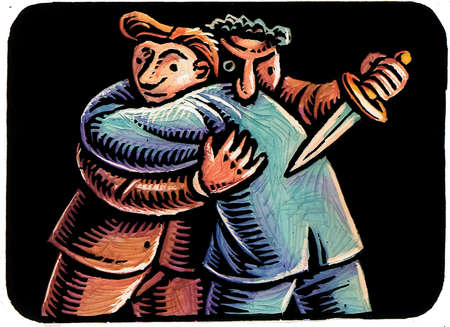
Stewart did it with video, and it was nothing less than brilliant. The sharp, twisting knife of a comedian will no doubt have a profound effect on the way business news gets reported on television in the future. While he was dead serious last night, it was certainly his prior comedic torching of Cramer and CNBC that set the stage.

When Stewart gets his Emmy for it, it will be well-earned.


See also:
"Stewart was as well prepared for the interview as any prosecutor, with video clips assembled to refute every excuse that Cramer might offer, turning an interview that initially looked like it might be a non-event into a relentless cross-examination that left Cramer deflated and obviously just hoping that it would all be over."

Labels:


Friday, October 31, 2008


P.T. Barnum Was Wrong On Sarah Palin

The Sarah Palin debacle contains a lesson for trial lawyers. It's a lesson on playing a trial straight, without shtick. And a lesson that runs contrary to what legendary showman P.T. Barnum was alleged to have said:
Nobody ever went broke underestimating the intelligence of the American people.
Today a New York Times / CBS pol shows that the public doesn't believe Sarah Palin is ready for the job. According to this NYT story (Growing Doubts on Palin Take a Toll, Poll Finds):
All told, 59 percent of voters surveyed said Ms. Palin was not prepared for the job, up nine percentage points since the beginning of the month. Nearly a third of voters polled said the vice-presidential selection would be a major factor influencing their vote for president, and those voters broadly favor Senator Barack Obama, the Democratic nominee.
And according to this CBS story:
A third of voters saying the vice presidential nominees will factor in their vote, and here the Democrats have the edge: While 74 percent say Democratic vice presidential nominee Joe Biden is prepared to be vice president, just 35 percent say GOP counterpart Sarah Palin is prepared for the job.

The lesson to draw from this mess? Argue the evidence. Jurors will feel insulted if you do otherwise. (Of course, this doesn't necessarily explain how and why voters did what they did in other elections.)

The quote, by the way, most likely wasn't Barnum's, but belonged to H. L. Mencken. If you decide you want to believe what you read on the Internet.

Labels: ,


Tuesday, October 7, 2008


Lawyer Caught Coaching Witness In the Courtroom (Ted Stevens Trial)

The news came out from the Sen. Ted Stevens corruption trial: A lawyer was sending signals to the witness on the stand. Oy. According to this AP report:
The federal judge overseeing the case accused the lawyer for the government's star witness of making secret signals to his client during a crucial cross-examination.
Those of us who stand in the well of the courtroom for a living will see, or sense, this from time to time. It comes generally in three distinct forms, and I suggest here ways to handle that problem:

1. The speaking objection. Opposing counsel doesn't like the question and thinks the witness needs a little help. Thus comes the "speaking objection" in which the lawyer blurts out, in the guise of an objection, that the witness already said xyz on the subject, or in some other way hints the witness how to answer. Some judges already have sharp rules in place for this, but others don't.

Solution: If it is obvious, and the judge hasn't jumped in, you audibly object to the lawyer coaching the witness with a speaking objection. Of course, you may incur the wrath of the judge with this, so tread carefully. Sidebar conferences may be called for. And, of course, at the earliest opportunity when the jury is out of the room a record should be made. It is one way to stop it from recurring, even if the damage may already be done.

2. The head shake. The attorney makes a face or shakes his/her head. This can be a subconscious thing. The problem is that it may not be seen by you if you are in the middle of a cross exam and, let's put this mildly, have a brain preoccupied with getting that task done. One big clue to help you out? Watch the eyes of the witness. If you know your case and the cross-exam to be done, you won't have your head buried in your notes and will see the eyes of the witness swivel as s/h seeks help.

Solution: When you see the witness look at opposing counsel, that is the time to say "Your lawyer can't help you with that," or "the jury is over here," or a similar comment/question as the situation warrants.

3. Deliberate signals. In the Stevens case at the links above we have, according to the judge, deliberate signals being given. The solution though is the same as the head shake: Watch the eyes and pull the witness back to the testimony.

The only thing you can't do is stay quiet (unless the judge has already acted, in which case silence is the order of the day unless you are asking for a curative instruction of some kind). So long as the issue is raised by either you or the judge, you can bet your last dollar that everyone in the courtroom will now be attuned to it if it happens in the future.

See also:

Labels: ,


Tuesday, July 1, 2008


Trial Blog, Part 7 (Summation and Verdict)

When we last met on this blog, I discussed the final two defense experts.

Tuesday, June 24th: The witnesses are done. All that's left are summation, jury instructions, waiting and verdict.

In the morning I engage in one of my super-secret trial rituals, now exposed here for the world. I put on my wedding tie. All trial lawyers have superstitions or good luck charms.

I will be summing up last, after the two defense lawyers. It's often said that the person that goes last has an advantage. But that person also has a problem: The jury has already heard a lot of lawyer talk. They are itching to deliberate. To speak with one another and finally get past the judicial admonition that they had previously heard not to discuss the case . Listening to lawyers speak on, and on, and on is hard. The trial attorney's job is to make it interesting. To hold their eye and attention.

And that means notes must be kept to a minimum. If you're going to read your summation you might as well just sit down now and save everyone the time, because no one will hear it. The attorney representing the leasing company goes on for an hour. We have a five-minute break and the attorney for the driver speaks for about 25 minutes.

My turn. I start with a couple nuggets of trial testimony and argument I've prepared, working with the model of the spine, pelvis and hips in my hands to describe how the socket of the hip was pulverized in this car accident, and then move in to rebut the defendants arguments. Back and forth I weave from my prepared text to their arguments. Most of the time is spent dealing with the experts, and a large pad of paper on an easel is used for compensation suggestions. The main defendant had put his numbers up on the same pad just moments ago; since this is a damages-only trial he has no real choice. He then predicted I would ask for 4 or 5 million dollars, an amount that is clearly not sustainable in any appellate court. (See: How New York Caps Personal Injury Damages) That makes my job easier as I suggest more modest numbers, virtually the same ones I used in settlement negotiations. Numbers that an appellate court would find fair and reasonable if it came to that.

The jury goes at at 1:30. The defense then offers us a million. It is the first time since the accident almost three years ago they have made a bona fide offer. I did not respond kindly to their prior lowball efforts. But the offer today is still too low and we reject it.

Time to get lunch. And wait. Walk the halls. And wait. Watch 10 minutes of the trial next door. And wait. I once waited five days. There really isn't anything quite like waiting for a jury verdict.

At 3:30 I find myself writing notes about the courtroom longhand in my trial book for later transcription to this blog. I have little else to do but think and write. And one of those thoughts is this: If the jury awards less than the offer I just rejected, will I even bother to put up these blog postings at all when it's over? While such an event might be entertaining for readers, it isn't the kind of thing a lawyer would want to write about.

There has been one note. A request for certain evidence. They get it. We wait some more.

At 4:30 the jury returns with a verdict. The lawyers assemble. The jury enters. "All rise!" is shouted from a courtroom corner. We rise and wait for the judge and the reading of the verdict. And wait. And and then wait some more. You can hear the judge on the phone in the robing room. Two long minutes of standing and waiting and looking at the jury and wondering.

The judge finally enters and the verdict is read: $420,000 for economic loss and $850,000 for pain and suffering. Since summary judgment was granted in plaintiff's favor in 2006, there will also be about $190,000 in interest, for a total of about $1.46M. There may be subsequent present-value reductions of portions of the verdict relating to future damages under a complicated formula that needs an economist's brain to decipher.

The jury is quickly escorted from the courtroom. I get no chance to stand up and thank them for their service. And no chance to talk with them after they leave, as the court needs to address the issue of post-trial motions. I also need to retrieve some of the evidence and pack up my bags to leave. By then the jury is long gone. I don't get the opportunity to ask them what they thought about various portions of the trial and the decisions that I have made, to tuck away in my brain for future reference.

As I leave the courthouse I am in wonderment that this case even went to verdict: The interest has been mounting for 20 months on what would surely be a substantial case. Of all the matters in my office, I thought this one was the most likely to settle. And I silently thank my dad for teaching me to prepare all cases for verdict, and never for settlement. Since my training was in medical malpractice suits, and such cases rarely settle before trial, I've always shown up ready. And so that is the philosophy I use for my general negligence cases as well. I reflect on the lessons of my father and wonder which ones are being passed down to the next generation.

I head home to my family and take them out to a Mexican restaurant that the kids like. I order up a margarita. On the rocks. With salt. I've lost three pound during trial, about normal for me, and I will now start to put it back on. I sit back and look at my kids and try to morph back into Daddy.

A month from now I am scheduled to start all over again.
-------------------------------------------------------------------------

Prior Posts In This Series:
Synopsis of the case at my firm's website.

Labels:


Monday, June 30, 2008


Trial Blog, Part 6 (Defense Experts)

Yesterday's post dealt with the dueling orthopedists. Today we resume with the defense case:

Saturday, June 21st. I'm making pancakes for my kids, some with the Turkewitz Family Secret Ingredient.* But I'm thinking about the defendants' two experts on Monday. The brain refuses to shut down. My 8 year-old daughter comes up to me to make fart noises on my calf. I try hard not to think of summation comments I'll make regarding yesterday's witness.

Sunday, June 22nd -- In the home office at night, I'm making revisions to my cross examination outlines and doing more research on precluding surprise testimony from a party. But my printer runs out of ink. Crap. OK, Abe Lincoln didn't have a printer at home nor did my dad, nor did any trial attorney that came between them. I'll make do and go longhand.

Monday, June 23rd-- To hell with longhand. Early morning run to Staples for ink cartridge. I'm not my dad, and I'm certainly not Lincoln.

I pull my two trial bags on the wheelie thing up the hill to the courthouse. The trial bags were my father's. He gave them to me when he retired and I use them for good luck. The one pictured here is at least 50 years old, and still has T & T stenciled in gold on it from the time of Turkewitz & Tessel, a firm he started with the kid he sat next to at Brooklyn Law. If trial bags could talk they would rivet you with the stories they held. Dad calls me every night to find out what happened in court. I suggest, for the umpteenth time, that he come out of retirement and make a court appearance for me here and there. I offer to put him on my letterhead -- Turkewitz & Father -- and for the umpteenth time he declines.

Defendants' first witness is another orthopedist, who did a defense medical exam on my client two years ago and says she was only mildly disabled. He claims she was doing well and could go back to work, and his exam is at odds not only with her treating orthopedist, but with subsequent defense medical exams two years later that call her "moderately" and "markedly" disabled. He has never seen the records or x-rays of her treating physician. Either he has deliberately diminished her disabilities for this suit or my client's condition has worsened. That makes this witness a win-win for me.

Defendants' second expert is a rehabilitation expert who testifies that the plaintiff can go back to work doing sedentary work. She can do this, he says, despite the fact that she sleeps poorly due to pain, and thus has problems during the day, that she has pain on sitting, may need a hip replacement in the future, needs to be retrained, moves slowly due to her arthritic hip, and is in her mid-60s. I'm sure there are plenty of companies out there itching to hire such a person, but this expert doesn't name any in his report. The expert does, however, appear in a wheelchair. Which might account for why he was brought in from Pennsylvania for the trial instead of using a local rehabilitation expert. Assuming one could be found.

At the end of the day the defendants ask the court that, if they chose not to produce their neurology expert -- the one that said the client was "markedly disabled" -- that they not get a very damaging missing witness charge. Under that charge, the jury is permitted to draw an inference that the testimony wouldn't be helpful to the side that was supposed to call him. I oppose it for obvious reasons, given that he is under their control, would be expected to produce him, and that his opinion differs from the defense orthopedist. The judge rules in favor of the defense. Nuts.

Next up -- Summation and charge tomorrow. And...?
---------------------------------------------------------------


* You're reading the footnote to a law blog about a pancake recipe? Please don't let the boss catch you.
---------------------------------------------------------------

Addendum -- The full series of posts:

Labels:


Friday, June 27, 2008


Trial Blog, Part 5 (Dueling Orthopedists)

With my first four witnesses now off the stand, we turn to the main orthopedic witnesses:

Thursday, June 19th. Arrive at court for 11:30 charge conference. Bad news. Yanks are playing a day game. I park in my usual lot 50 yards from the ball yard. I have no doubt the game will end when court does. My two trial bags on the wheelie are now accompanied by two exhibit bags slung over my shoulder for a medical illustration and a model of the spine, pelvis and hips.

The plaintiff's treating orthopedist takes the stand. He's seen her about 20 times. He's my last witness. Out come the spine and the medical illustration that I commissioned from Anatomical Justice, shown here, displaying the before and after of plaintiff's hip surgery. The doctor comes down off the witness stand for an anatomy lesson and tells the jury what happened to his patient's body. I disappear into a place behind the jury and ask him to explain what the heck all those bones are, what happened in this accident, how the woman was put back together, and what her future holds. Nothing resembling legalese crosses my lips.

In a proper direct exam, the lawyer should barely be noticed. The entire focus must be on the witness. My cross exam style is, of course, quite different. A proper cross has the lawyer "testifying" and the witness simply agreeing, or disagreeing. Unless, of course, one decides to break those rules. Which I might do tomorrow for defendant's orthopedist.

Defense tries in cross-exam to claim that her back injuries are pre-existing by using records from several years back. Their problem is that their own experts don't agree in their reports that any of her complaints were pre-existing. They can't. Those records were never given to them.

My case is now in. I relax a bit. Maybe I'll even eat. Maybe.

I head back down the hill to the parking lot. The streets are filled with blue Yankee shirts. The strains of Sinatra singing New York, New York waft out of the stadium, filling the Bronx air. The game has just ended. The 20-minute drive home will take an hour.

Friday, June 20th. We have only one witness again today, a defense orthopedist. His report discusses only the medical records from 2005 and his examination in March of 2008. He has not seen any pre-accident records. He has not seen any films from 2006 or 2007 regarding the plaintiff's post traumatic arthritis of the hip. He has not seen the records of her current treating orthopedist for the past two years. Testimony should be quick. I do not anticipate the need to impeach him (too much), since he hasn't seen the important records.

But it won't be easy. Because there he is, standing in the courtroom by one of the big picture windows looking at films he has never seen before. Or rendered an opinion on before.

The jury comes in and he takes the stand and he starts to talk about all the records and x-rays that were not included in his report. I object. The judge lets him go anyway saying he can discuss things that are in evidence. It is now trial by ambush. There is no report to work from. There is no deposition of him (not permitted of experts in New York). And no way to know what will come out of his mouth. The jury can see my evident displeasure.

The defense has been created during trial. I will comment on this in summation. (The reader would do well to note here, however, that neither of the defense trial attorneys were responsible for the day-to-day work-up of the case. These postings are intended to give the day-to-day flavor of what a trial is about and the types of decisions that need to be made, not criticize opposing counsel, who were both quite experienced and able.)

The doctor testifies, contrary to her treating physician, that based on the films he saw by the big picture window that very morning that there is no post-traumatic arthritis. He says that, contrary to her treating physician, that a hip replacement will not be needed in the future. I need to modify my cross-exam.

I start by using him as my own expert. I'll get some good stuff first before I impeach him. I pick up the skeletal model and, while I stand directly in front of him and the jury, walk him through the shattering of the acetabulum -- that's the socket part of the hip's ball-and-socket joint -- in the accident when the femur was rammed through it. With my hands on the model I pull the femur out of the socket and push it back to the place it was dislocated and ask him if he agrees on the mechanism of injury, and the risks ahead due to this trauma. I walk him through the two reductions of the dislocation and the repair of the fracture and the risks of post-traumatic arthritis. He asks for the spine I am holding and I assent to let him use it, contrary to common cross-examination principles. I'm breaking a rule because I am, at this point, using him as my own expert to describe the uncontested initial trauma.

I stop lobbing softballs to the witness about the nature of her initial trauma and surgery when it comes time to discuss her current condition. I cross him on the fact that the opinion of "moderate disability" that he gave in his report -- that he now claimed in court was based in part on pre-existing issues -- couldn't possibly have been the basis of his opinion since he hadn't seen those records when he wrote his report. He is forced to modify his opinion and claim that he was only talking in the abstract and not about this patient. I don't think the jury is fooled, but I won't know until the verdict.

I force him to concede she has current disability due to the hip fracture, that she can't do her job because of it, and force him to concede she is limited in her ability to do household chores.

A courtroom observer, impartial, tells me that cross went well. Unfortunately, she isn't on my jury.

I go to sleep with a notepad by my bed for the bazillion thoughts that are running though my mind about the trial.

Query: Do hourly lawyers get to bill for the time that they obsess and think and strategize about a trial when they are home with the family?

Next Up: Two additional defense witnesses. Stay tuned.


-----------------------------------------------------------

Addendum -- The full series of posts:

Labels:


Thursday, June 26, 2008


Trial Blog, Part 4 (The Trial Starts)

We finished jury selection Friday, and today we open...

Tuesday June 17th. The action against the host vehicle, the one the plaintiff was in, settles for the small policy limits. This is now a damages only trial against the car that hit my client from behind.

The judge gives an opening charge to the jury along with a small historical lesson the Bronx. We open, and I tell her story, starting from the middle. Because the accident is not where her life started, but where it changed. I start with the change. Then weave back and forth between past and present.

The first witness is the driver of the car my client was in, who testifies about the plaintiff's night before the accident, the totaling of his car on the highway and the extrication of my client from the car with the jaws of life.

The plaintiff's daughter testifies about returning to New York to help her mother, the physical pain and emotional damage to her that she observed, and her rehabilitation.

Plaintiff testifies about her life before the accident, the accident and the problems she has faced.

The judge rules that a videotape we made that demonstrates the difficulties she had five months after the accident -- some refer to these as Day-In-The-Life videos -- will not be allowed into evidence. He says it is too prone to manipulation and that outweighs its probative value. I argue that these have been used for decades, and that he can't exercise his discretion on this particular tape without actually looking at it. I lose the argument. Trying to see the glass as half-full, another lawyer tells me that the judge may simply be looking to cut down any appealable issues for the defendants. That is small consolation to me.

Leaving court, the Yankee fans are starting to arrive for tonight's game, two blocks away.

So this is the basic summary of trial: Spend day in court. Prepare for next day at night. Obsess in free time.

The headline news is of gay marriages in California. I assume the legal blogosphere is generating a gazillion pixels on the subject. I haven't checked my RSS feed reader in many days.

Wednesday, June 18th. My vocational economist takes the stand to discuss the loss to the plaintiff due to her difficulty/inability in doing household chores such as cleaning, shopping and cooking. He places a value on her time for these items. That which she can still do takes much longer. Her time is compensable, as is the value of finding someone to do these tasks. Defense crosses him on the fact that friends and neighbors help out. I sit there and wonder: And therefore the defendants are not responsible? She must go begging for help for the rest of her days? I drop some notes into my trial book for summation.

Since it's a short day I drop into the courtroom next door and spend 20 minutes watching a friend trying a case with a brain injury. Much time is spent on establishing the issue of a car's title. Not particularly exciting.

I head home and use the home office to prepare for Thursday, a pre-charge conference with the judge and my orthopedic witness.

At dinner I pick at my food and pretend to be engaged with my children while thoughts of cross-examinations, evidentiary issues, summations, jury charges and whatnot fill my brain. My wife is not fooled, having seen this routine many times before. I try to work right after dinner but a fierce thunderstorm forces me to shut down the computer and spend more time with the kids. And that is a good thing. For all of us. Storm passes, kids get tucked into bed, and I return to the home office. A better printer and a small copy machine would be nice to have.

Next up, the orthopedists take the stand.


-----------------------------------------------------------

Addendum -- The full series of posts:

Labels:


Wednesday, June 25, 2008


Trial Blog, Part 3 (We Finish Jury Selection)

Jury Selection started yesterday, and now continues:

Friday, June 13th. Jury selection drags on the whole day. One of the defense lawyers tries hard to bond with each potential juror. He talks of movies, television shows, the Belmont Stakes, Sydney Sheldon books and anything that may be of interest to the potential jury. I contemplate stopping him with an objection, but decide that the benefits of a backlash against him for dragging this out outweigh the benefits of finishing the selection process quickly. Also, I like to use this stuff in summation, where I remind them that I am here to talk about the case, and only the case, and am not trying to suck up to them or charm them.

A juror tells us he was sued as the owner of a car, when his wife was in an accident. The claimant, he tells us, trumped up the damages. He even saw the guy remove a cervical collar after visiting their home. Since it happened 20 years ago, and he says he says he is still bitter about it, I ask that he be removed for cause. The judge disagrees, and I exercise a peremptory challenge.

I exercise another challenge on a woman who never smiles. While she certainly answered all the questions "correctly," I make a gut call based on body language.

Another juror has a husband that sells insurance. That is usually a reason to challenge a person for cause. But she works for a child protective services agency, and seems to have a warm and pleasant disposition. She's the type of person you would feel comfortable talking to, which is important for my client when she needs to open up on the stand. I keep her.

Another juror works for a cancer hospital and helps the dying. Since my client works with the elderly, principally those with Alzheimer's and dementia, this is a great fit. But she takes herself off the jury saying she can't be fair. I ask her anyway to expound on why she enjoys her work, since my client enjoys hers and her inability to do her work is a significant part of my case. Since there are many people who don't enjoy their work, and some may be on the jury and not necessarily believe that there are people that actually enjoy what they do, I'm eager to have someone similar to my client discuss how and why she loves hers so much.

A couple of people indicate that they will give the plaintiff whatever she asks for, since they know she has already won the liability case. These folks get tossed for cause.

Jury selection ends after two days. That was way too long. We are told to come back Tuesday for opening charge, opening statements and witnesses. My plan is to put the two drivers on the stand first and then my client.

Next up: We open and start taking evidence


-----------------------------------------------------------

Addendum -- The full series of posts:

Labels:


Trial Blog, Part 2 (Jury Selection Starts)

Continued from yesterday, when I was assigned to a trial judge:


Wednesday, June 11th: Since my home is more convenient to the courthouse than my office, I've hauled back a few trial bags full of stuff, and have my skeletal model and medical illustrations strewn about the home. My five year old sees the trial bags and tells my wife, "Daddy's got a LOT of homework."

I prepare for trial by thumb wrestling with the kid. He beats me. But he cheated by using two hands. I hope it's not an omen.

Thursday, June 12th. Jury selection starts. The leasing company has a new lawyer, since the other one had a jury picked elsewhere. We have a panel of 25 and will use a courtroom for selection. Clients do not attend, though permitted. It is the local custom due, in large part to the fact that we usually use cramped jury rooms to pick.

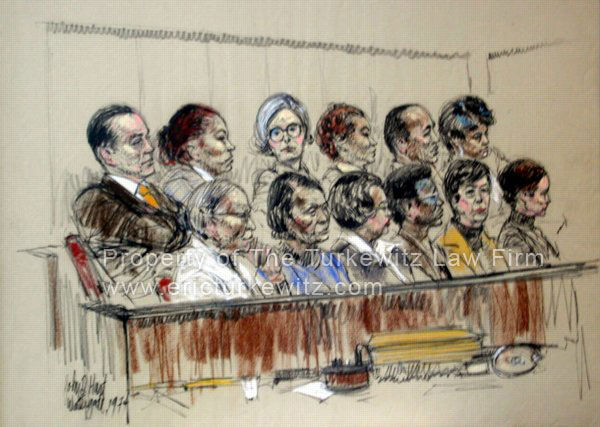
Some folks say cases are won and lost at this stage, so you hate to mess up. Some of the jurors that we see:

1. A juror says to one of the other attorneys, "The insurance company should just give her what she asks for" (since liability is already decided). I don't know if he is trying to talk himself off the jury or mis-speaking. He speaks English well, but it is clearly a second language to Spanish. I follow by asking, if Ms. Plaintiff asks you for all the gold in Fort Knox, does that mean you would give it to her?" He says of course not, indicates he had mis-spoken, and that any award must be fair and reasonable. Defendants want to knock him off for cause, and I say no. We get a judicial ruling. I lose. He's gone for cause.

2. A juror says he doesn't feel right holding the leasing company (owner of the car) liable just because the driver was negligent. I don't think he's trying to talk himself off, but it doesn't really matter. He's a goner. Defendants love this guy and desperately try to rehabilitate him but he sticks to his guns. Gone on consent.

3. A juror claims not to speak English well. I've seen this routine many times before. I never believe it because, if they couldn't speak well, they wouldn't have made it past the jury clerk. In order to avoid a mass exodus from the courtroom, I use my canned speech about the importance of jury duty, it's place in the Bill of Rights, and the desires of our nation's Founders to keep power in the hands of the people, not all-powerful judges.

4. A juror has a son about to do his third tour in Iraq. He would otherwise be OK, but as serious as my client's injuries are, I don't want him doing a comparison to what his son and friends are going through. I exercise my first peremptory challenge.

Lunch break across the street at the Court Deli. The crowd is a stew of lawyers and litigants, witnesses being prepped, cops and court officers, judges and clerks. Perhaps some folks who are building the new Yankee Stadium two blocks away are also in the crowd. Soccer is on the big screen TV. You watch what you say and you use your best table manners in this diner because you don't know which members of the jury pool may be close at hand.

Selection goes slowly with four lawyers. The crawling pace and a revised trial schedule from the judge shreds my witness schedule. I have to start over. Scheduling witnesses, which always includes doctors, is the bane of trial practice.

Tomorrow we will only work until 3. I hope to finish selection and open. Monday is off. Opening Friday afternoon and then continuing Tuesday is not an ideal situation.

I arrive home exhausted and a bit agitated at the delays. The new puppy promptly pees on the rug.

As I type this up at night I see that the exploding story of Ninth Circuit Chief Judge Alex Kozinski and his collection of comically lurid photographs is all over the legal blogosphere. While the story is certainly fascinating, and has plenty of sizzle, I can safely predict that not one single juror in the room knows who the judge is. Or cares. The lawyers probably don't know him either. It bears no relation to real life. Unless, of course, you are the guy in the middle of the storm.

Next up: Jury Selection Continues

-----------------------------------------------------------

Addendum -- The full series of posts:

Labels:


Tuesday, June 24, 2008


Trial Blog, Part 1 (Bronx Trial Assignment Part)

This blog was silent while I was on trial. But I kept real-time notes. They now follow, with Part 1 today:

Tuesday, June 10th: Arrive Bronx County Supreme Court for 9:30 calendar call in "STP," the Special Trial Part. Justice Howard Silver acts as traffic cop up on the 7th floor of the massive courthouse, sending some cases to pick, adjourning others and hopefully settling a few. On previous appearances here my case had been marked, after several adjournments, "final." Then it was marked “final, final." And finally it was marked "absolutely final," as he has made clear he would not accept additional applications for more time.

One of my three adversaries strolls in at 11:00, and asks for another day or two, because he has a jury picked in Brooklyn. That case will either settle, he says, or he will find another attorney to try this one. Silver says no way, no how. Go pick.

At 12:30 we are assigned to a judge (instead of being sent to the jury clerk), and told to report back at 2:00. The assigned judge takes a shot at settlement.

The case details: July 2005 rear-end collision on a local highway. My client is a back-seat passenger in the lead car. She suffers a fractured hip, among other injuries, has a plate and screws put in, and stays in the hospital and rehab for 16 weeks. Her orthopedist says she has traumatic arthritis now and will need a hip replacement in the future. She is in her 60s and worked as a nurse's aide. Summary judgment was granted 20 months ago against the driver and owner of the car that hit her from behind. Interest at 9% will run from that point. There is also an open issue, albeit a small one, as to whether the driver of her car shares in any liability.

For reasons that escape me, the leasing company that owns the car that plowed into her from behind never calls me and tries to dispose of the case. This is odd since loss exposure can reach seven figures, with big interest piling up. They have litigated to the end of the line. As a result of the running interest, and a deterioration of my client's condition over the two years, I have raised my demand. Four times. That's what happens when you use real numbers for demands instead of pie-in-the-sky stupid numbers.

The three defense lawyers represent the driver of the host vehicle, the driver of the trailing vehicle and the leasing company for the trailing vehicle. Under New York's vicarious liability law, owners were liable for the negligence of their drivers until Congress passed the Graves Amendment, also in July 2005. I filed this suit after the House and Senate agreed to the amendment, but since it was before President Bush signed the legislation, my client can proceed against the leasing company. (Not so for the also-injured driver of the host vehicle, who filed suit well afterwards.)

Settlement talks don't work. We are told to return Thursday to pick the jury and to be prepared to open Friday.

Next up in Part 2: Jury Selection Starts

-----------------------------------------------------------

Addendum -- The full series of posts:
Synopsis of the case at my firm's website.

Labels:


Tuesday, September 25, 2007


Ahmadinejad and Cross-Examination

The appearance of Iranian President Mahmoud Ahmadinejad at Columbia University was the source of much angst in many quarters. But it was also an important lesson for trial attorneys.

Sometimes, we get witnesses who can't answer a question directly, no matter how straightforward. The witness dodges and weaves and ultimately gives answers that defy credulity.

An example from press reports yesterday, was Ahmadinejad claiming that there were no homosexuals in Iran. Not one.

Sometimes the best way to approach such a witness is not to shut them down, but to let them talk. And talk. And talk. Let the jury see the evasiveness. And when the question isn't answered, simply say, "Perhaps I asked the question poorly, let me try again." Then ask it again the same way. And again.

Hand them all the rope they want to hang themselves.

Labels:


Monday, September 24, 2007


Personal Injury Trial Opening Statement -- Telling The Story From the Middle

Every personal injury victim that has a case worth taking should have a story worth telling. And there are a million ways to tell it at trial.

The ability to tell that story -- in an engaging manner that keeps the jury interested while you dot the "I"s and cross the "T"s of evidence -- goes to the heart and soul of standing in the well of the courtroom. Those that mechanically travel the linear path from start to end are likely to lose the interest of the jury, and if their interest is lost, so too are your arguments.

When I open, I like to start the story in the middle. It is that particular moment in time, perhaps, when a patient walks into a doctor's office, or a car crosses the double yellow line to the wrong side of the road. It goes to the essence of why you have risen from your chair to address the jury.

And when I say I like to start in the middle of a story, I'm not kidding. I don't waste time thanking the judge, or the jurors for their presence in the courtroom. I don't introduce myself or my client. Chances are, much of that has already been done anyway, but if not, I can get to it later. I need to tell them why they are here. Because they want to know.

You'll never have greater command of the jury's attention than that first 60 seconds of a trial. You can waste it with platitudes the jury doesn't care about, or you can use the time wisely. And so I begin,
"Today we turn the clock back to January 5, 2004. Jane Patient is showing a hard lump in her breast to Dr. Gyno, explaining how she found it while washing herself in the shower, and of her intense anxiety over its appearance. Dr. Gyno, who Jane has trusted for years, examines the lump for a few seconds, and tells Jane not to worry about it."
The jury now knows why they were dragged from their homes or jobs to sit in this courtroom. They know, perhaps intuitively, that Dr. Gyno likely has a different version of events, but that this is the sharp issue of fact that will define the trial. They have also been presented with a moment of anxiety and stress by your client that may be the essence of one of one of your themes -- betrayal of trust. Most importantly, they want to know the details.

From there one can fill in the before and the after, introduce people in the courtroom, witnesses that may appear, and slowly work into the story the various elements. But it is a story you are telling in the trial -- often an emotional, gut-wrenching story that brings the concepts of life and death into sharp focus. This cannot be told in a rote beginning-to-end manner.

Sometimes finding the middle doesn't seem easy. If you were telling your friend about running the NYC Marathon, would you start with your decision to run or the months of training that went into it? Doubtful. The "middle" of such a story may be the moment of greatest anxiety and anticipation: The starting line as you wait for the deep thump of the cannon while looking out across the Verrazano Narrows Bridge, where the great footrace starts.

Telling the narrative can take you into a thousand different directions. There is really no "right" way to do it, other than to stop orating like a lawyer and start talking like a storyteller.

Mark Twain, not a keen fan of attorneys, was a master. On this subject he wrote:
"Narrative is a difficult art; narrative should flow as flows the brook down through the hills and the leafy woodlands, its course changed by every bowlder it comes across and by every grass-clad gravelly spur that projects into its path; its surface broken, but its course not stayed by rocks and gravel on the bottom in the shoal places; a brook that never goes straight for a minute, but goes, and goes briskly, sometimes ungrammatically, and sometimes fetching a horseshoe three-quarters of a mile around, and at the end of the circuit flowing within a yard of the path it traversed an hour before; but always going, and always following at least one law, always loyal to that law, the law of narrative, which has no law. Nothing to do but make the trip; the how of it is not important, so that the trip is made."

(Hat tip to Bryan Garner, Quote of the Day, 4/11/07)

(Eric Turkewitz is a personal injury attorney in New York.)

Labels: , ,


Wednesday, July 11, 2007


New York Motion and Trial Practice Rules Amended

For the New York practitioners who frequent here (all others will be bored):

Effective July 3rd there are new rules for motion practice and the time limits for service of cross-motions and papers. The rules can be found here: New Rules for Motion Practice

Effective 1/1/08 - new rules for service of a trial subpoena that changes the method of service.

Labels: ,


Tuesday, March 27, 2007


Practice Tip: One Way to Cross-Examine The Attractive Doctor

A recent British study confirmed something most of us all know intuitively:
Juries trying criminal cases are likely to be more lenient when the person in the dock is physically attractive, psychologists say.
So how do you level the playing field if, for example, you have an attractive doctor as a defendant in a medical malpractice case? And by attractive, I mean not just physically, but someone with good credentials who makes an impressive personal appearance by their ability to speak well. This is important if the patient chose the doctor.

The answer is not to knock them down, but to build them up in opening statements and jury selection (if your jurisdiction allows).

Tell the jury they will like the defendant. After all, your client chose this doctor for surgery, right? Trusted him/her. Kinda like Marcus Welby. Therefore, it stands to reason, the jury will too.

This does a few things: First, you have been dead honest. It is unlikely the jury expected you to "confess" this thing, but frankly, they will likely see it anyway if defense counsel is even mildly competent. Trying to tar a physician at the outset that your client previously trusted has enormous potential to backfire.

The jury also now has very high expectations for the doctor. With the bar set so high, any slip-up or contradictory testimony is likely to be viewed in a harsher light. Assuming you have a solid case to take to trial, this doctor-defendant will also lay out the standards of care (while they still trust him/her) before being confronted with the deviations from care, the sloppy notes, the rushed surgery, failure to read the x-ray, or contradictions from deposition testimony.

And there is something else at play here. The doctor was trusted, and the trust was betrayed. Betrayal often unleashes a flood of powerful emotions.

The instinct for confrontation must, at times, be avoided, and saved for those few special moments when the witness, who has now been built up, strays from the straight and narrow. And if that happens, it will have far greater impact than if you had simply tried to trash the doctor from the outset.


(Eric Turkewitz is a personal injury attorney in New York)

Labels: , ,


Wednesday, January 31, 2007


Jurors Can't Be Excluded by Nationality, Judge Says

A federal Magistrate Judge sitting in New York has ruled that potential jurors cannot be excluded from a jury based on nationality. The rule against discrimination stems from Batson v. Kentucky, where race had been used by attorneys for peremptory challenges. The Batson rule also been extended to other minorities and to gender based discrimination, and extends also into civil cases.

From today's New York Times (sub. req.):
The judge, in a ruling last week, opened a door to lawyers defending a West Indian man who argued that he had been denied justice because all five potential jurors who were West Indian were improperly excluded by the prosecution. The Bronx jury that convicted the man, Mark Watson, of rape, sodomy and burglary included blacks, but all of them were American born.

...

The judge, James C. Francis IV, ordered a hearing to determine "whether the state can offer a nondiscriminatory explanation for its peremptory challenges and whether Mr. Watson can carry his burden of establishing discriminatory intent." If a separate hearing determines that jury selection was discriminatory, Mr. Watson, who was born in Jamaica and is serving 37 1/2 to 75 years in prison, could receive a new trial.
...

"Mr. Watson established that the prosecutor had struck every one of the five West Indian prospective jurors, a showing that was plainly sufficient to support an inference of intentional discrimination," Judge Francis wrote.

"If striking five out of five West Indian jurors is insufficient to raise an inference of discrimination, it is difficult to imagine what sort of pattern of strikes might do so," he said.
Personally, when I pick juries I always have a reason when exercising a challenge, and I think trial lawyers make a mistake when they bounce potential jurors based solely on discriminatory factors. While on the one hand a lawyer wants the jury to look like his own client, on the other hand, those from the same racial/ethnic/national/gender group may also be the harshest critic of their own. Picking a jury takes a lot more subtlety than simply looking at the superficial features of your fellow man.

Labels: , ,


Tuesday, January 30, 2007


Scooter Libby Trial - A Truly Bizarre Trial Experience

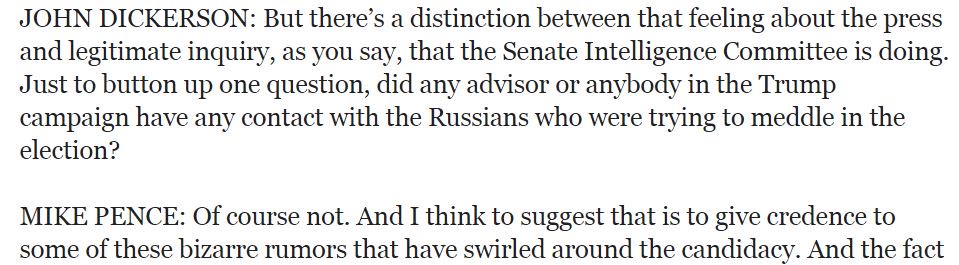
This isn't about New York personal injury law, but it is about trial practice, and is simply too good to pass up...a trial observer (then-Time magazine correspondent John Dickerson) that suddenly finds the testimony is about him...it comes from Slate at this link...this is the lede and the end, but the middle is well worth reading...
Dispatches From the Scooter Libby Trial

I wanted to raise my hand and ask, "Your Honor, may I approach the bench?"

I was at the Scooter Libby trial to cover it, and all of a sudden, I found myself in the middle of the case. In his testimony today, former White House press secretary Ari Fleischer told the courtroom -- which included me -- that when I was a White House correspondent for Time magazine, he had told me that Joe Wilson's wife worked at the CIA.

He did?

Everyone had heard about Robert Novak, Matt Cooper, and Judith Miller, the reporters who had received the Valerie Plame leak. But now Ari was saying I was in that club, too.
...

Only moments before Ari's surprise disclosure, I had been trying to figure out what my lede would be for today. I enjoyed seeing Ari have to answer questions under oath, which he never had to do in the White House briefing room. As a reporter, I'd always tried to put him in the witness box, and he always climbed out. Now he may have put me in there.
There's nothing quite like the heart-pumping drama and surprise of a good trial.

Labels: , ,


Thursday, January 11, 2007


State Farm to Pay Punitive Damages. Again.

State Farm has done it again. Some years back they made quite a bit of law in a case called State Farm v. Campbell that went up to the U.S. Supreme Court on the issue of punitive damages that they had to pay for their conduct.

Now they got smacked again by a jury, this time for $2.5M in a case they offered to settle for $20K. This time, it was people victimized once by Katrina, before State Farm got to them for a second go-round:
Jan. 11 (Bloomberg) -- State Farm Mutual Automobile Insurance Co. must pay a Mississippi couple $2.7 million for the loss of their property, a judge and jury ruled in a test case over how much Hurricane Katrina damage is covered by insurance.

The judge, deciding actual damages without the jury, awarded $223,000 for the home and belongings of Norman and Genevieve Broussard of Biloxi, Mississippi. The jury awarded punitive damages of $2.5 million for State Farm's improper conduct in processing the claim...

The Broussards argued their house had been destroyed by wind or a tornado, a type of damage covered by insurance. State Farm, which is owned by policy holders, argued at trial that the loss stemmed from flooding, which the company's policy didn't cover.
...

[U.S. District Judge L.T. ] Senter called the company's handling of the claim ``impermissible,'' saying it offered the couple no choice except to sue over their claim.

``I find the defendant did not have any legal or arguable reason for refusing to pay,'' Senter said today in federal court.
...

Senter ruled today that Bloomington, Illinois-based State Farm, the largest U.S. auto and home insurer, failed to present enough evidence for the jury to be able to find that the policy terms didn't cover the damage.
...

The Broussards' attorney Bill Walker told the jury that his clients had been needlessly wronged by State Farm.

``Did they act like a good neighbor?'' he asked, referring to the company's famous slogan. ``No, they acted like a cheat. They acted like a chiseler.''

Labels: , , , ,


The New York Personal Injury Law Blog is sponsored by its creator, Eric Turkewitz of The Turkewitz Law Firm. The blog might be considered a form of attorney advertising in accordance with New York rules going into effect February 1, 2007 (22 NYCRR 1200.1, et. seq.) As of July 14, 2008, Law.com became an advertiser, as you can see in the sidebar. Law.com does not control the editorial content of the blog in any way.

Throughout the blog as it develops, you may see examples of cases we have handled, or cases from others, that are used for illustrative purposes. Since all cases are different, and legal authority may change from year to year, it is important to remember that prior results in any particular case do not guarantee or predict similar outcomes with respect to any future matter, including yours, in which any lawyer or law firm may be retained.

Some of the commentary may be become outdated. Some might be a minority opinion, or simply wrong. No reader should consider this site (or any other) to be authoritative, and if a legal issue is presented, the reader should contact an attorney of his or her own choosing for advice.

Finally, we are not responsible for the comments of others that may be added to this site.


This page is powered by Blogger. Isn't yours?